Cuban President Miguel Diaz-Canel has sharply criticised the latest round of American sanctions against his nation, framing them as part of a coordinated global campaign that resurrects the spectre of 1950s anti-communist witch-hunts. Speaking via social media platform X from Hamilton, Canada, Diaz-Canel argued that Washington is orchestrating what he termed a "new and more dangerous version of McCarthyism" directed at progressive movements worldwide. The accusation carries considerable rhetorical weight in Latin American discourse, invoking Senator Joseph McCarthy's notorious campaign that destroyed careers and lives through unsubstantiated allegations of communist sympathies during the Cold War.
The Cuban leader expanded his critique beyond historical comparisons, asserting that contemporary transnational far-right movements are being actively promoted through mechanisms that echo both Nazi fascism and Operation Condor, the brutal intelligence-sharing network that coordinated state repression across South America during the 1970s and 1980s. This layering of historical references reflects Cuba's long-standing narrative positioning itself as victim of imperial aggression and ideological hostility. Diaz-Canel suggested that allegations targeting left-wing governments and movements may serve as justification for intensified economic and diplomatic pressure, masking what he characterised as imperial objectives behind the language of security concerns and democratic principle.
In his broader indictment, Diaz-Canel positioned the ideological conflict as fundamentally asymmetrical, arguing that the genuine threat to global stability emanates not from the left but from what he calls the "philosophy of dispossession" underlying far-right geopolitical conduct. He attributed to American influence and its allied powers responsibility for the humanitarian catastrophe in Gaza, extrajudicial killings in various contexts, the persecution and deaths of migrant populations, the 2024 bombing of a girls' school in Iran, and Cuba's decades-long economic isolation through embargo. This comprehensive framing seeks to reposition Cuba from accused state to victim within a broader pattern of Western-aligned power abuse, though such arguments compete with alternative interpretations of international responsibility and internal governance.
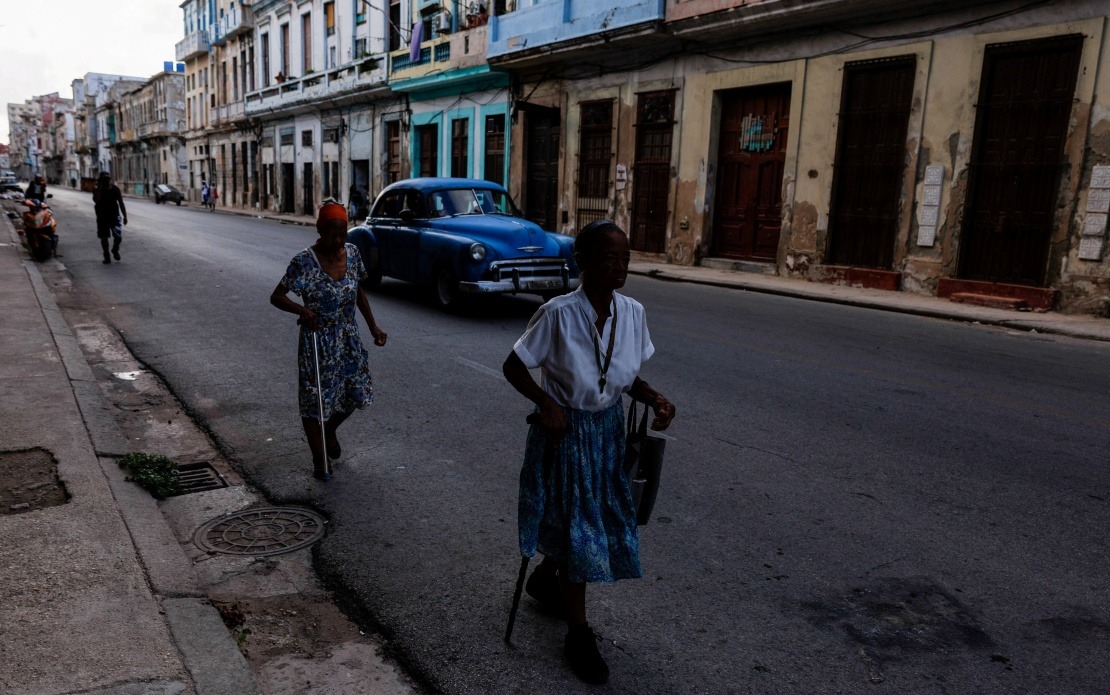
The timing of Diaz-Canel's remarks reflects acute desperation within Cuba's leadership regarding the island's economic deterioration. The nation confronts its most severe financial crisis since the Soviet Union's collapse in the early 1990s, characterised by acute fuel shortages, cascading infrastructure failures, and widespread material scarcity. Official statistics released during 2024 documented economic contraction during the first half of the year, with rolling blackouts averaging 20 hours daily and electricity deficits reaching 1,955 megawatts—figures that underscore systemic dysfunction across generation and distribution networks.
Cuban authorities consistently attribute this degradation to intensified American economic measures rather than to domestic policy failures, systemic inefficiency, or structural economic vulnerability. Havana's official position maintains that Washington has systematically disrupted petroleum supplies reaching the island, pressured international corporations to sever commercial relationships with Cuba, and engineered restrictions on the nation's participation in international financial systems. These allegations possess substantive foundation—American policy has indeed targeted Cuba's energy access and financial integration—though Cuban officials rarely acknowledge the role that government economic policies, underinvestment, and dependence on declining oil revenues from Venezuela have played in precipitating the current crisis.
The trajectory of Trump administration sanctions demonstrates consistent escalation of pressure mechanisms against the Cuban state. In May 2025, President Donald Trump signed an executive order imposing sanctions targeting specific Cuban officials and entities, justifying the measure through invoking state repression and threats to American national security and foreign policy interests. This May action built upon January measures through which Trump declared a national emergency and established authority to impose tariffs on nations supplying or selling petroleum to Cuba—an extraordinarily broad instrument designed to weaponise Cuba's energy dependence and restrict international commerce.
For Malaysian and Southeast Asian observers, the Cuba situation illuminates broader patterns of superpower competition and sanctions as instruments of geopolitical coercion. The United States employs comprehensive economic sanctions regimes against multiple nations, from Iran to North Korea to Venezuela, creating precedents that shape how rising powers calibrate their own economic statecraft. Similarly, Cuba's experience demonstrates vulnerability faced by smaller nations lacking diversified trading partners or autonomous energy supplies when locked in confrontation with technologically advanced adversaries capable of leveraging financial networks and supply chains as weapons.
The rhetorical battle over McCarthyism versus security concerns reflects fundamental disagreement about whether ideological concerns or legitimate security interests drive contemporary sanctions. Western governments typically justify restrictions through arguments about human rights, democratic deficits, or security threats, while target nations frame sanctions as ideological persecution masking imperial ambition. This interpretative divide shapes how nations in the Global South evaluate their own alignment strategies, with some accepting Western framing and others viewing it with suspicion earned through historical experience of colonialism and intervention.
Cuba's economic crisis simultaneously constrains its ability to project power regionally while potentially making it more dependent on alternative partnerships, particularly with China and Russia. This realignment carries implications for hemispheric geopolitics and broader great-power competition. As Cuba's integration with Western institutions remains foreclosed, the island nation gravitates toward partnerships with states itself facing Western sanctions and pressure, creating alternative networks that parallel but do not yet rival traditional Western-dominated structures.
The fundamental challenge confronting Havana involves distinguishing between sanctions designed to coerce political change and genuine economic constraints limiting all nations' prosperity. American policy toward Cuba combines both elements—genuine security concerns about military relationships, but also ideological opposition to any leftist government Washington cannot influence. Cuban officials' tendency to attribute all hardships to external sanctions, while minimising domestic policy errors, prevents the critical analysis necessary for economic reform. Simultaneously, comprehensive sanctions regimes severely constrain ordinary Cubans' material conditions regardless of their political views, raising humanitarian concerns that transcend partisan considerations about whether particular governments merit international isolation.

