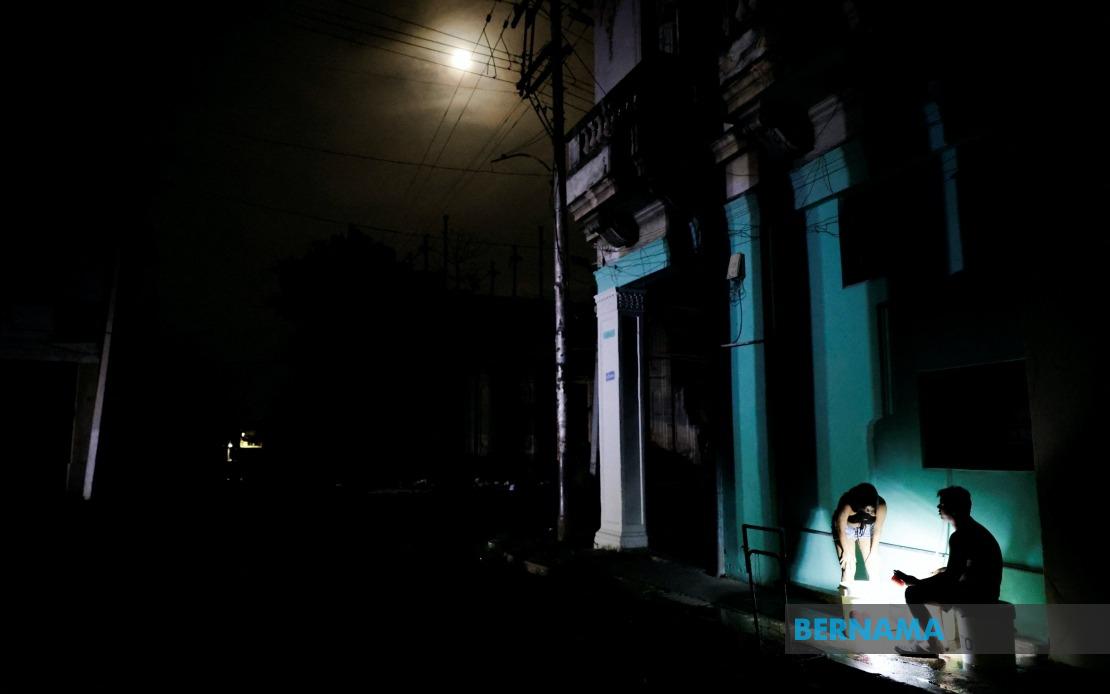
The Caribbean nation of Cuba suffered another catastrophic power failure on Sunday when its national electrical grid collapsed, leaving the entire country without electricity. The blackout marks the latest in a series of cascading failures that have plagued the island's energy infrastructure, with the state-owned electricity utility confirming the grid's breakdown without immediately disclosing the underlying cause. This represents the first such incident recorded in August and compounds a deteriorating situation that saw three separate nationwide outages grip the country during July alone.
The frequency and severity of these blackouts reveal the structural fragility of Cuba's power generation and distribution systems. Rather than isolated technical faults, the recurring failures suggest systemic problems embedded within ageing infrastructure that has struggled to meet the island's electricity demands. Energy experts point to a combination of factors, including underinvestment in maintenance and upgrades, fuel supply constraints, and the strain placed on generators operating beyond their intended capacity. For a nation that once boasted one of Latin America's most reliable power networks, the current situation represents a dramatic reversal.
The impact on ordinary Cubans extends far beyond mere inconvenience. Rolling blackouts have become so frequent and unpredictable that residents have fundamentally restructured their daily routines around electricity availability. Families cook, bathe, wash clothes, and complete household tasks whenever power returns, rather than according to any regular schedule. Internet access, already limited by bandwidth constraints, becomes even more precious during the brief windows when electricity flows. Summer temperatures compound the hardship, with many homes lacking reliable air conditioning or adequate ventilation, turning residential spaces into sweltering environments during extended outages.
The energy crisis has also throttled economic activity across the island. Businesses unable to operate reliably struggle to maintain productivity and competitiveness, while tourism—traditionally a crucial revenue source—faces disruption from unreliable infrastructure in hotels and attractions. Small enterprises operate at a fraction of their potential capacity, unable to guarantee service to customers or sustain operations through extended blackouts. The cumulative effect depresses economic growth precisely when Cuba's government recognises the nation requires stronger economic performance to address broader developmental challenges.
Recognising the severity of the situation, Cuban authorities have begun implementing market-oriented reforms designed to attract foreign investment and expand domestic economic capacity. Prime Minister Manuel Marrero Cruz announced in July that the government had approved Cuba's first foreign investment venture focused on importing and distributing fuel, a significant opening in a state-dominated economy. This represents a departure from traditional rigid economic controls and reflects recognition that the private sector may offer solutions the government alone cannot achieve.
The government has additionally authorised nearly 200 businesses to engage in wholesale fuel distribution, distributing supply responsibilities beyond state monopolies. These changes signal a pragmatic acknowledgment that Cuba's energy challenges require diversified approaches and market mechanisms. Private capital and entrepreneurial expertise, long excluded from such critical sectors, now represent part of the solution set. For a government ideologically committed to state control, such concessions represent substantial policy shifts driven by necessity rather than ideological preference.
Beyond fuel supply, Cuban policymakers have approved reforms permitting private investment in the tourism sector, another crucial generator of foreign exchange and employment. These measures, taken together, suggest a broader reorientation toward economic liberalisation, albeit incremental and cautious. The government recognises that attracting foreign investors and enabling domestic entrepreneurs requires creating conditions more compatible with market dynamics, even as political leadership maintains ultimate state authority.
However, Prime Minister Marrero's comments in July conveyed realism about the timeline for improvements. He acknowledged that meaningful results will materialise gradually, not immediately, and stressed that the most challenging stage of reforms was only beginning. This measured language reflects genuine uncertainty about whether market-oriented measures alone can resolve systemic infrastructure deficiencies accumulated over decades. Even successful reforms require time to attract investment, negotiate deals, implement projects, and generate measurable improvements in energy supply.
For neighbouring countries and regional observers, Cuba's energy crisis carries several instructive lessons. The case demonstrates how infrastructure underinvestment and delayed modernisation can precipitate widespread service failures affecting entire populations. It illustrates the risks of over-relying on ageing generation capacity without continuous renewal and upgrade cycles. Cuba's experience also underscores how economic isolation and limited access to international markets can constrain a nation's ability to acquire necessary equipment, spare parts, and fuel. The experience is particularly relevant for developing economies throughout the Caribbean and Latin America that face similar infrastructure challenges and budgetary constraints.
The crisis has also exposed dependencies in Cuba's energy equation that reforms alone cannot immediately resolve. Even attracting foreign fuel suppliers and private investment requires functioning institutional frameworks, transparent regulatory processes, and investor confidence—elements that materialise only over extended periods. Revolutionary governance structures accustomed to centralised command decisions must adapt to market-based negotiations and profit-driven decision-making, a transition fraught with institutional friction and potential miscalculation.
As Cuba pursues these economic adjustments, the immediate outlook for residents remains challenging. The fourth blackout in as many weeks promises continued disruption until underlying infrastructure receives adequate investment and maintenance. Whether market-oriented reforms successfully mobilise resources quickly enough to prevent further deterioration in service quality remains an open question. The government's acknowledged need for patience suggests that ordinary Cubans should expect extended periods of energy scarcity before conditions improve measurably.

