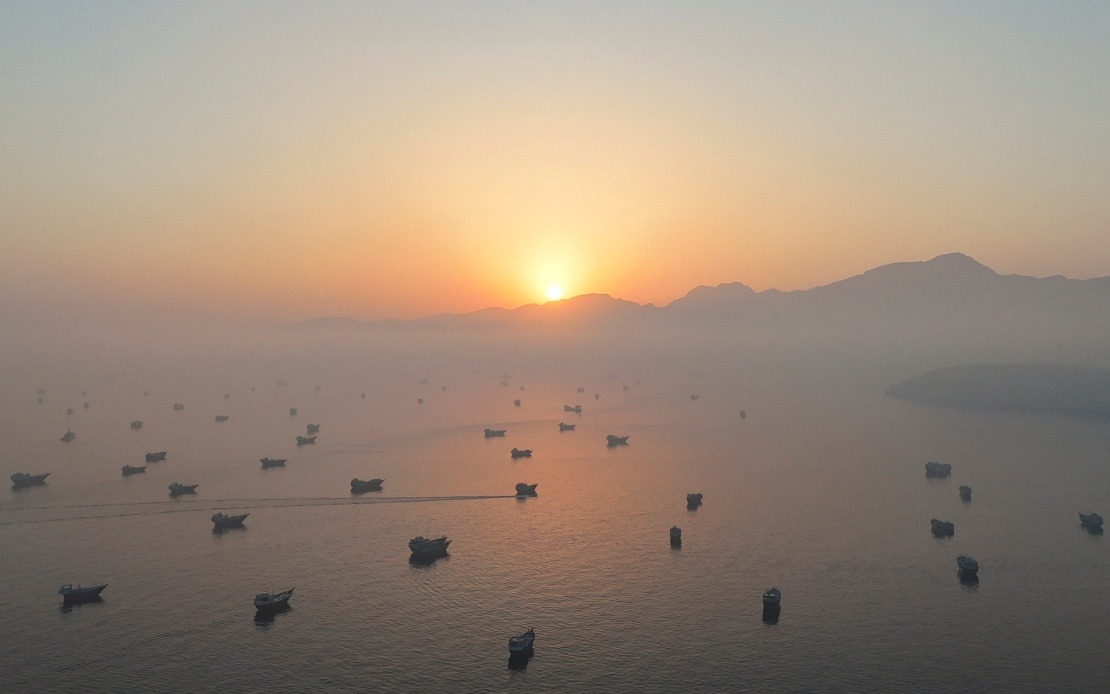
The 12-nation Comprehensive and Progressive Agreement for Trans-Pacific Partnership has publicly backed the recent diplomatic accord between Washington and Tehran, signalling strong support for measures aimed at reopening the Strait of Hormuz and guaranteeing unobstructed maritime passage. The endorsement came through a joint ministerial declaration released following a virtual gathering on Friday, underscoring how geopolitical developments affecting one of the world's most strategically vital waterways carry profound implications for the bloc's economies spanning four continents.
For Malaysia and other CPTPP members, the stability of the Strait of Hormuz represents far more than a matter of diplomatic protocol. This narrow waterway between Iran and Oman serves as a crucial chokepoint through which roughly one-third of all seaborne traded oil passes globally, making disruptions to its operations a direct threat to energy security. The ministers' statement explicitly recognised this vulnerability, emphasising that maintaining open and secure shipping lanes, safeguarding freedom of navigation, and ensuring uninterrupted transit are essential to protecting their nations' economic interests and the stability of global markets.
The bloc's concern extends well beyond crude oil supplies. The joint statement itemised the full spectrum of commodities dependent on reliable Hormuz transit: petroleum derivatives like diesel fuel, liquefied natural gas, petrochemical feedstocks, and agricultural fertilisers. For Southeast Asian economies heavily reliant on energy imports and agricultural exports, any prolonged disruption to these trade flows would cascade through domestic economies, affecting everything from fuel prices at petrol pumps to production costs for manufacturers and food production. Malaysia, as both an energy producer and significant trading nation, has particular stakes in ensuring this critical artery remains open and secure.
The CPTPP ministers went beyond mere acknowledgment of the problem, committing themselves to upholding rules-based international commerce in energy and affected products. This represents a deliberate pushback against unilateral trade restrictions or actions outside established legal frameworks. By anchoring their position in the United Nations Convention on the Law of the Sea, the ministers signalled their preference for resolving maritime disputes and ensuring shipping safety through internationally recognised mechanisms rather than ad-hoc interventions. Such a stance carries particular resonance for Southeast Asian nations that have long advocated for respect for international law in managing regional maritime complexities.
The bloc also pointedly reaffirmed its commitment against imposing protectionist or unjustified trade barriers, and called on other nations to exercise similar restraint. This language reflects concerns that the US-Iran tensions had sparked fears of retaliatory tariffs and supply-side restrictions that could further fragment global markets. For smaller trading economies dependent on predictable market access, such assurances carry substantial weight. The call extends beyond the bloc's own members, appealing to the broader international community to maintain commercial discipline during geopolitical crises.
A notable dimension of the ministerial discussion involved recognising regional initiatives designed to build greater resilience into global energy supply chains. The ministers specifically acknowledged the Partnership On Wide Energy and Resources Resilience Asia, known as POWERR Asia, as an avenue through which producer and consumer nations can coordinate more effectively. This framework represents an evolving approach to energy security that emphasises dialogue and coordination between oil exporters and importers, reducing the likelihood that supply shocks become weaponised in trade disputes. For CPTPP members spanning both energy-producing (Australia, Canada) and energy-consuming (Malaysia, Singapore, Japan) economies, such partnerships offer a middle path between complete market dependency and autarkic isolationism.
The statement also acknowledged that certain member nations, particularly small island developing states in the Pacific, face disproportionate energy security vulnerabilities. These countries, often distant from major production centres and lacking alternative supply routes, bear heightened risks when major shipping lanes face disruption. The ministers committed to exploring trade diversification strategies to help these nations reduce their exposure to supply shocks. This recognition of differentiated impacts reflects a maturing understanding within the bloc that managing global challenges requires tailored responses accounting for members' varying geographic and economic circumstances.
The broader context for this declaration involves mounting concerns about the fragility of global supply chains, tested repeatedly by geopolitical tensions, pandemic disruptions, and now energy market instability. CPTPP members collectively represent some of the world's largest trading economies, and they recognised in their statement that collective action offers their best defence against further fragmentation. The ministerial meeting itself, held virtually, occurred at a moment when many stakeholders worried that the US-Iran tensions could spiral into broader trade warfare, prompting the bloc to move quickly in endorsing the agreement and reaffirming commitment to open markets.
The 12-member composition of CPTPP—Australia, Brunei, Canada, Chile, Japan, Malaysia, Mexico, New Zealand, Peru, Singapore, the United Kingdom and Vietnam—reflects a geographically distributed membership with interests spanning Atlantic, Pacific and Indian Ocean shipping routes. This geographic diversity amplifies the statement's significance: it represents countries with different strategic relationships to major powers, yet converging interests in maintaining rules-based global commerce. For Malaysia in particular, situated along one of the world's busiest maritime corridors, the statement reaffirms that the larger trading bloc shares its interest in preserving freedom of navigation and preventing any single nation or dispute from disrupting regional commerce.
Looking forward, the ministerial statement signals that the CPTPP bloc intends to monitor implementation of the US-Iran agreement and may convene again if new disruptions threaten member economies. The explicit commitment to minimise energy trade disruptions in accordance with international law suggests the bloc will advocate for diplomatic solutions over sanctions-based approaches when future tensions arise. For Malaysia and other Southeast Asian CPTPP members, this positioning offers reassurance that their trading partners remain committed to institutions and rules that have generally favoured open commerce and regional stability in one of the world's most economically dynamic regions.

