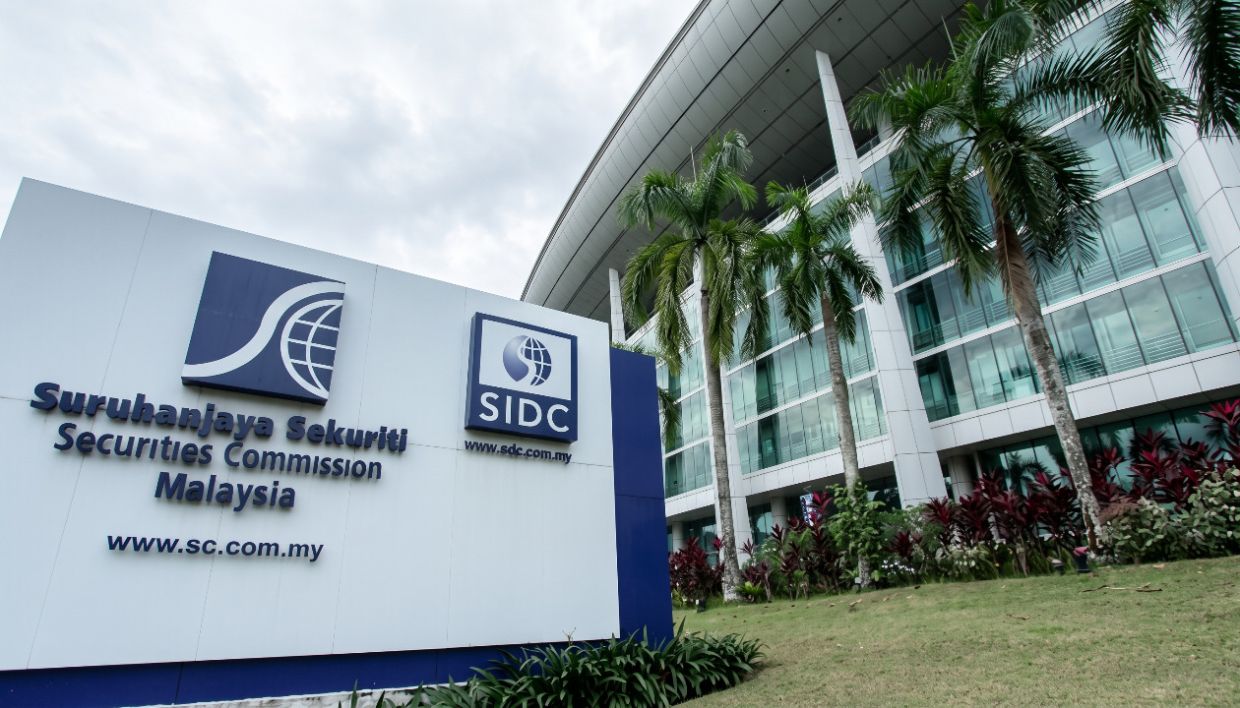
Malaysia's Court of Appeal has dealt a significant blow to businessman Wong Shee Kai, commonly known as Ricky Wong, by upholding a sweeping freeze on assets and properties valued at up to RM169.2mil. The appellate tribunal rejected challenges mounted by Wong, his associate Teh Sew Wan, and their company Wong SK Holdings Sdn Bhd against the restrictive order, which remains in force while civil proceedings continue at the High Court.
The three-judge panel, led by Justices Datuk Ravinthran N. Paramaguru, Datuk Dr Choo Kah Sing and Datuk Leonard David Shim, delivered its ruling on Monday, dismissing not only the main appeals but also an earlier attempt to overturn an ex parte injunction that the High Court had initially granted in May 2020. The appellants have been ordered to bear costs of RM200,000 payable to the Securities Commission Malaysia (SC), the regulatory body that brought the enforcement action.
The underlying dispute traces back to allegations of securities law violations. The SC filed its civil suit in 2020, accusing the defendants of contravening Section 179 of the Capital Markets and Services Act 2007 (CMSA). Two years later, in April 2022, the High Court formalized the asset freeze through an inter partes injunction, a more robust order made after both parties had presented their arguments. This injunction not only paralyzes the assets but also prevents any third party from knowingly facilitating transactions or dealings involving the frozen property.
For Malaysian regulators and investors, the Court of Appeal's decision reinforces the judiciary's willingness to deploy powerful remedial measures against those accused of securities misconduct. Asset freezes serve a dual purpose: they protect the public interest by preventing potential dissipation of assets that might be needed to satisfy any eventual judgment, and they send a clear deterrent message about the consequences of flouting securities law. The SC's enforcement powers, already robust under the CMSA, have proven effective even at the appellate level.
The case underscores ongoing concerns about securities fraud within Malaysia's financial markets. Wong's alleged contraventions represent the type of systematic market abuse that regulatory agencies worldwide prioritize, as such conduct erodes investor confidence and market integrity. The fact that proceedings have advanced to the stage where asset freezes remain justified through multiple court levels suggests the SC has presented a credible case on the merits.
Critically, Wong's current status complicates the picture considerably. The businessman remains at large and is simultaneously wanted in connection with criminal charges under two statutes: the Anti-Money Laundering, Anti-Terrorism Financing and Proceeds of Unlawful Activities Act 2001, and the CMSA itself. This dual regulatory and criminal exposure indicates that the issues at stake extend beyond civil asset recovery into potential proceeds of crime legislation. His absence from Malaysia has not prevented the courts from proceeding with civil remedies, but it does signal the seriousness with which authorities regard his conduct.
The legal representation in the case reflects the complexity of high-stakes financial litigation in Malaysia. The SC was represented by senior counsel including Datuk Lim Chee Wee and attorneys from his partnership firm, alongside internal counsel. Wong engaged Tan Sri Muhammad Shafee Abdullah, one of Malaysia's most prominent criminal and commercial lawyers, while Teh retained Tan Sri Cecil W. M. Abraham, another leading silk. The calibre of counsel involved demonstrates the gravity of the proceedings and the substantial sums at stake.
Looking ahead, the litigation remains far from concluded. The underlying civil trial at the Kuala Lumpur High Court is continuing and is not scheduled to resume until September 1, 2026, signalling a protracted legal struggle. The gap between now and that date provides ample opportunity for further interlocutory applications and procedural developments. Throughout this period, the RM169.2mil asset freeze will remain operative, barring any fresh application to vary or discharge the injunction.
For Malaysian investors and business participants, this judgment sends an important signal about the enforceability of regulatory orders. The Court of Appeal's affirmation demonstrates that appellate courts take securities regulation seriously and will not readily overturn asset preservation measures simply because defendants object. This consistency strengthens the SC's hand in future cases and reinforces confidence in Malaysia's regulatory framework among international investors who depend on effective enforcement.
The SC has also made a public appeal for information about Wong's whereabouts, indicating that locating him remains a priority for law enforcement. International cooperation mechanisms such as mutual legal assistance treaties and extradition frameworks may eventually come into play if Wong is identified abroad. Meanwhile, the continued freeze on his Malaysian assets represents a tangible consequence of his alleged misconduct and his apparent non-cooperation with Malaysian authorities.
The case exemplifies how modern securities regulation operates across multiple enforcement channels simultaneously. Civil asset freezes complement criminal investigations and proceedings, creating a comprehensive response to alleged market abuse. The persistence of these remedies through appellate scrutiny suggests that Malaysia's courts are calibrating enforcement tools appropriately in response to systemic risks posed by alleged fraudulent conduct, ultimately serving the broader public interest in market confidence and integrity.

