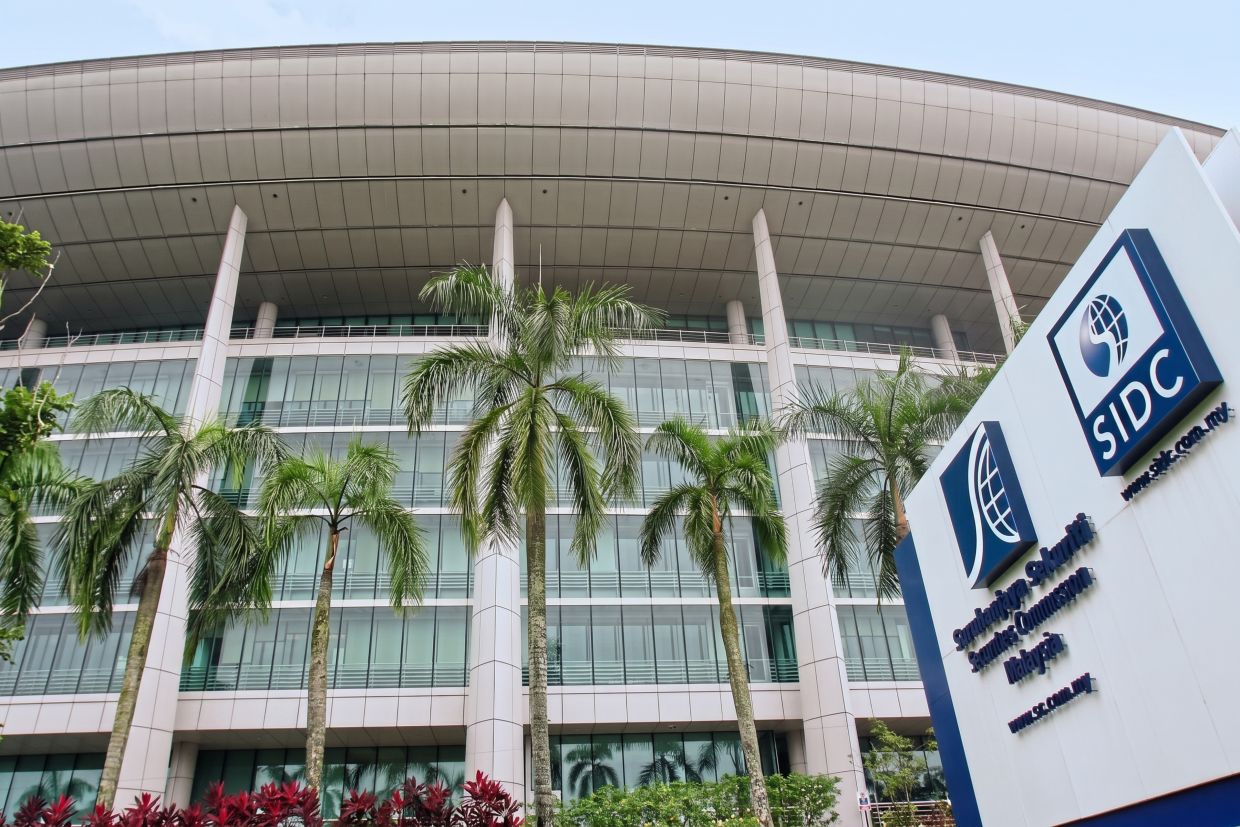
The Court of Appeal has delivered a decisive affirmation of insider trading accountability in Malaysia's capital markets, unanimously upholding the 2022 High Court judgment that found former WCT Bhd deputy managing director Goh Chin Liong and Ara Holdings Sdn Bhd director Leong Ah Chai guilty of breaching securities laws. The appellate court rejected both defendants' appeals without identifying any legal error substantial enough to warrant reconsideration, sending a firm signal about the judiciary's stance on market misconduct.
The Securities Commission Malaysia confirmed that the Court of Appeal upheld the original judgment awarding it RM5.83mil in total compensation for the breaches committed by both men. Additionally, each defendant has been ordered to pay RM2.5mil in disgorgement—compensation representing the profits or losses they avoided through their illegal conduct—alongside RM300,000 in civil penalties and RM75,000 in costs to the SC. The appellate dismissal also included RM100,000 in costs for each defendant, reinforcing the financial consequences of contesting insider trading allegations.
The case traces its origins to a civil claim filed by the Securities Commission in 2015, targeting violations under the Capital Markets and Services Act 2007. The breach centered on a contract involving a proposed racecourse development in Dubai, United Arab Emirates, which had been awarded to a joint-venture partnership between WCT and Arabtec Construction LLC. This project represented a significant transaction with material implications for WCT's financial standing and share performance, making the confidential information surrounding its cancellation decidedly sensitive.
At the core of the misconduct was Goh's disclosure of non-public information about the contract's cancellation to Leong, effectively providing the latter with knowledge that could influence investment decisions. Armed with this privileged information, Leong proceeded to dispose of 1.64 million WCT shares held in Ara Holdings' trading account between January 2 and 5, 2009. The timing and volume of this share disposal, occurring immediately after receiving material confidential information, formed the documentary and circumstantial foundation of the insider trading case.
The original High Court judgment, delivered following a full trial, determined that the evidence presented by the Securities Commission conclusively demonstrated the unlawful transfer of material non-public information and its subsequent exploitation for trading advantage. This foundation proved sufficiently robust to withstand appellate scrutiny, with the Court of Appeal finding no grounds to disturb the trial judge's factual findings or legal conclusions. The appellate court's unanimous decision underscores the strength of the prosecution case and the clarity of the evidence linking both defendants to the prohibited conduct.
A significant procedural development occurred on May 26, 2026, when the SC succeeded in its appeal to the High Court to reinstate garnishee orders against both defendants. Garnishee procedures represent a critical enforcement mechanism, allowing creditors to recover judgment sums by intercepting funds in the defendants' bank accounts or other financial holdings. This reinstatement was essential for translating the legal judgment into actual monetary recovery, a challenge that often complicates insider trading enforcement in Malaysia.
The Securities Commission has indicated its intention to proceed immediately with enforcement mechanisms to recover the RM5.83mil judgment sum from Goh and Leong. The pursuit of this recovery demonstrates that Malaysia's securities regulator treats insider trading enforcement as a comprehensive endeavour extending beyond establishing legal liability to securing actual financial redress. This multi-stage approach—prosecution, judgment, and enforcement—reflects international best practices in securities regulation.
Insider trading represents one of the most serious threats to capital market integrity, undermining the principle that all investors operate on a level playing field with access to equivalent information. When corporate insiders exploit confidential information for trading profits, they erode the confidence of retail and institutional investors who cannot compete with privileged knowledge. The Securities Commission has explicitly characterized such conduct as fundamentally corrosive to Malaysia's capital market reputation and the trust that underpins investor participation.
The regulatory emphasis on deterrence comes at a time when Southeast Asian markets face intensifying scrutiny from international investors evaluating governance standards and enforcement rigour. Malaysia's capital markets compete regionally for foreign investment and listing activity, making the credibility of insider trading enforcement particularly consequential. A demonstrated track record of prosecuting major violations and recovering penalties strengthens perceptions of regulatory effectiveness.
For Malaysian investors, this judgment offers reassurance that regulatory authorities possess both the legal tools and institutional determination to pursue misconduct at senior corporate levels. The involvement of a deputy managing director of a publicly traded company amplifies the case's significance, demonstrating that no executive rank provides immunity from securities law. The substantial financial penalties—particularly the disgorgement requirements—ensure that any profits gained through insider trading are recaptured, eliminating the financial motivation for misconduct.
The Securities Commission has committed to continuing its enforcement agenda with renewed vigour, positioning insider trading prosecutions as central to its mandate of safeguarding market integrity. This sustained enforcement approach serves both retributive and prospective functions: it penalizes past misconduct while signalling to market participants that regulatory scrutiny remains unrelenting. For corporate officers and connected persons, the message is unambiguous: accessing material non-public information carries corresponding obligations to refrain from trading.
The Court of Appeal's endorsement of the lower court's decision also validates the investigative methodologies and evidence-gathering techniques employed by the Securities Commission in what clearly represents a sophisticated securities violation case. The complexity of proving insider trading—establishing the communication of information, its non-public status, materiality, and causal connection to subsequent trading—demands rigorous investigation. The appellate court's unanimous acceptance of the SC's case theory suggests that these investigative and prosecutorial standards met the highest judicial scrutiny.
Looking forward, this judgment contributes to a developing jurisprudence in Malaysian securities law that increasingly emphasizes the seriousness with which courts treat capital market misconduct. As regulatory sophistication grows and enforcement priorities harden, defendants contemplating appeals in similar cases face unfavourable precedent. The unanimous nature of the appellate decision, the absence of dissent or equivocation, demonstrates judicial consensus on both the applicable law and its application to these facts, making this ruling authoritative guidance for future cases involving insider trading allegations in Malaysia's securities markets.

