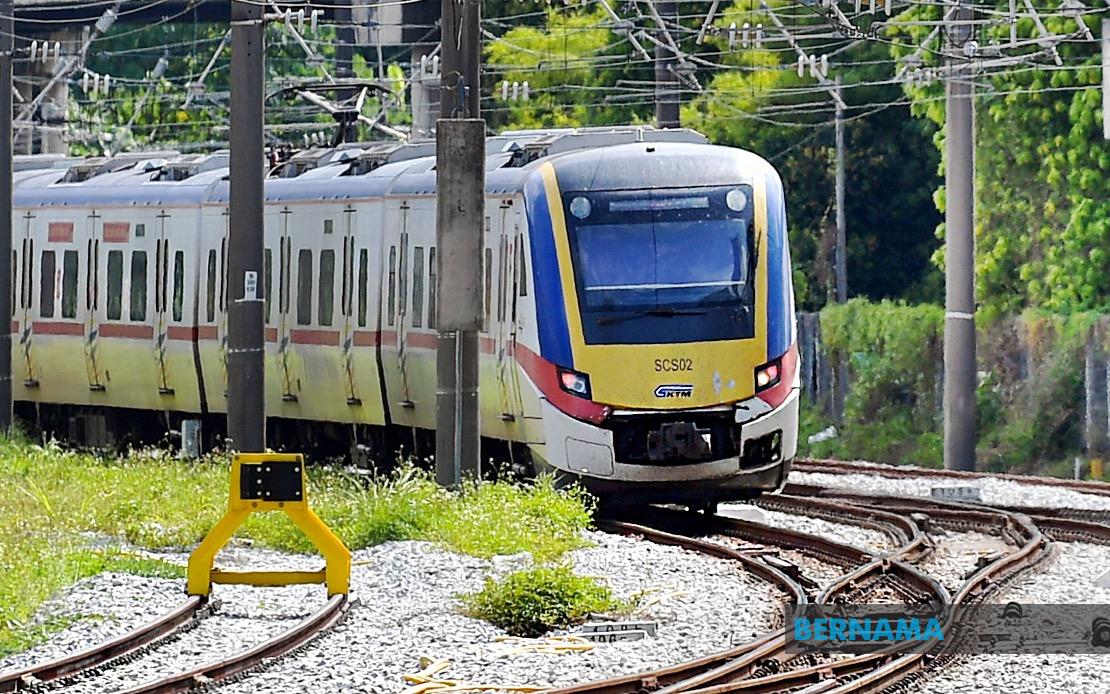
The Klang Valley rail network experienced significant operational disruption on July 23 when a wooden construction structure collapsed onto the railway line near Batang Benar, striking the overhead power system and bringing commuter and express train services to a halt. The incident, triggered by a third-party contractor engaged in Public Works Department-related activities, immediately forced Keretapi Tanah Melayu Berhad to implement emergency service restrictions and establish alternative transport arrangements to minimise passenger inconvenience.
The fallen structure impacted the overhead line system positioned between Batang Benar and Labu stations, severing electrical supply to that section of the network. This critical damage cascaded through KTM Komuter operations, necessitating the suspension of all services operating through the affected corridor. Passengers travelling from Pulau Sebang toward KL Sentral found their journeys terminated at Seremban Station, whilst commuters heading in the opposite direction faced departure restrictions from Bangi Station only. The complete shutdown between Bangi and Seremban eliminated an important transport artery that typically handles thousands of daily passengers across multiple suburban communities.
To manage the stranded passenger load, KTMB deployed three dedicated shuttle buses that circulated between Seremban, Tiroi, Batang Benar, Labu and Bangi stations, establishing a temporary land-based connection across the damaged railway section. For Electric Train Service passengers, the disruption proved equally severe, prompting the operator to position seven additional shuttle buses at major transport hubs including KL Sentral, Bandar Tasik Selatan, Kajang and Seremban. This dual-pronged substitution strategy reflected the scale of the operational crisis, with nearly ten vehicles mobilised to maintain transport connectivity for affected commuters during what became an extended service interruption.
KTMB's preliminary investigation revealed systemic safety procedure violations by the contractor undertaking the wayleave project for the Public Works Department. The contractor failed to furnish a comprehensive work schedule and critically neglected to communicate with KTMB regarding the actual timing of bridge construction activities scheduled for the incident date. These communication breakdowns proved catastrophic, as they prevented the railway operator from deploying mandatory oversight personnel to monitor potentially hazardous operations near critical railway infrastructure.
The contractual framework governing construction activities near railway assets stipulates that once full approval has been authorised and complete documentation submitted, three KTMB technical representatives must maintain on-site presence throughout works execution. These specialists—drawn from the Regional Engineer, Signalling and Communications, and Electrification departments—function as independent monitors ensuring contractor compliance with safety protocols. The contractor's failure to trigger this oversight mechanism revealed dangerous gaps in the Site Entry Permit Standard Operating Procedure implementation, exposing the railway network to preventable risks.
The incident raises fundamental questions regarding contractor accountability and government procurement oversight across Malaysia's critical infrastructure projects. Public Works Department contractors engaged in wayleave projects possess intimate access to sensitive railway environments yet appear to operate with insufficient supervision mechanisms. The absence of mandatory pre-work notification systems creates blind spots where high-risk activities proceed without appropriate railway operator coordination. For Malaysian commuters reliant on KTM services, such lapses represent more than operational inconvenience—they highlight vulnerabilities in systems designed to protect public safety.
KTMB emphasised that passenger security remains the operational priority whilst its technical teams mobilised to restore the damaged overhead power infrastructure. The operator offered ETS passengers who declined to continue their journeys from departure points full refund entitlements, acknowledging the legitimate frustration accompanying unexpected service terminations. This compensation gesture, whilst appropriate, underscores the genuine impact experienced by commuters whose travel plans encountered disruption through no fault of their own.
The extended suspension period between Bangi and Seremban extended across multiple train cycles, affecting commuters during morning rush periods and subsequent service windows as repair crews worked to assess and rectify overhead line damage. Restoration timelines remained uncertain pending technical evaluation, though KTMB committed to prioritising reconstruction efforts to minimise ongoing disruption. For Klang Valley residents depending on rail connectivity to access employment, education and essential services, each additional hour of suspension compounded economic and personal costs.
This incident illuminates broader infrastructure governance challenges confronting Malaysia's transport sector. Construction projects proximate to railway assets require more robust notification frameworks, enhanced coordination protocols and strengthened contractor accountability mechanisms. The current system's reliance upon contractors proactively complying with communication requirements has demonstrably failed, necessitating mandatory trigger-based notifications that automatically activate railway oversight without contractor discretion. Regulatory authorities must establish enforceable penalties for procedure violations, ensuring future contractors prioritise safety compliance over operational convenience.
The implications extend beyond immediate rail service recovery. Investment in Malaysian transportation infrastructure depends partly on public confidence that safety systems function reliably and that operational disruptions remain genuinely exceptional rather than routine consequences of inadequate oversight. The Batang Benar incident, whilst resolved through shuttle bus substitution, revealed that critical network segments remain vulnerable to preventable failures. Future incidents could prove more severe if falling objects damage not merely power lines but signalling systems or track infrastructure, potentially creating genuine safety hazards rather than service inconveniences.
Passengers seeking real-time service updates were directed toward KTMB's official social media platforms and station staff, reflecting the operator's pivot toward digital communication channels during emergencies. This communication strategy acknowledges that stranded commuters need immediate, accurate information to arrange alternative travel arrangements. However, the reactive nature of such updates underscores that prevention remains superior to response—strengthened contractor oversight would prevent incidents rather than managing their consequences.
Moving forward, both KTMB and the Public Works Department face obligations to strengthen their collaborative safety frameworks. Mandatory contractor briefings should precede any construction activities within prescribed distances of railway infrastructure. Real-time tracking systems should monitor construction schedules, triggering automatic KTMB notifications when activities commence. Regulatory bodies should conduct comprehensive audits of all active wayleave projects, ensuring existing contractors comply with established protocols. Only through such systematic improvements can Malaysian rail operators prevent similar incidents and restore passenger confidence in transport service reliability.
The Batang Benar incident ultimately represents a preventable crisis—not an inevitable consequence of infrastructure development but rather a failure of institutional coordination and contractor accountability. Addressing these systemic weaknesses will require genuine commitment from all agencies involved in Malaysia's critical infrastructure stewardship, ensuring that future construction activities proceed without jeopardising the public transport networks upon which millions depend.

