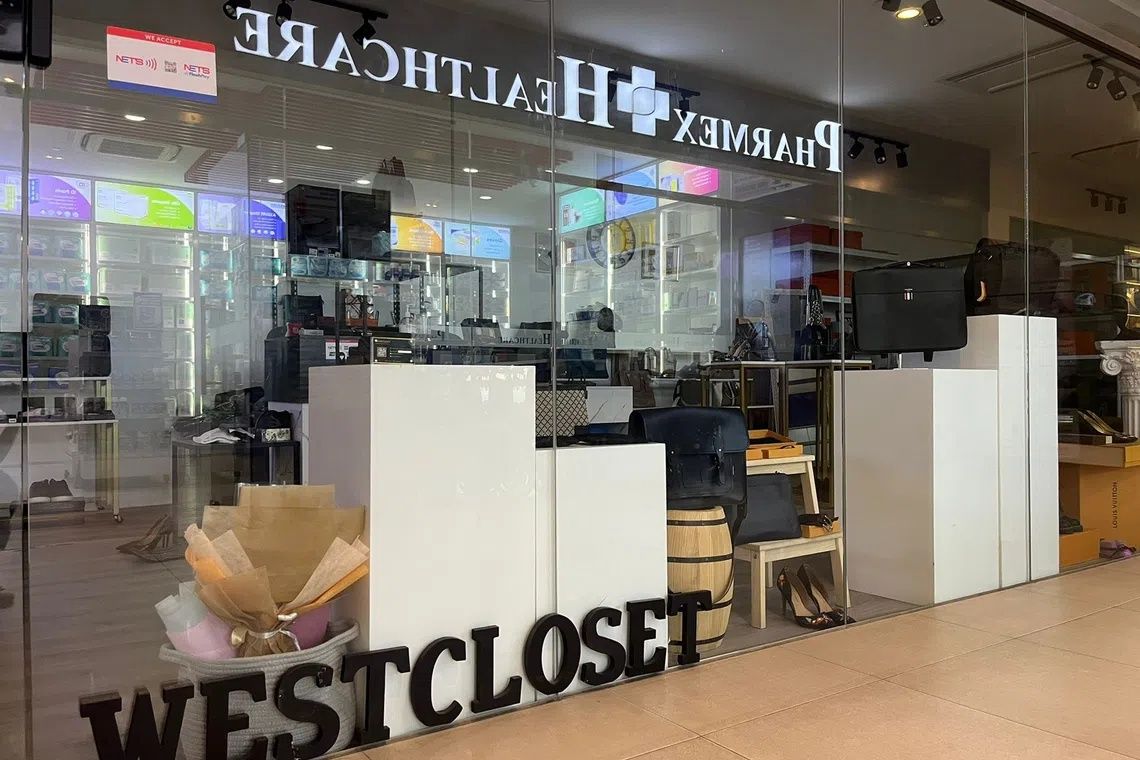
An Indonesian businesswoman operating a luxury consignment outlet at a prominent Singapore shopping mall has been convicted and imprisoned for systematically embezzling funds from customers who left designer handbags with her for resale. Ringga Dwi Rizky Irianto, 36, who ran West Closet at the OUE Downtown Gallery, was sentenced to eight months' jail on Thursday, August 13, after pleading guilty to misappropriating nearly S$140,000 from five separate victims. The court proceedings highlight vulnerabilities in the secondhand luxury goods market, where trust between sellers and intermediaries remains largely unregulated across Southeast Asia.
The West Closet business model operated straightforwardly: customers would deposit designer bags with the store for a 60-day consignment period, after which they faced a S$60 penalty fee if items remained unsold. The store would then market these items through Carousell, Instagram, and other social platforms, taking a commission ranging from S$200 to S$900 on each successful sale. Victims were provided written guarantees that upon sale, their proceeds would be transferred to their bank accounts within seven days. For customers accustomed to dealing with legitimate resale platforms, these terms appeared standard and professionally managed. However, Ringga exploited this framework of trust to redirect customer funds for purposes entirely divorced from their original sellers' interests.
The prosecutorial evidence revealed a calculated pattern of theft spanning multiple transactions. In July 2022, one victim consigned two Hermès bags and one Chanel bag with guaranteed proceeds of S$51,000. When Ringga successfully sold these items and generated the promised S$51,000, she simply redirected the funds to settle another customer's pending order rather than fulfilling her contractual obligation. This diversion technique—using incoming revenue from one seller to cover commitments to another—is a classic hallmark of fraudulent consignment operations. A second victim lost S$33,500 when their Hermès bag sold, while a third victim was similarly deprived of S$23,500 from another Hermès sale. In total, Ringga pleaded guilty to three counts of criminal breach of trust involving S$108,000, with two additional charges relating to the remaining victims being considered during sentencing deliberations.
Ringga has already made partial restitution of S$41,000 to her victims, and the court has ordered her to pay an additional S$91,950 in compensation administered through an investigation officer. Should she default on this compensation order, she faces an extra 24 days of imprisonment, effectively extending her sentence. The bail was set at S$15,000, with her jail term expected to commence in October. Under Singapore law, criminal breach of trust carries penalties reaching seven years' imprisonment, substantial fines, or both, though Ringga's sentence reflects the court's consideration of her partial repayment efforts and guilty plea.
The case exposes significant operational gaps in the burgeoning secondhand luxury market, particularly regarding how consignment stores manage client funds. Many such businesses operate with minimal regulatory oversight, relying instead on reputation and repeat custom to maintain legitimacy. The involvement of social media platforms like Instagram and Carousell—which facilitate direct consumer-to-business transactions without institutional gatekeeping—further complicates accountability structures. For Malaysian consumers exploring similar consignment services in Kuala Lumpur and other cities, this Singapore prosecution underscores the necessity of comprehensive due diligence before entrusting valuable items to intermediaries.
The timeline of Ringga's detection and prosecution also raises questions about enforcement responsiveness. She was arrested in September 2022, more than a year after the initial misappropriations, yet formal charges were not filed until 2024. This lag suggests that victims may have waited extended periods before reporting discrepancies, or that investigative resources were stretched thin. For the broader Southeast Asian region, where consignment and resale platforms are proliferating rapidly amid growing interest in sustainability and affordable luxury, such delays can enable perpetrators to expand their victim pool significantly. The luxury goods market's informality creates particular vulnerability for individual sellers who lack institutional recourse mechanisms.
The Ringga Irianto case carries specific relevance for Malaysia's emerging secondhand luxury market. Platforms facilitating designer bag resales have gained traction in Klang Valley and Penang, yet many operate without formal legal registration or insurance protections covering client assets. The absence of industry standards or third-party verification systems leaves sellers entirely dependent on the operator's integrity. Malaysia's Consumer Protection Act provides certain safeguards, but consignment arrangements often exist in legal grey zones where responsibilities are ambiguous and enforcement slow. Malaysian authorities reviewing this Singapore judgment would be prudent to consider whether regulatory frameworks require strengthening to protect participants in the secondhand luxury trade.
Beyond the immediate financial losses, the West Closet scandal damages consumer confidence in consignment-based business models across the region. Luxury goods sellers now face heightened anxiety about entrusting expensive items to intermediaries, potentially slowing the adoption of resale channels that otherwise support sustainability objectives. This chilling effect may benefit established platforms with institutional credibility and corporate backing, effectively consolidating market share among larger players while discouraging smaller, independent operators from entering the space. The regulatory consequences thus shape market structure in ways that transcend the individual defendant's culpability.
The sentencing also reflects judicial acknowledgement of the psychological harm inflicted upon victims who believed they were conducting legitimate transactions. Unlike fraud perpetrated through deceptive advertising or false promises, consignment theft involves the betrayal of direct personal relationships built on explicit contractual terms. Victims here were not misled through misrepresentation but rather robbed of agreed-upon compensation after fulfilling their side of the arrangement. This distinction may explain the judge's decision to impose a custodial sentence despite Ringga's partial restitution—a signal that Singapore courts take seriously the trust violations embedded in consignment fraud.
Moving forward, consumers and authorities across Southeast Asia should recognise that consignment store operations warrant closer scrutiny through enhanced transparency requirements. Options might include mandatory segregation of client funds into trust accounts, regular third-party audits, and bonded insurance covering customer assets. Platforms like Carousell and Instagram, while valuable for reaching buyers, should be expected to implement due diligence protocols for merchants handling high-value goods. The Ringga Irianto judgment serves as a cautionary precedent, demonstrating that the luxury resale market's rapid growth has outpaced appropriate institutional safeguards, leaving ordinary sellers vulnerable to systematic exploitation by unscrupulous operators.

