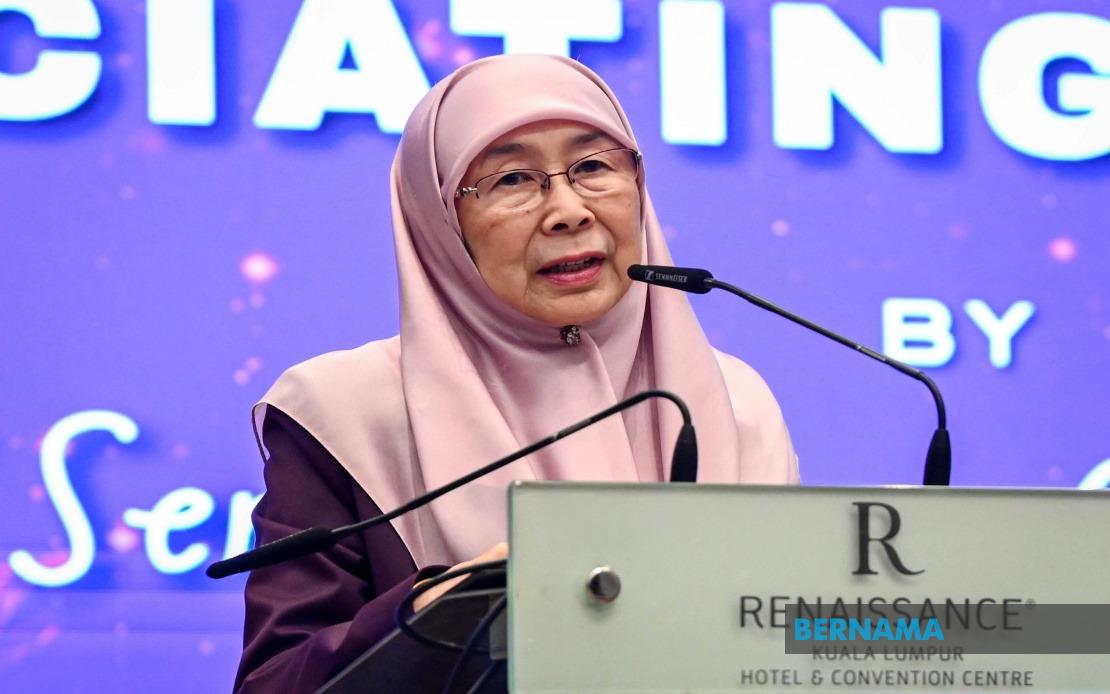
Datuk Seri Dr Wan Azizah Wan Ismail has underscored a fundamental principle in modern healthcare delivery: that technological advancement and procedural excellence must never come at the expense of human dignity and emotional support. Speaking at the launch of the 16th Malaysian Obstetric Anaesthesiology Symposium (MyOASym) 2026 in Kuala Lumpur, the Prime Minister's wife articulated a vision of maternal healthcare that integrates cutting-edge medical innovation with the compassionate, personalised attention that expectant mothers and their families deserve during one of life's most transformative periods.
Wan Azizah's remarks represent a timely reminder within the Malaysian healthcare sector that clinical metrics alone provide an incomplete picture of care quality. While reducing maternal mortality rates and improving birth outcomes remain essential objectives, she contended that the measure of healthcare excellence must encompass broader dimensions of patient experience. The dignity and respect accorded to mothers throughout pregnancy, labour and the immediate postpartum period—alongside the emotional scaffolding provided to families navigating uncertainty and vulnerability—constitute integral components of genuine healthcare excellence. This holistic framing challenges healthcare systems to evaluate success not merely through quantifiable clinical indicators but through the qualitative lived experiences of those receiving care.
The complexity facing maternal healthcare providers in contemporary Malaysia has intensified considerably. Advanced maternal age, escalating obesity rates, intricate cardiac conditions, and life-threatening complications such as obstetric haemorrhage represent an expanding constellation of clinical challenges that demand increasingly sophisticated medical knowledge and coordinated interventions. These complications disproportionately affect vulnerable populations and those with limited access to specialist care, underscoring why the integration of human-centred approaches with technological capability becomes particularly critical for ensuring equitable outcomes across Malaysia's diverse healthcare landscape.
Addressing these multifaceted challenges necessitates fundamental restructuring of how healthcare professionals train and collaborate. Wan Azizah advocated for institutionalising regular multidisciplinary simulation training programmes that bring anaesthesiologists, obstetricians, and neonatologists together in controlled settings to rehearse complex scenarios and refine their coordinated responses. Such simulation-based learning strengthens team cohesion, clarifies role delineation, and builds the muscle memory necessary for executing seamless interventions when high-stakes situations materialise in clinical settings. The emphasis on breaking down professional silos reflects recognition that maternal emergencies rarely respect traditional departmental boundaries; instead, they demand rapid, orchestrated responses from multiple specialists working in synchrony.
Beyond technical training, Wan Azizah highlighted the necessity of cultivating organisational cultures that prioritise transparent communication and early warning systems. When healthcare teams establish clear protocols for flagging deteriorating maternal conditions and create psychologically safe environments where junior staff feel empowered to voice concerns, critical complications can be identified and managed before they cascade into irreversible crises. This preventive approach transforms potential disasters into narratives of successful intervention and survival, ultimately reducing maternal morbidity and mortality while simultaneously demonstrating to patients that their safety is the paramount consideration guiding all clinical decisions.
The call for younger healthcare professionals to cultivate both technical excellence and emotional intelligence represents another crucial dimension of the vision articulated at MyOASym 2026. Aspiring doctors and nurses should view curiosity and lifelong learning not as optional enhancements but as non-negotiable professional commitments. Simultaneously, they must consciously develop empathy and the capacity to view patients not as clinical cases but as individuals navigating intensely personal experiences. Mentorship relationships become vehicles through which seasoned practitioners transmit not just procedural knowledge but also the wisdom of understanding when to push the boundaries of medical intervention and when to simply sit with patients in their fear or grief. The implicit message is that technical competence and moral compass must evolve in tandem.
The international participation in MyOASym 2026, drawing delegates from Singapore, Hong Kong, Pakistan, and across Malaysia, testifies to the region's commitment to elevating maternal healthcare standards through collaborative knowledge exchange. Such symposia create opportunities for practitioners to share evidence-based innovations, learn from institutional experiences across different healthcare systems, and build professional networks that facilitate ongoing peer consultation and skill development. For Malaysia specifically, engagement with international colleagues provides windows into how other nations have navigated challenges of resource allocation, training capacity, and quality assurance in maternal health services, potentially informing domestic policy refinements.
The Malaysian healthcare system faces distinctive pressures as it grapples with competing demands on finite resources, rising patient expectations, and the imperative to maintain equitable access across urban and rural settings. Wan Azizah's emphasis on compassion-guided innovation offers a navigational framework that refuses false choices between technological advancement and humanistic care. Rather, it positions these as mutually reinforcing commitments. Advanced monitoring systems, for instance, enable clinicians to identify maternal complications earlier whilst simultaneously freeing them from constant bedside worry, thereby allowing more genuine human connection with vulnerable patients. Similarly, simulation training enhances technical competence whilst also building team relationships that improve communication quality during actual clinical emergencies.
Moving forward, the challenge for Malaysian maternal healthcare stakeholders involves operationalising these principles at scale. This requires investment in training infrastructure, creation of career pathways that reward both clinical innovation and excellence in patient communication, and institutional leadership that explicitly values compassionate care as a core performance metric. Healthcare facilities should measure success not only through survival statistics but also through maternal satisfaction surveys, breastfeeding initiation rates, postpartum mental health outcomes, and family-reported experiences of feeling heard and supported throughout the maternal journey. Such comprehensive evaluation frameworks acknowledge that mothers themselves are the ultimate judges of whether healthcare systems have truly prioritised their wellbeing and dignity.

