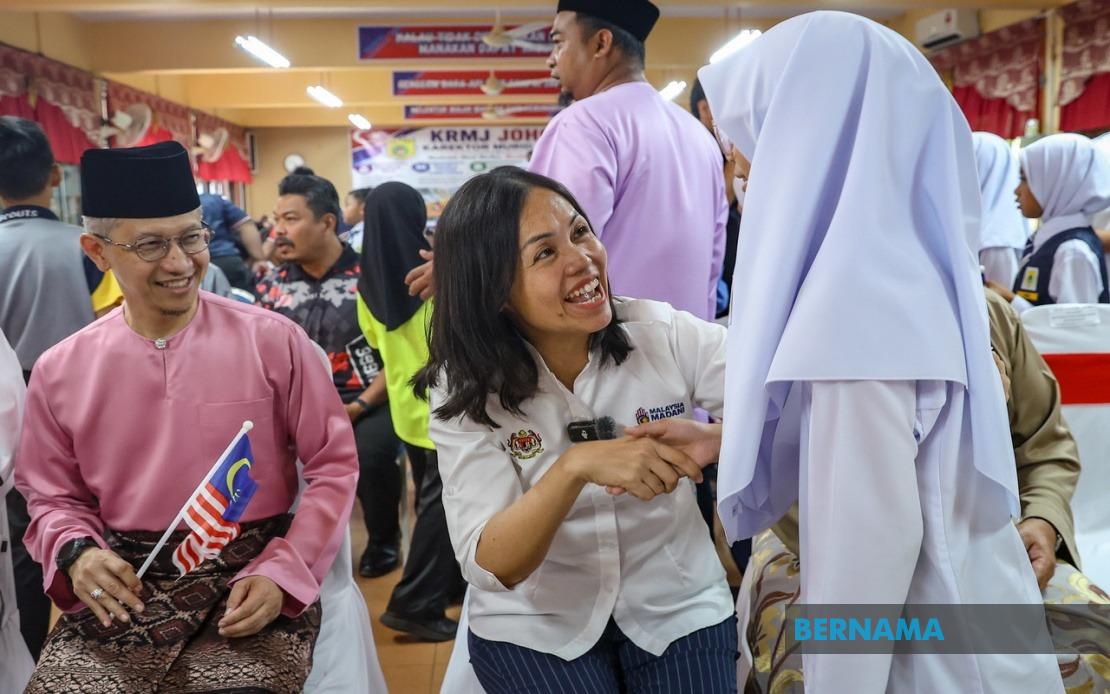
Deputy Minister of Communications Teo Nie Ching has signalled that strengthening Malaysia's film industry ranks prominently among the ministry's budgetary priorities for 2027, though specific financial allocations remain under negotiation with the Ministry of Finance. Speaking after a temple inspection in Kulai, Teo indicated that while formal budget discussions have yet to occur, preliminary conversations with finance officials have already explored mechanisms to inject greater resources into the creative sector. The timing reflects growing recognition within government circles that the film industry represents a significant economic opportunity for the nation.
The formal announcement of Budget 2027 commitments relating to the Communications Ministry must await an official gathering with the Ministry of Finance scheduled within the coming week. Nevertheless, Teo's disclosure of preliminary consultations suggests that internal advocacy for film sector support has already gained traction at ministerial level. These early discussions represent an important signalling moment, indicating that the case for increased film industry investment has moved beyond isolated departmental interest to occupy space in higher-level budgetary planning conversations.
The thrust of the Communications Ministry's approach centres on deploying targeted policy interventions rather than pursuing ad-hoc subsidy arrangements. Teo articulated this distinction by emphasising the ministry's commitment to developing comprehensive frameworks that would enable the industry ecosystem to mature and achieve sustainable growth trajectories. This policy-first orientation suggests the government views the film sector not simply as a cultural endeavour requiring protection, but as an economic actor requiring structural support to compete regionally and globally.
The connection between film industry development and Malaysia's broader orange economy strategy underpins this budgetary positioning. The orange economy encompasses creative and cultural industries recognised as drivers of employment, innovation, and value creation in modern economies. By linking film support to this wider framework, the Communications Ministry situates cinema within a constellation of creative enterprises including music, design, digital media, and heritage sectors. This holistic approach signals intention to create synergies across creative disciplines rather than isolating film as a standalone concern.
Gross domestic product contribution provides the economic rationale shaping the ministry's advocacy. Malaysian policymakers increasingly view creative industries as mechanisms for diversifying economic output beyond traditional resource extraction and manufacturing. The film sector's capacity to generate revenue through direct production, ancillary services, tourism linkages, and international licensing creates multiple multiplier effects throughout the economy. By securing Budget 2027 allocations, the Communications Ministry seeks to amplify these contributions through targeted interventions.
The discretionary nature of budgetary outcomes introduces uncertainty into sector planning. Teo's acknowledgment that allocation levels remain subject to overall government financial capacity reflects fiscal realities confronting Malaysian policymakers. Economic conditions, competing departmental priorities, and revenue projections all influence final budget allocations. However, her emphasis on policy-driven rather than purely financial solutions suggests the ministry recognises potential to achieve substantive outcomes within whatever budgetary envelope ultimately materialises.
Regional context adds dimension to these domestic initiatives. Southeast Asian neighbours including Thailand, Vietnam, and Indonesia have pursued aggressive strategies to position their film industries as regional content hubs, attracting international investment and production activity. Malaysia's budgetary prioritisation of cinema support reflects governmental awareness that without active measures, the nation risks ceding ground to competitors pursuing similar strategies with greater intensity. Film infrastructure development, tax incentives for production, and human capital investment all feature within this competitive landscape.
The ministry's willingness to advance film industry support amidst Budget 2027 negotiations also reflects evolving political economy calculations regarding creative sector constituencies. Malaysian filmmakers, production companies, technical crews, and related service providers form increasingly organised advocacy groups capable of articulating sectoral interests effectively. Political responsiveness to these constituencies demonstrates recognition that creative economy stakeholders merit consideration equivalent to traditional economic sectors.
International competitiveness concerns shape backdrop considerations influencing budgetary decisions. Malaysian productions increasingly compete for audience attention against content originating from other Asian markets characterised by higher production values and greater investment resources. Without deliberate budgetary support mechanisms, domestic filmmakers face structural disadvantages in competing against better-resourced regional counterparts. Budget 2027 allocations potentially address these competitive asymmetries through targeted support enabling Malaysian producers to maintain quality standards and international marketability.
The timing of budgetary negotiations also carries significance within electoral cycles and governance priorities. Communications Ministry advocacy for film sector support during Budget 2027 formulation reflects departmental strategy to position cinema as essential development priority worthy of resource commitment. This advocacy occurs within broader governmental evaluation of how creative industries contribute to Malaysia's national development objectives encompassing economic growth, employment generation, and cultural soft power enhancement.
Implementation mechanisms will prove equally important as allocation amounts. The Communications Ministry's emphasis on policy frameworks suggests future budget discussions may encompass not simply financial commitments but regulatory reforms, tax structures, and institutional arrangements facilitating industry development. These structural dimensions potentially create more durable advantages than temporary funding injections, enabling sustainable sectoral growth extending beyond single budget cycles.
Stakeholder engagement appears central to the Communications Ministry's approach moving forward. Consultation with film industry representatives regarding their budgetary priorities and structural requirements will likely inform formal Finance Ministry discussions. This consultative process represents opportunity for Malaysian filmmakers and production entities to articulate specific support mechanisms addressing sector-specific challenges constraining growth and international competitiveness.
Ultimately, Budget 2027 deliberations surrounding film industry support reflect Malaysian government's gradual recalibration of economic priorities toward creative sector development. Whether forthcoming budget allocations fully match sectoral aspirations remains uncertain pending formal Finance Ministry engagement. Nevertheless, Teo's public acknowledgment of film industry support as ministerial priority signals governmental recognition that cinema development merits serious consideration within national budgetary frameworks.

