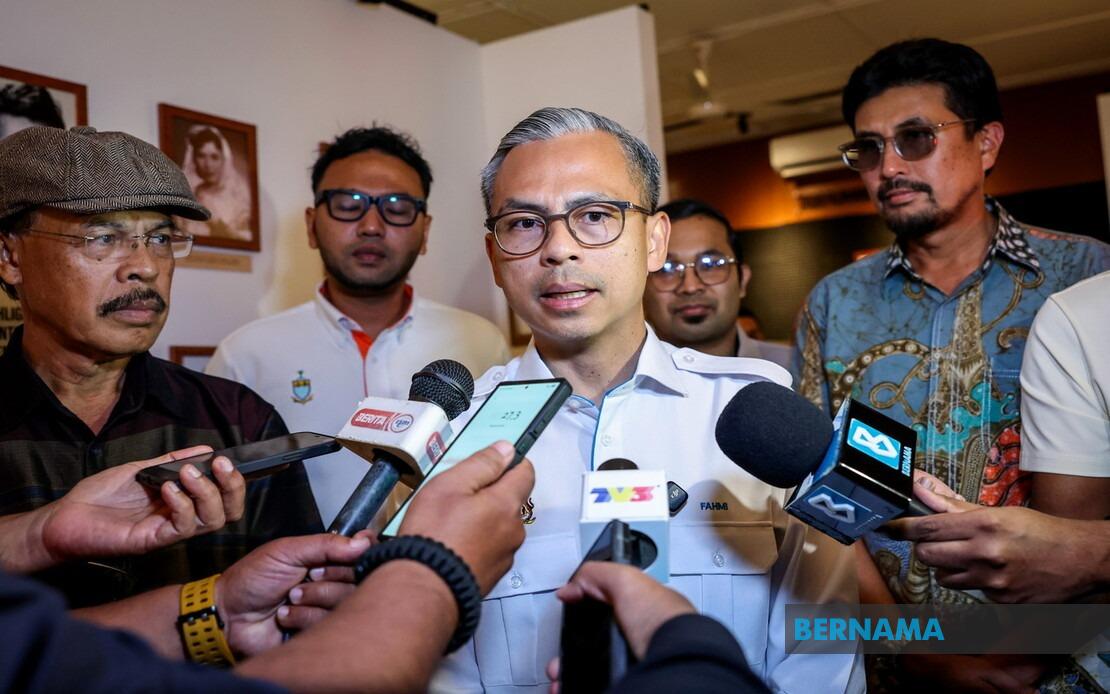
Communications Minister Datuk Seri Fahmi Fadzil has issued a stark warning to voters in Negeri Sembilan about the dangers of accepting unverified information circulating on social media during the state election campaign. Speaking after visiting the Nordin Ahmad Karyawan Gallery at Sekolah Kebangsaan Permatang Pasir in Permatang Pauh, Fahmi emphasised the critical importance of cross-referencing online content with established mainstream media sources before sharing or acting upon such claims.
The appeal comes at a time when the digital information landscape has become increasingly fragmented, with voters receiving news through multiple channels simultaneously. Fahmi highlighted a particularly troubling pattern: the recycling of outdated content repackaged as current developments, combined with outright false statements designed to manipulate public opinion. This phenomenon has grown more sophisticated, making it harder for ordinary citizens to distinguish between legitimate reporting and carefully crafted misinformation.
A key vulnerability that Fahmi identified involves messaging platforms such as WhatsApp, where information spreads rapidly without editorial gatekeeping. Unlike social media platforms where some fact-checking mechanisms exist, encrypted messaging applications allow false information to propagate through trusted personal networks, lending it an unwarranted air of authenticity. This creates a particular challenge for election integrity, as voters may base crucial political decisions on unverified claims shared by friends and family members.
The Malaysian Communications and Multimedia Commission (MCMC) has already recorded 16 complaints related to fake news and internet connectivity problems since the Negeri Sembilan campaign commenced. While this number may seem modest, it likely represents only a fraction of misinformation actually circulating, as many voters either do not report false claims or lack awareness of reporting mechanisms. The true scope of the problem remains difficult to quantify, but the trajectory is clearly upward as digital literacy gaps persist across demographic groups.
Fahmi's appeal extends beyond individual voters to encompass the broader media ecosystem. He called upon news organisations to adopt more proactive stances in identifying viral content, fact-checking claims circulating on social platforms, and publishing clarifications before misinformation becomes entrenched in public consciousness. This represents a significant responsibility, as mainstream media outlets must balance rapid response times with journalistic accuracy and verification standards.
For Malaysian readers, the implications extend beyond this particular state election. The problem of election-related misinformation has become endemic across Southeast Asia, affecting political processes in Thailand, Indonesia, the Philippines, and elsewhere. The techniques used to spread false information are constantly evolving, and the window for corrective action narrows as each election cycle passes. Negeri Sembilan's experience serves as a cautionary indicator for other states and the federal government regarding the infrastructure needed to combat coordinated disinformation campaigns.
The challenge also reflects broader structural issues within Malaysia's information ecosystem. While internet penetration remains high, media literacy education has not kept pace with technological change. Many voters, particularly older demographics, lack the critical frameworks to assess source credibility or recognise manipulation techniques. Educational initiatives targeting these groups have been insufficient, leaving significant portions of the electorate vulnerable to exploitation.
The timing of Fahmi's intervention suggests growing concern within government about the potential scale of misinformation during electoral periods. As digital platforms have become primary news sources for younger voters, and personal messaging apps dominate information sharing among all age groups, traditional approaches to election monitoring and regulation have become inadequate. The MCMC's 16 reported cases likely underestimate the actual volume of problematic content, revealing gaps in both public awareness and institutional capacity to respond.
For political campaigns, the absence of clear, trustworthy information channels creates perverse incentives. Candidates who struggle to gain media coverage may be tempted to resort to spreading misinformation through private channels, knowing it faces minimal accountability. Similarly, opposition campaigns may deploy false information to damage rivals, calculating that corrections arrive too late to matter. The resulting erosion of shared factual reality undermines democratic deliberation by making consensus-building around common truths impossible.
The minister's suggestion that voters should treat information not covered by mainstream media with suspicion reflects a pragmatic approach to an intractable problem. Yet this recommendation also highlights a concerning reality: in an ideal information environment, citizens should be able to verify claims through multiple independent sources rather than relying on a single category of institution. The fact that mainstream media has become the default arbiter of truth suggests concerning concentration of gatekeeping power, though this remains preferable to the alternative of unfiltered information chaos.
Moving forward, Fahmi's warning should prompt both voters and institutions to consider structural reforms. Media literacy programmes need significant investment, digital literacy training should become standard in schools, and technology platforms must face regulatory pressure to remove false content more aggressively. Additionally, fact-checking initiatives specifically designed for Southeast Asian contexts could help voters navigate the uniquely complex information ecosystem that characterises Malaysian elections, where multiple languages, cultural contexts, and political divisions intersect with digital technology.

