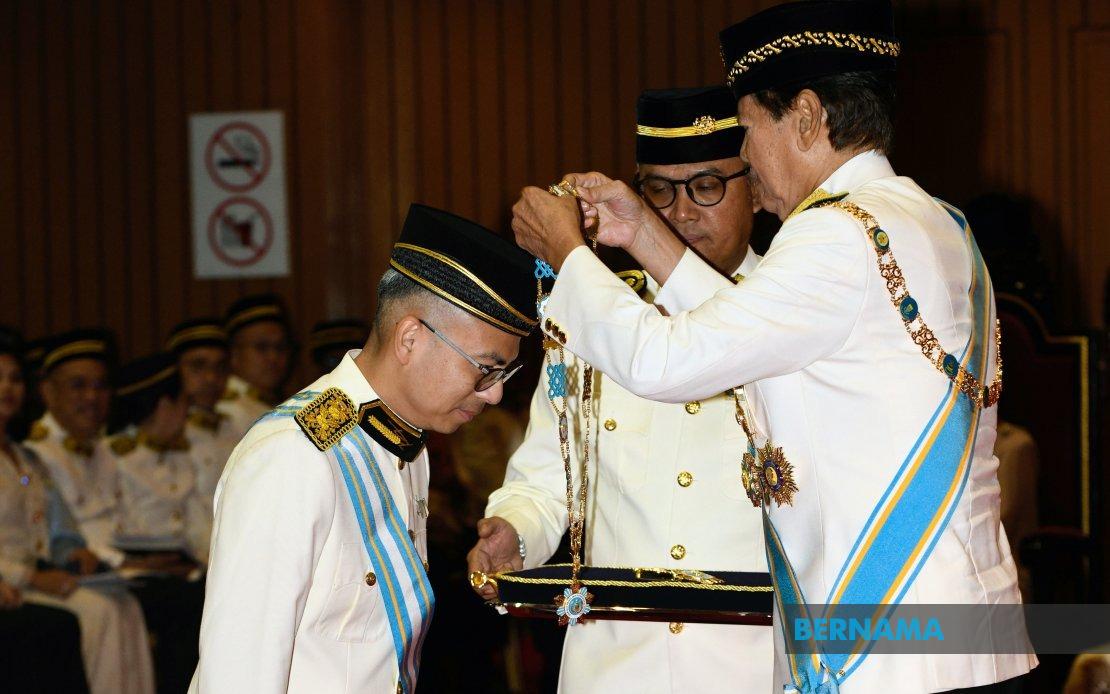
Communications Minister Datuk Fahmi Fadzil has received the Darjah Panglima Pangkuan Negeri (DPPN) award, which confers the Datuk Seri title, during the investiture ceremony marking the 85th birthday celebration of Penang Governor Tun Ramli Ngah Talib. The honour recognises Fahmi's contributions to the nation and the state, establishing him as a prominent figure within the MADANI Government's leadership structure alongside his role as the administration's official spokesperson.
Fahmi stands alone as the sole recipient of the DPPN award this year, a distinction that underscores the prestige of this particular honour. His appointment tops a significant list of 230 individuals receiving recognition through the 2026 Investiture Ceremony for Penang State Orders, Decorations and Medals, which commenced at Dewan Sri Pinang in George Town. The ceremony, which continues over four days through July 15, represents one of Malaysia's important occasions for recognising service and contributions to the state.
Beyond Fahmi's singular honour, the investiture has distributed several tiers of recognition reflecting the breadth of service recognised within Penang. A total of nineteen recipients have been conferred the Darjah Gemilang Pangkuan Negeri (DGPN), which similarly carries the Datuk Seri title. Among this cohort are prominent figures including Datuk Abdul Halim Mohammad, who chairs MARA Incorporated Sdn Bhd, and Datuk Loo Lee Lian, chief executive of Invest Penang. These appointments reflect acknowledgment of both public sector and state development agency leadership.
The honours structure continues with the Darjah Yang Mulia Pangkuan Negeri (DMPN), conferring the Datuk title, with nine recipients recognised in this category. Former Penang police chief Datuk Azizee Ismail received this honour, reflecting the state's recognition of contributions from law enforcement personnel who have served the community. The presence of security sector representatives among honourees demonstrates the comprehensive nature of recognition extended across various professional domains.
A substantially larger cohort—seventy-two individuals—have been conferred the Darjah Setia Pangkuan Negeri (DSPN), also carrying the Datuk title. This category encompasses a diverse range of accomplished individuals. Notable recipients include the late Nordin Ahmad, a respected filmmaker, director and scriptwriter associated with Cathay-Keris Film Productions, who receives posthumous recognition for his cultural contributions. Meor Ismail Meor Akim, the National Disaster Management Agency director-general, joins this honour roll, reflecting recognition of those managing critical national infrastructure. Datuk Mohd Irwan Mohd Mubarak, chairman of Bank Rakyat, represents the financial services sector among the honourees.
The scope of the investiture ceremony extends considerably beyond these state order recipients. Across the four-day proceedings, a total of one hundred and one individuals will receive state honours through various categories, while an additional one thousand one hundred and twenty recipients will be awarded medals and honorary decorations. This comprehensive recognition programme demonstrates Penang's commitment to honouring contributions across multiple spheres of society, from commerce and culture to public administration and defence.
The ceremony itself opened with the formal arrival of Tun Ramli and his wife, Toh Puan Raja Noora Ashikin Raja Abdullah, at eight forty-five in the morning. Their presence affirms the ceremonial significance and state-level importance accorded to these proceedings. As both the occasion for marking the governor's milestone birthday and the formal investiture of state honours, the event carries symbolic weight within Penang's governance calendar and broader Malaysian civic traditions.
For Malaysian readers and observers of political developments, Fahmi's singular selection for the DPPN award carries implications for understanding the MADANI Government's recognition of ministerial performance and political leadership. As spokesperson for the administration, Fahmi has maintained a visible public profile articulating government policy and direction. His appointment at the pinnacle of Penang's state honour categories this year may reflect appreciation within the state administration for his political acumen and communication effectiveness during a period when government messaging has been central to maintaining public confidence and policy coherence.
The timing of these honours, coinciding with a senior state official's birthday milestone, illustrates how Malaysian states utilise ceremonial occasions to recognise service and reinforce institutional bonds. For Penang particularly, as one of Malaysia's economically significant states and a political bellwether, the composition of recipients and their professional backgrounds offer insight into which sectors the state prioritises for recognition. The prominence given to development agency leadership, financial services, and cultural figures suggests state priorities encompassing economic competitiveness, financial inclusion, and cultural preservation.
Looking at the regional significance, such state honours ceremonies reflect broader patterns within Malaysian governance where formal recognition systems help bind elite networks and reinforce institutional hierarchies. The conferment of titles like Datuk and Datuk Seri carries social currency extending beyond ceremonial value, influencing business relationships, professional standing, and political influence. For recipients, particularly those in the private sector or professional fields, the honours validate contributions that may have operated outside formal political structures while advancing state interests.
The substantial number of recipients across categories—over thirteen hundred individuals receiving various forms of recognition—demonstrates how Malaysian states employ honours systems as mechanisms for institutional acknowledgment and social cohesion. Rather than concentrating honours narrowly, Penang's inclusive approach to recognition distributes esteem across numerous contributors, potentially strengthening civic participation and institutional loyalty across diverse professional communities. This breadth of recognition, managed through differentiated honour categories, allows simultaneous celebration of exceptional contributions whilst acknowledging broader participation in state development.

