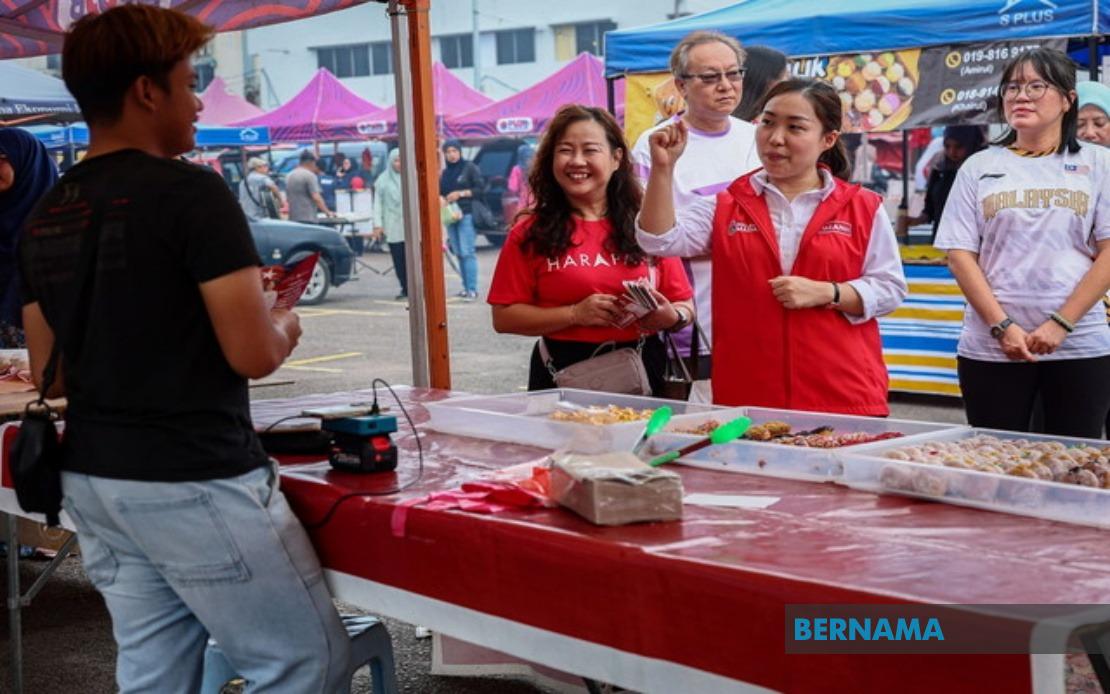
Young lawyer Chu Poh Yee is running as the Pakatan Harapan candidate for the Mengkibol state seat in the Johor state election scheduled for July 11, pitching voters on a comprehensive three-part platform that addresses immediate infrastructure needs, economic diversification, and family-oriented social policies. Her campaign reflects growing recognition among opposition parties that state-level races increasingly hinge on bread-and-butter issues rather than national political narratives, a shift particularly evident in Johor's competitive electoral landscape where 14 of the 56 contests are straight fights between two major coalitions.
At the heart of Chu's pitch lies a commitment to transform Mengkibol's physical infrastructure, with particular emphasis on road network improvements. This resonates with constituencies across Malaysia where ageing or inadequate transport links remain sources of genuine frustration for residents and businesses alike. Rural and semi-urban districts like Mengkibol often fall behind in maintenance schedules compared to metropolitan centres, creating bottlenecks that affect productivity and quality of life. Chu's focus on this foundational issue acknowledges that without functional infrastructure, subsequent economic development becomes difficult to achieve.
Beyond roads, Chu is promoting urban agriculture initiatives and community farming projects as mechanisms to both improve local food security and create employment pathways. This approach gains relevance amid Malaysia's ongoing urbanisation and growing consumer interest in locally-sourced produce. Small-scale farming enterprises can provide supplementary income for lower-income households while reducing dependence on imported vegetables, addressing two policy objectives simultaneously. Such initiatives have shown varying degrees of success elsewhere in Malaysia, and Chu's emphasis suggests she recognises the dual appeal of environmental sustainability and economic inclusion among Mengkibol voters.
The economic component of Chu's agenda concentrates on unlocking latent potential within Kluang's existing commercial ecosystem rather than proposing wholesale industrial overhaul. She identifies the Kluang Rail Festival as evidence of the district's capacity to generate community benefits through creative tourism experiences, a pragmatic observation that acknowledges what local stakeholders have already demonstrated they can accomplish. Building on such successes by creating more entrepreneurship platforms and formal employment opportunities directly addresses youth migration, a persistent challenge across smaller Malaysian cities where young people depart for metropolitan job markets and rarely return.
Chu's emphasis on female workforce participation and work-life balance merits particular attention as it reflects evolving policy conversations in Malaysian politics. Her proposal to establish well-equipped childcare centres targets a specific constraint on women's economic participation—the high cost and limited availability of reliable child supervision. This policy focus appeals not only to working mothers but also to households with dual incomes reliant on formal childcare arrangements. By framing this as an enabler of economic participation rather than purely a social welfare measure, Chu positions it within a growth narrative rather than a redistributive one, potentially broadening its appeal across the political spectrum.
The campaign itself has encountered obstacles, including vandalism of party materials, incidents Chu characterises as provocations. Such disruptions have become increasingly common features of Malaysian electoral contests, particularly in competitive districts where margins are expected to be narrow. Her public response emphasising team resilience attempts to convert campaign adversity into narrative capital, portraying her candidacy as determined and principled rather than rattled by opposition tactics. This rhetorical positioning matters in close races where undecided voters may interpret how candidates handle conflict as a proxy for how they would handle governance challenges.
Mengkibol represents one of the 172 candidacies competing across 56 Johor state seats, with Chu directly competing against Barisan Nasional's Yap Zhi Peng in what is classified as a straight fight. The binary nature of this contest simplifies voter choice and typically produces higher turnout than multi-candidate scenarios. Early voting commences July 7, providing an important data point for campaign teams assessing momentum and volunteer mobilisation effectiveness. In Malaysian electoral contexts, early voting patterns often correlate with final results, offering campaigns real-time feedback on their ground operations.
The Johor state election itself occurs against the backdrop of national political realignment. The state has historically been a BN stronghold, yet recent electoral cycles have demonstrated growing PH competitiveness, particularly in urban and semi-urban constituencies. Mengkibol's composition and voting history would determine whether Chu's agenda aligns with constituent priorities or whether incumbent preferences favour continuity under Barisan leadership. Without detailed demographic and historical voting data, her campaign's ultimate success remains contingent on both the quality of local ground organisation and broader state-level electoral trends that transcend individual candidate platforms.
Chu's candidacy exemplifies how contemporary Malaysian political competition increasingly focuses on deliverable, tangible policy commitments rather than ideological appeals. Infrastructure, jobs, and family support constitute pragmatic governance promises that voters across party lines find relevant. Whether such commitments become reality following election victory depends on state budget allocations, inter-agency coordination, and the degree of influence wielded by individual state assemblymen within their respective state governments. For voters in Mengkibol, this election represents an opportunity to assess not merely Chu's policy intentions but also her demonstrated capacity to translate campaign pledges into constituency benefits.

