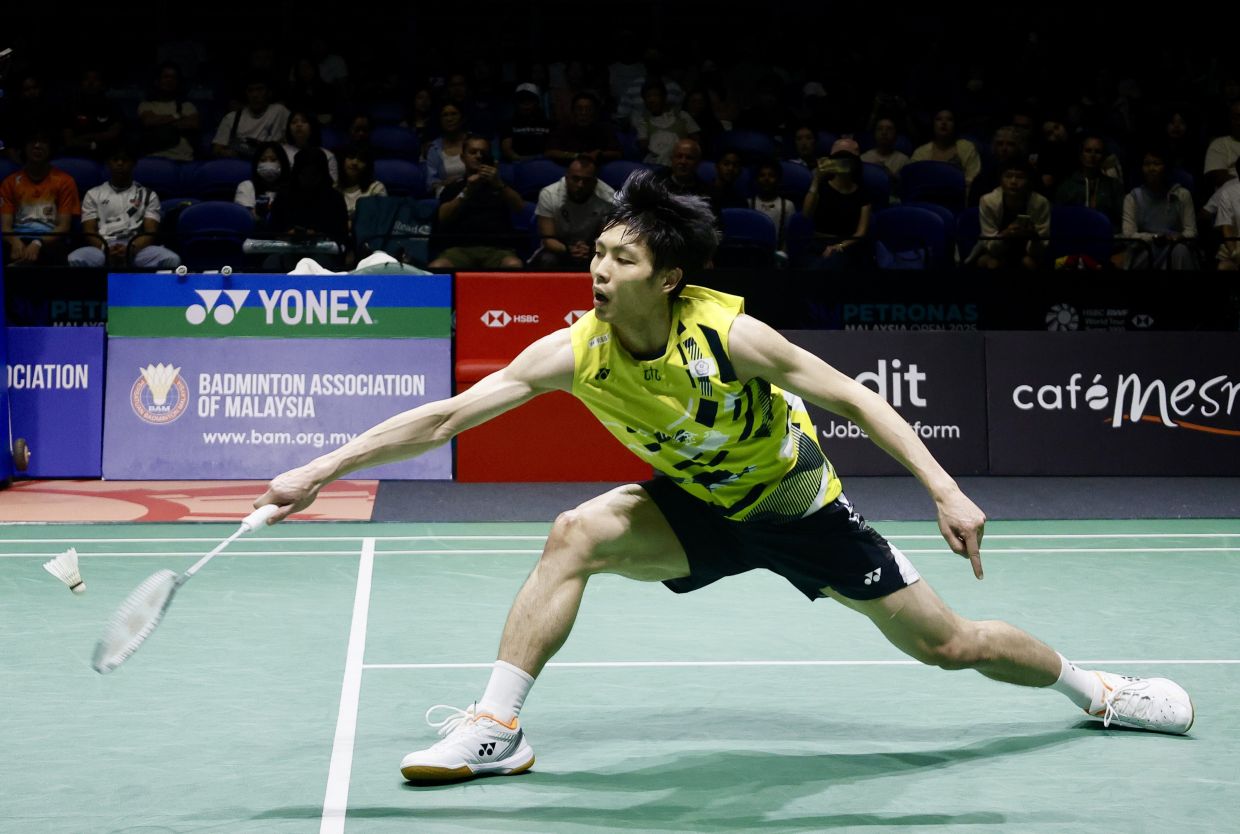
Chou Tien-chen's victory at the China Open has shattered conventional wisdom about athletic performance and longevity in professional badminton. At 36 years old, the Taiwanese shuttle star has etched his name into the sport's record books by becoming the oldest player ever to claim a BWF World Tour Super 1000 title, a distinction that underscores both his exceptional physical maintenance and mental fortitude in a sport typically dominated by younger athletes.
The achievement carries profound significance for badminton in Taiwan, as Chou's triumph at the Changzhou Olympic Sports Centre ends a drought that has lasted three decades in the men's singles category. The last time a Taiwanese player captured the China Open men's singles crown was in 1996, when Fung Permadi held aloft the trophy. That nearly three-decade gap highlights how challenging it has been for Taiwanese players to compete at the highest echelons of the sport on one of the international circuit's most prestigious stages. Chou's breakthrough therefore represents a watershed moment for badminton development in Taiwan.
The final itself showcased a compelling generational clash, with Chou facing France's Toma Junior Popov, a player a full decade younger at 26. Despite the age differential, Chou demonstrated superior match intelligence and physical endurance across the 64-minute encounter. The Taiwanese veteran secured victory with a scoreline of 21-15, 7-21, 21-13, a result that required him to recover from losing the second set before reasserting control in the decisive final game. The fluctuation in performance across sets reflects the reality of competing at the elite level while managing the physiological demands that accompany advancing years in professional sport.
Chou's path to the title illuminates the unpredictability inherent in tournament badminton at the Super 1000 level. Just one week prior to his China Open triumph, the veteran had experienced a humbling first-round exit at the Japan Open, losing to Ireland's Nhat Nguyen. That disappointment could have signalled the beginning of a downward trajectory, yet Chou demonstrated the psychological resilience necessary to recalibrate and emerge stronger the following week. His ability to convert that setback into motivation speaks to the mental architecture required to sustain competitiveness across multiple decades in professional sport.
In his post-match reflections, Chou acknowledged the improbability of his achievement with candour and gratitude. He expressed genuine astonishment at reaching the final, let alone capturing the title, underscoring how this victory transcended his own expectations entering the tournament. His recognition of the support network surrounding his career—particularly the intensive work with physiotherapist Victoria Kao—reveals the contemporary infrastructure required to maintain elite-level performance into the fourth decade of life. The emphasis on daily preparation, nutritional management, and detailed performance analysis represents a stark contrast to how athletes across previous generations approached their careers.
The victory also positions Chou among an exclusive cohort of athletes who have defied the conventional trajectory of sports performance. While most professional badminton players experience gradual decline in their thirties, Chou's Super 1000 triumph suggests he has constructed a training regimen and lifestyle approach capable of sustaining, and even enhancing, competitive capacity. This achievement carries implications for how the sport conceptualises player development and career longevity, potentially inspiring younger athletes to reconsider conventional retirement timelines.
For Southeast Asian badminton observers, Chou's success carries particular resonance given the region's historical dominance in the sport. Malaysia and Indonesia have long regarded badminton as a national treasure, and the emergence of ageing champions from neighbouring Taiwan introduces fresh competitive dynamics. Chou's triumph indicates that badminton excellence can flourish beyond the traditional powerhouses when coupled with systematic preparation and unwavering commitment. His victory at Changzhou may well inspire a reassessment of player development philosophies across the region.
Chou's philosophical approach to sustained excellence emphasises consistency in training and positivity in mindset, particularly following defeats. He articulated the notion that recovery from setbacks requires immediate return to training protocols and maintenance of psychological equilibrium, principles that transcend badminton and apply broadly to competitive athletics. His insistence on attending to marginal details that accumulate into performance improvements reflects a maturity and sophistication in approach that often emerges only after decades of professional experience.
The broader context of this victory extends beyond individual accomplishment. For Taiwan's badminton programme, Chou's China Open title provides a template for success at the sport's highest levels and demonstrates that continued investment in experienced athletes can yield substantial returns. The 30-year drought preceding his victory underscores periods where Taiwanese badminton may have struggled with consistency at the Super 1000 level, making Chou's breakthrough particularly meaningful for national sport development.
Looking forward, Chou's achievement raises intriguing questions about the traditional career arc in professional badminton. His demonstration that peak performance remains attainable in one's late thirties challenges assumptions about athletic decline and opens possibilities for other veteran players. The investment he has made in recovery, training methodology, and mental resilience has apparently yielded returns that younger competitors with less refined approaches may struggle to match. As the international badminton circuit continues to evolve, Chou's China Open triumph will likely be remembered as a watershed moment that redefined expectations about longevity and performance at sport's highest levels.

