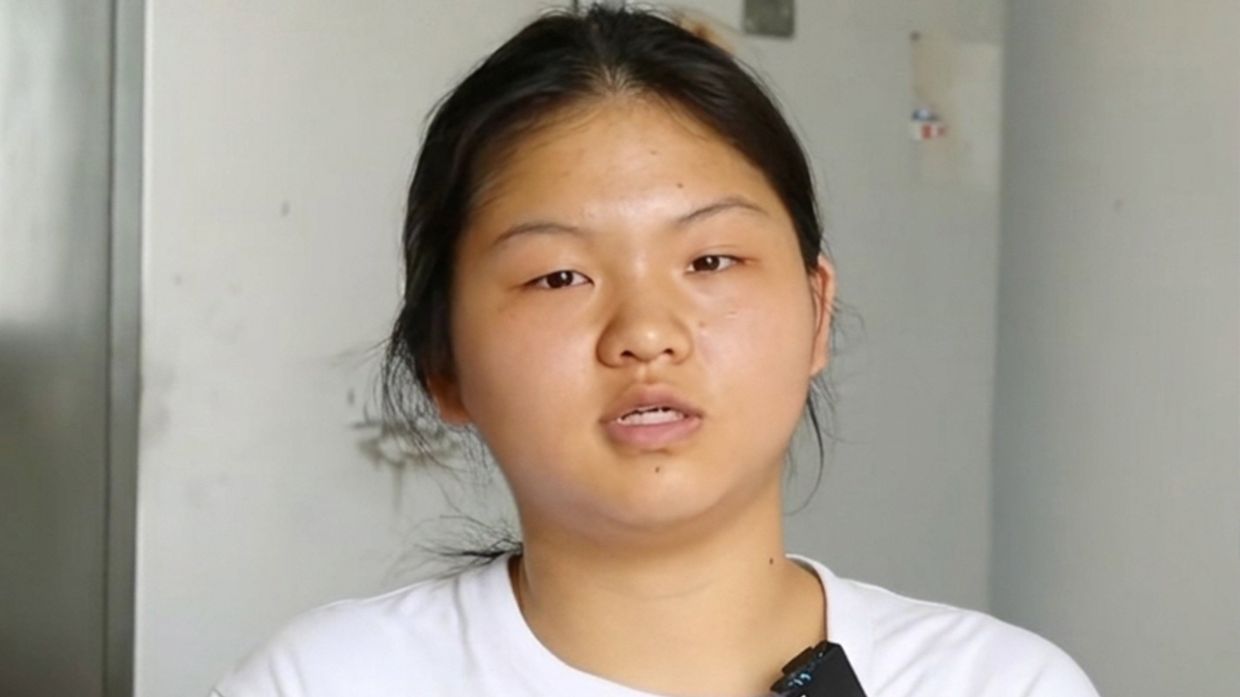
At a moment when many young people would feel justified in accepting help, an 18-year-old Chinese student has chosen a different path. After scoring 564 out of 750 on this year's gaokao examination, Zeng Zixuan faced an extraordinarily difficult transition into adulthood when her grandmother—her sole remaining family member—passed away in early July, leaving her orphaned just as she prepared to begin university.
The circumstances that led Zeng to depend entirely on her grandmother form a cautionary tale about family fracture and economic vulnerability in contemporary China. Her parents divorced during her childhood, after which her mother remarried and left the region while her father relocated to Guangdong for work. This left the young girl in the care of her grandmother, a situation that might have seemed manageable until tragedy compounded. During her senior secondary school years, her father died in an accident, an event that not only deepened her family's fragmentation but stripped away what little financial stability remained. With their sole income source gone, Zeng and her grandmother survived through government assistance and educational subsidies provided by her school.
The psychological toll of these losses became visible to those around her. The cheerful, outgoing child that Zeng had been gradually withdrew following her father's death, a transformation her teachers could not help but notice. Recognizing the warning signs of depression and despair in a student under such extraordinary stress, her supervising teacher took an active role in her emotional recovery. Rather than offering only sympathy, the teacher provided perspective and motivation, telling Zeng that academic achievement represented her pathway to both personal security and a way to honor the memory of her father and grandmother. This counsel proved formative, sustaining her through examinations that might have been derailed by grief.
The village administration also stepped in to provide institutional support during this period. Officials designated a representative responsible for women's issues to oversee Zeng's welfare and ensure that both she and her grandmother received the assistance they were entitled to. This combination of individual mentorship and community structures created a safety net that allowed Zeng to continue her education even as her personal circumstances deteriorated. The strategy appeared to work: her selection of a university close to her hometown reflected her desire to remain connected to this support system and to maintain filial presence by visiting her grandmother regularly during term breaks.
Just as Zeng seemed poised to enter a new and more stable chapter, her grandmother's illness and subsequent death stripped away even this remaining anchor. The timing could hardly have been worse, occurring after she had committed to her university place but before she could establish herself in a new environment. However, the response from her community proved that she had not been forgotten during those years of quiet struggle. Touched by her story, concerned citizens and neighbors began offering financial support through the village government office, recognizing that this bright student now faced university education without any family safety net whatsoever.
Within a remarkably short period, the accumulated donations reached more than 60,000 yuan, equivalent to approximately US$8,800—a substantial sum that could comprehensively cover her tuition and accommodation fees. For a family in her economic circumstances, such an outpouring of generosity might have seemed like salvation. Yet Zeng's response to this collective compassion revealed a maturity and ethical clarity that has resonated far beyond her village. She contacted the village office explicitly requesting that further donations cease, articulating her reasoning in language that carries particular weight coming from someone who has known genuine deprivation.
In her message, Zeng expressed genuine gratitude to the donors, addressing them with the respectful forms of address—uncles, aunties, brothers, and sisters—that reflect Chinese cultural norms of deference and humility. But rather than basking in their generosity, she made a pointed observation about economic hardship itself. She noted that earning money is not easy, acknowledging the sacrifice implicit in each donation. More significantly, she argued that many others in her region face circumstances even more dire than her own, and that the community's charitable impulses would be better directed toward those individuals. This perspective stands in stark contrast to the self-interest that might be expected from a grieving teenager facing an uncertain future.
Zeng's plan for sustainability reveals both pragmatism and determination. The funds already received, she insisted, were sufficient to cover the costs of tuition and accommodation—the fixed expenses that often prove insurmountable for students from low-income backgrounds. Her living costs, she resolved, would come from part-time employment, a common strategy among Chinese university students but one that carries particular weight when undertaken by someone who has experienced genuine poverty. The village government, recognizing her resolve and perhaps wanting to formalize its commitment to her continued education, offered her a work position designed specifically to accommodate a student's schedule, removing at least one barrier to her ability to both study and support herself.
The response to Zeng's story from online observers has emphasized two complementary themes. Some have focused on the inevitability of her eventual success, framing her difficulties as temporary obstacles before a bright future that her character and ability seem to guarantee. Others have emphasized the fortunate coincidence of her circumstances—that she faces hardship in an era and within a system where such support, while not universal, is nevertheless increasingly available. The gaokao examination system itself, despite persistent criticisms about its pressures and inequities, has created a framework where geographic and economic mobility remains theoretically possible for high-performing students from humble origins, even if the reality often falls short of this promise.
For Malaysian readers and observers across Southeast Asia, Zeng's story illuminates several interconnected issues about education, family support systems, and community resilience in rapidly developing societies. While China's institutional structures for educational subsidy and social assistance differ from those in Malaysia and its neighbors, the underlying themes—family fragmentation, economic precarity, and the role of education as a pathway to intergenerational mobility—resonate across the region. Zeng's ethical choice to redirect charitable attention toward others in greater need also offers a counter-narrative to the individualism that can characterize contemporary responses to hardship, suggesting instead that even those experiencing profound personal loss can maintain perspective and solidarity with their communities.

