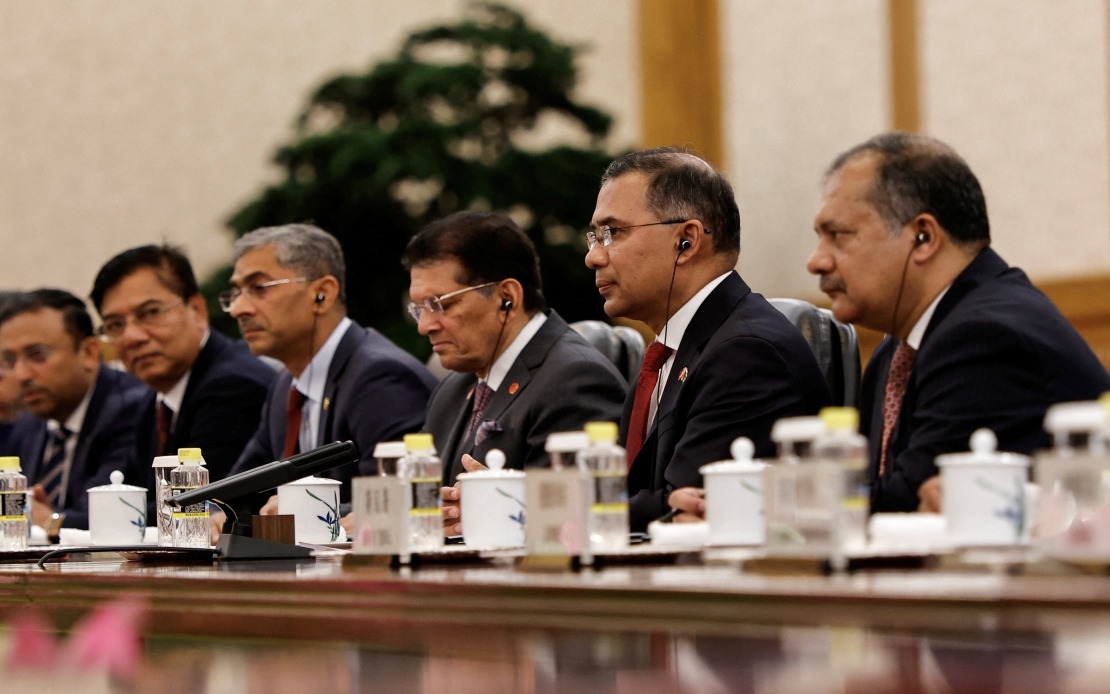
Bangladesh is set to receive a significant injection of Chinese capital, with twelve companies announcing proposed investments totalling US$9.2 billion during Prime Minister Tarique Rahman's four-day visit to China from June 22 to 26. The ambitious proposals span critical sectors including energy generation, port modernisation, transportation infrastructure, and advanced manufacturing—sectors that have long been identified as priorities for the country's economic development and job creation agenda.
The scale of these investments underscores deepening economic ties between Dhaka and Beijing at a moment when Bangladesh is actively diversifying its foreign investment sources and seeking to address longstanding infrastructure gaps. Both nations formalised their commitment through a joint communiqué released on Friday, which explicitly outlined plans to strengthen bilateral cooperation across trade, e-commerce, industrial development, and supply chain integration. This strategic partnership reflects Bangladesh's broader effort to position itself as a manufacturing hub in South Asia while simultaneously upgrading its export capacity and supporting multilateral trading frameworks.
Among the major infrastructure initiatives is a US$4.5 billion commitment from Sichuan Road and Bridge Group to develop and upgrade the critical Dhaka-Chattogram highway through a public-private partnership model. This project carries particular significance for Bangladesh, as the corridor connects the capital to the nation's primary port city and represents one of the country's most economically vital transportation arteries. Improved connectivity along this route could substantially enhance logistics efficiency and reduce transit times for goods movement within the country and to international markets.
Port development stands as another cornerstone of the investment package. China Civil Engineering Construction Corporation has offered US$650 million to develop and operate an economic zone surrounding Mongla Port, with particular emphasis on constructing modern warehousing and logistics infrastructure. Bangladesh and China have agreed to jointly modernise and expand Mongla Port's facilities, recognising its potential as a gateway for regional trade. This collaborative approach reflects the mutual benefits both nations see in enhancing Bangladesh's maritime connectivity and positioning it as a significant player in regional shipping networks.
The investments also reveal Chinese interest in Bangladesh's manufacturing renaissance and industrial park development. Both countries have committed to establishing a dedicated Chinese industrial park in Chattogram, which would serve as a concentrated hub for manufacturing operations and facilitate technology transfer. This initiative aligns with broader patterns of Chinese industrial relocation and the search for cost-competitive production bases in South and Southeast Asia, while offering Bangladesh opportunities to attract advanced manufacturing capabilities and skilled employment.
Renewable energy and environmental sustainability feature prominently in the proposed portfolio. Shanghai SUS Environment Company plans to deploy US$890 million in developing waste-to-energy plants, addressing Bangladesh's pressing need for sustainable waste management while generating electricity. Huaxin Textile Industry Company has committed US$190 million to construct a 200 megawatt captive solar power plant within the Payra economic zone, alongside expanding recycled cotton and yarn production and manufacturing lithium batteries. These initiatives demonstrate Chinese recognition of Bangladesh's energy challenges and the commercial opportunity in green technology solutions.
Environmental remediation constitutes another significant component. Zhongxin Environmental Protection Group has proposed a US$1.65 billion investment in an electronic waste recycling project in the Payra Port Industrial Zone on the Bay of Bengal. This substantial commitment addresses the mounting challenge of e-waste management in Bangladesh while creating industrial capacity to process and recover valuable materials from discarded electronics—a concern gaining urgency across South Asia as electronic consumption accelerates.
Energy sector development extends beyond renewables. China Future Energy Group Holding Limited has outlined a US$250 million plan for gas field exploration and development, tapping into Bangladesh's hydrocarbon resources and contributing to the country's energy security objectives. These complementary energy investments—spanning renewables, waste-to-energy, and conventional energy resources—suggest a comprehensive Chinese approach to addressing Bangladesh's multifaceted energy needs.
Logistics and supply chain infrastructure improvements underpin several projects, reflecting broader regional integration trends. SF Express plans to invest US$180 million in developing cold-chain logistics and warehouse facilities at Mongla, approximately 230 kilometres north of Dhaka. This investment targets the growing demand for temperature-controlled storage and distribution networks, particularly relevant for perishable goods including agricultural products and pharmaceuticals—sectors in which Bangladesh maintains significant export interests.
Technology manufacturing also features in the investment slate. Shenzhen Kaifa Technology has committed US$250 million to manufacturing electric smart metres, positioning Bangladesh to participate in the global smart grid revolution and potentially serve regional electricity distribution networks with locally manufactured components.
Bangladesh Commerce Minister Khandakar Abdul Muktadir highlighted the strategic importance of these investments, noting that substantially increased Chinese capital inflows would help narrow Bangladesh's persistent trade deficit with China—a longstanding structural imbalance in bilateral commerce. By attracting Chinese manufacturing investment, Bangladesh aims to increase its exports to China and other markets while simultaneously creating domestic employment opportunities.
For Malaysian observers, this investment wave carries several implications. The scale and diversity of Chinese manufacturing and infrastructure investments flowing into Bangladesh may influence regional competition for similar foreign direct investment, particularly in sectors like renewable energy, ports, and manufacturing. The integration of Bangladesh more deeply into Chinese supply chains could reshape regional trade patterns and logistics networks. Additionally, the emphasis on environmental remediation and waste management projects suggests growing Chinese corporate attention to sustainability standards across Southeast Asia and South Asia, potentially raising expectations for Malaysian projects.

