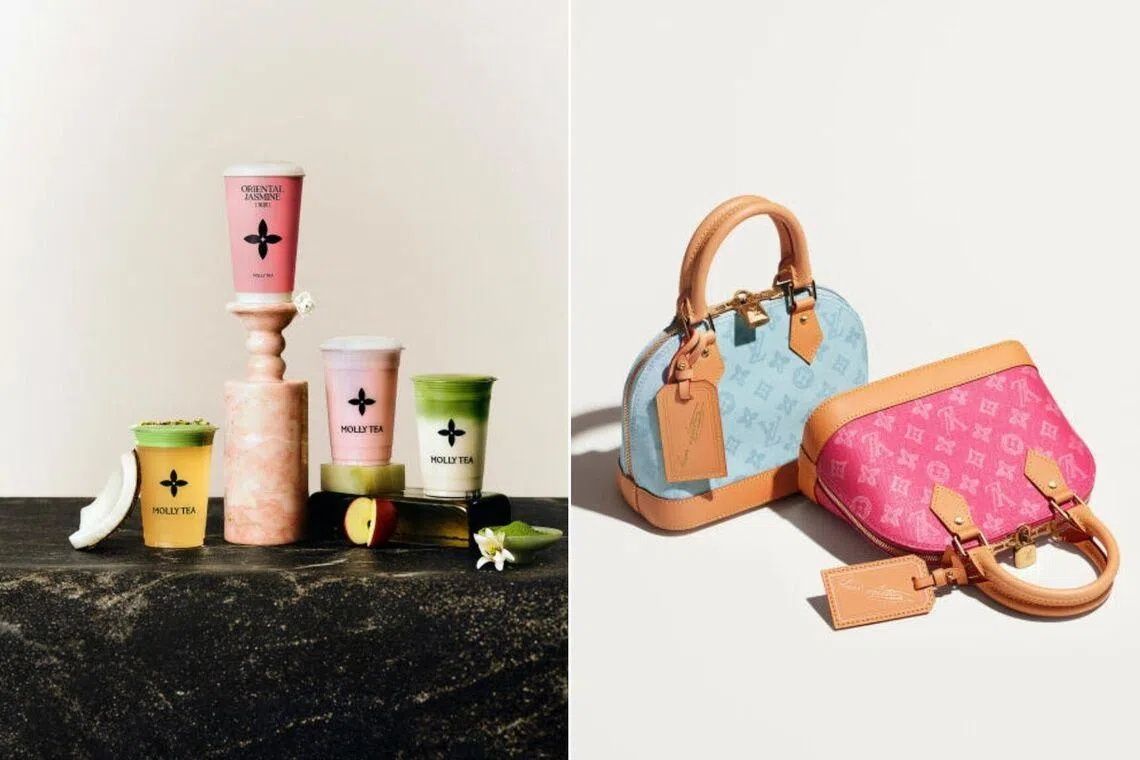
A Chinese court has ordered Molly Tea, a Shenzhen-based milk tea operator, to pay 10.3 million yuan (US$1.5 million) to Louis Vuitton after finding the beverage company had unlawfully replicated the French luxury brand's trademarked four-petal flower design. The ruling, handed down on June 29 by the Suzhou Intermediate People's Court in Jiangsu province, also required the milk tea chain to cease using the infringing emblem and issue a public apology. The decision has ignited considerable discussion across China regarding the balance between protecting intellectual property rights and preserving access to traditional cultural imagery, a tension increasingly evident across Southeast Asia as homegrown companies expand internationally.
The lawsuit centred on the visual similarity between Molly Tea's brand emblem—a four-petal flower motif—and Louis Vuitton's iconic graphic signature that has anchored the luxury house's identity for decades. Louis Vuitton initiated the legal action in May 2025, and the ruling arrived less than a month later. Molly Tea has signalled its intent to appeal the decision to a higher court, suggesting the dispute is far from concluded and will likely establish important precedent for how Chinese courts balance competing commercial and cultural interests.
Molly Tea's trajectory with trademark applications reveals the complexity of the underlying dispute. Beginning in March 2024, the company and its affiliates filed numerous trademark registrations featuring floral designs with China's National Intellectual Property Administration, primarily seeking protection for restaurant services, accommodation, advertising, and convenience food categories. The majority of these applications faced rejection from authorities. Only the trademark incorporating the Chinese characters for "Molly Tea" itself secured successful registration, suggesting that examiners were already concerned about the floraldesign applications' potential conflicts with existing marks.
The case has captured unprecedented public attention within China, demonstrating how intellectual property disputes can become major cultural flashpoints. A hashtag on Chinese social media platforms documenting the "Louis Vuitton sues Molly Tea for 10.3 million yuan in damages" narrative accumulated over 360 million views, while a related topic about the invalidation of Molly Tea's trademark reached 18.7 million reads. This extraordinary engagement reflects deeper public curiosity about how courts navigate between protecting foreign luxury brands' interests and supporting domestic entrepreneurship.
Public opinion on the ruling remains fractured along several lines. Some commentators contend that Molly Tea's four-petal design bears sufficient visual resemblance to Louis Vuitton's monogram to constitute genuine infringement, potentially confusing consumers familiar with the French brand's prestige. Conversely, others argue that meaningful visual distinctions exist between the designs and that the two companies operate in fundamentally different market segments—luxury fashion versus affordable food and beverages—making consumer confusion unlikely. A third perspective challenges Louis Vuitton's claim to originality itself, with some arguing that the brand's signature pattern draws inspiration from traditional Chinese cultural motifs that predate modern trademark systems.
Kang Lixia, a partner at Beijing Standzer IP Firm, explained that the legal outcome hinges on evidentiary standards governing trademark disputes. Either party dissatisfied with the judgment possesses the right to appeal, and success in such appeals depends primarily on whether the appellant can supply compelling evidence demonstrating that its design represents original and distinctive creative work rather than imitation. She emphasised that floral patterns and designs rooted in traditional Chinese culture constitute part of humanity's shared cultural heritage and should theoretically remain available for anyone's use.
However, the practical application of Chinese trademark law complicates this principle considerably. China's trademark system operates on a "first to file" basis, meaning that whichever applicant registers an identical or substantially similar mark first for the same or comparable products gains exclusive rights, while subsequent applicants face automatic rejection. This foundational rule creates advantages for earlier registrants and multinational corporations with established recognition. Kang noted that although Molly Tea and Louis Vuitton technically operate in different product classifications, Louis Vuitton's status as an earlier-registered and globally recognised mark entitles it to cross-class protection under Chinese law—meaning its intellectual property rights can extend beyond fashion into other commercial domains, presenting formidable obstacles for later market entrants.
Liu Bin, an intellectual property lawyer at Beijing Zhongwen Law Firm, advocated for a more nuanced perspective on the dispute, stressing that trademark law protecting figurative or graphic marks does not require perfect identity between the challenged design and the registered trademark. Rather, courts assess whether consumers are reasonably likely to experience confusion when encountering the marks. He identified the genuine puzzle troubling the Chinese public: determining how traditional cultural patterns should be equitably protected and deployed across the modern economy. Since these motifs constitute shared public resources, Liu acknowledged that widespread sentiment holds that no individual entity should monopolise their use.
Yet Liu underscored a critical distinction that often becomes obscured in public discussion. Intellectual property protection fundamentally safeguards not the cultural elements themselves but rather the brand recognition and commercial reputation that companies build by incorporating traditional elements into their business identities. When a company establishes strong consumer association with a particular application of a traditional pattern—through sustained marketing, quality delivery, and brand investment—that accumulated commercial goodwill warrants legal protection.
The apparent contradiction resolves when one recognises that traditional cultural elements should remain accessible for general use and cultural transmission, but commercial marks built upon those elements must not generate market confusion or imitate previously registered brands. A milk tea company, for instance, could potentially employ four-petal flowers in its branding if the design, application, and overall commercial presentation sufficiently differentiated it from Louis Vuitton's globally recognised monogram. The Suzhou court apparently found insufficient differentiation in Molly Tea's case.
For Malaysian and broader Southeast Asian readers, this ruling carries significance beyond entertainment value. As regional companies increasingly pursue international expansion and establish sophisticated brand identities, they will inevitably encounter trademark disputes with global corporations that have already secured protection across multiple jurisdictions. The Molly Tea case illustrates how courts in major Asian economies are navigating the intersection of rapid commercialisation, cultural preservation, and intellectual property frameworks inherited partly from Western legal traditions. Businesses throughout Southeast Asia should anticipate that trademark examiners and judges will increasingly scrutinise whether their designs—particularly those incorporating traditional cultural elements—risk infringing on earlier-registered marks by globally recognised brands.
The appeal process will likely clarify whether Chinese courts are expanding cross-class trademark protection for famous marks, potentially setting precedent that extends beyond this specific dispute. The outcome could reshape how Southeast Asian entrepreneurs approach brand development, forcing more explicit differentiation strategies even when drawing from shared cultural design vocabularies. Companies considering expansion into Chinese markets or competing against Chinese entities internationally should monitor how this case develops through appellate courts, as the legal principles established may influence intellectual property enforcement across the entire region.

