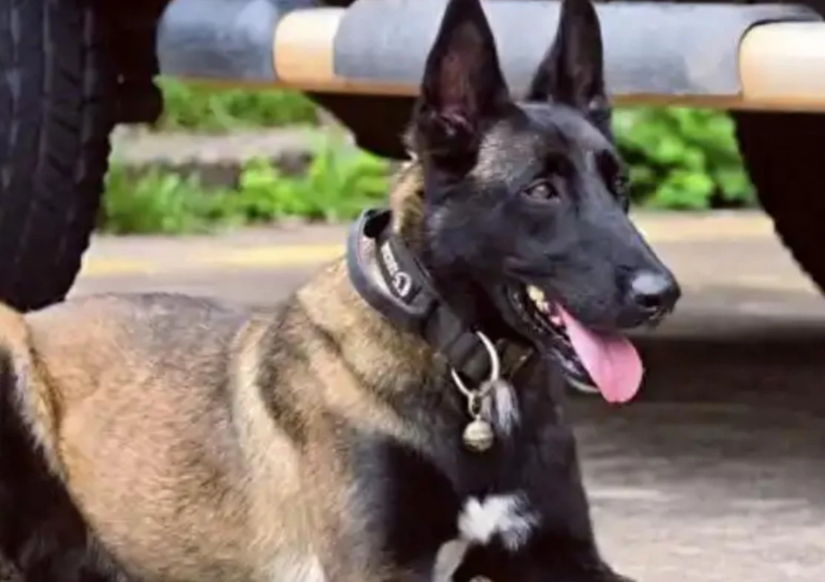
A loyalty tale involving a police dog and his injured handler has resonated across mainland China's social media landscape, drawing widespread admiration for the unbreakable partnership formed through years of collaborative law enforcement work. When Bulu, a four-year-old German shepherd trained in narcotics detection, was separated from his handler Awei after a workplace accident in Yunnan province last November, the canine's response—refusing sustenance and returning repeatedly to familiar locations—illustrated the profound emotional intelligence that working dogs develop alongside their human partners.
The incident unfolded during a drug operation in Chuxiong, an urban centre in southwestern Yunnan. Officers were investigating an abandoned building known to harbour suspects involved in narcotics trafficking. As the pair moved through the structure during the operation, Bulu detected movement and bolted forward in pursuit, with Awei following closely. The challenging conditions—darkness, debris scattered across floors, and the urgency of the moment—created hazardous circumstances that would prove decisive. Awei's foot caught on debris in the corridor, causing him to plunge from the second storey, resulting in injuries that hospitalised him immediately.
The aftermath was grave. Emergency responders discovered Awei convulsing and vomiting blood, his consciousness wavering dangerously. Medical staff transported him urgently to hospital, where he entered a five-day coma before awakening. Physicians identified multiple fractures affecting his head and chest region, injuries severe enough to require extended recovery and rehabilitation. Throughout this period, Bulu remained at a police training base, separated from the only handler he had known.
What followed challenged conventional assumptions about animal memory and emotional attachment. Rather than adapting to new handlers or routine duties during those six months, Bulu's behaviour changed markedly. Officers observed that the dog ceased engaging in regular working activities, grew visibly anxious, and consumed minimal food and water. This pattern persisted throughout Awei's hospitalisation and early recovery phase. Surveillance recordings captured Bulu's searching behaviour—the dog returning repeatedly to locations where his handler had previously worked, including the dormitory, the facility's main gate, and familiar training routes. On at least one occasion, Bulu rushed toward a vehicle returning to base, only to discover his handler was not present.
The emotional arc of their separation reflects what animal behaviourists recognise as genuine distress in working dogs separated from longstanding partners. Police and military canines develop cognitive associations with their handlers that extend beyond simple recognition. The training process itself—which can span months or years—creates reinforced neural pathways and behavioural conditioning. When that relationship is abruptly severed, particularly under traumatic circumstances where the handler disappears without explanation from the dog's perspective, withdrawal and depressive symptoms often emerge. Bulu's refusal to engage with food or training represented a form of protest against disrupted routine.
When Awei finally returned to duty after completing his recovery, authorities arranged a controlled reunion that became the emotional centrepiece of the narrative. Officers brought Bulu forward as Awei entered the base. The dog's response was immediate—barking urgently and sprinting toward his handler at full speed. Awei, dropping his luggage, knelt to receive the enthusiastic greeting, embracing the dog in a moment captured on video. The footage subsequently circulated across mainland social media platforms, accumulating over ten million views and garnering more than 580,000 likes, reflecting the depth of public emotional investment in their story.
During Awei's absence, his colleagues had continued the drug operation without interruption, demonstrating the institutional continuity of law enforcement work. Through sustained investigation, they successfully apprehended eleven suspects connected to the narcotics network. Officers confiscated 4.4 kilos of drugs and seized more than 500,000 yuan—equivalent to approximately 75,000 US dollars—in illicit funds. This material outcome, while less celebrated than Bulu's loyalty, ultimately constituted the operational success that had necessitated the dangerous pursuit in the first place.
Bulu's story has prompted broader public reflection on the role of police dogs within China's law enforcement apparatus. Contemporary estimates place the nation's active police dog force at over 29,000 animals, representing a significant investment in canine-based security capabilities. These working dogs typically serve approximately eight years in their roles, though the physical toll of high-intensity deployment often manifests in joint and spinal injuries that can prematurely end careers. Unlike human officers who benefit from workers' compensation and retirement benefits, these animals experience their career endings with limited public recognition or support mechanisms.
The institutional treatment of retired police dogs reflects evolving attitudes toward animal welfare. Most remain with their original handlers at their respective units, continuing to live with the officers who have worked alongside them throughout their careers. This practice offers continuity and care, though it depends entirely on individual handler circumstances and resources. A secondary group of retired police dogs becomes available for public adoption, creating opportunities for civilian families to provide care to animals who have served the state. Neither pathway is universal or guaranteed, leaving some retired dogs vulnerable to uncertain futures despite their years of public service.
The Bulu narrative has catalysed online commentary that elevates the animal's experience beyond mere sentimentality. Social media users have drawn parallels to military camaraderie, noting that the bond transcends species boundaries when individuals face danger together. One widely shared comment characterised Bulu's waiting period as devotion not merely to a handler, but to a comrade-in-arms—recognising that working partnerships develop mutual dependency and trust. This framing repositions the dog not as a tool or asset, but as a conscious participant in collaborative relationships with security and human consequence.
For Malaysian and Southeast Asian observers, Bulu's story offers comparative perspective on how different nations value and manage working animals. Regional security forces—including police and military units throughout Southeast Asia—employ canine teams in narcotics detection, border security, and crowd management. The emotional and operational realities that Bulu's experience illuminates apply broadly across the region's law enforcement apparatus. Understanding how animals respond to trauma, separation, and reunion informs best practices for handler safety, animal welfare, and operational effectiveness. The viral resonance of this particular reunion suggests that public sentiment increasingly recognises working dogs as sentient beings deserving of genuine consideration, rather than interchangeable equipment that can be replaced without consequence.

