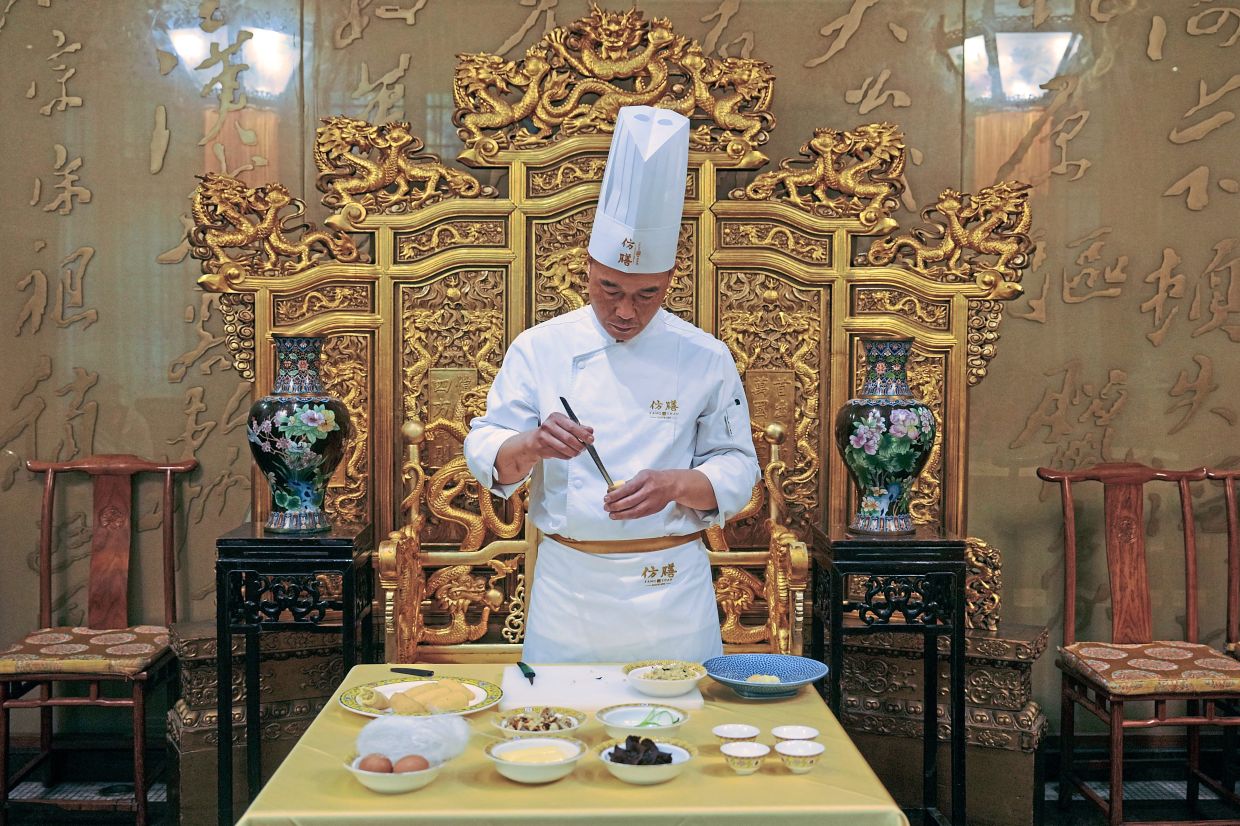
A pastry so exquisite that Empress Dowager Cixi dreamed of it—and found it waiting at her breakfast table the following morning—became an enduring symbol of imperial China's culinary sophistication. The delighted empress rewarded her chef handsomely with silver, and the humble "minced pork pancake" earned a new name befitting its origin: "dream pastry." Today, that very dish remains on the menu at Fangshan Restaurant in Beijing, a living archive of the imperial court's gastronomic heritage that has survived more than a century of upheaval and modernisation.
Fangshan, whose name translates to "imitating the imperial cuisine," was established in 1925 by former chefs who once served the Qing Dynasty. The restaurant occupies a privileged location within Beihai Park, a historically significant garden where Chinese emperors from multiple dynasties conducted both leisure and statecraft, including sacred ritual ceremonies. Beyond Fangshan, several other Beijing restaurants have taken up the torch of imperial cuisine preservation, while the Palace Museum maintains an extensive collection of Qing-era dining artifacts, from ornate pastry moulds to ceremonial vessels. Together, these institutions form a guardianship of culinary practices that once defined the pinnacle of Chinese dining culture.
Imperial cuisine encompasses far more than mere sustenance. It encompasses the everyday meals prepared for emperors and the elaborate ceremonial feasts orchestrated throughout the imperial calendar, each governed by intricate protocols that extended beyond the kitchen into the realm of ritual and statecraft. Consider the practice of serving milk tea at Qing Dynasty banquets: this was no casual beverage service but rather a prescribed ceremonial opening that set the tone for the entire gathering. The emperor would bestow wine or delicacies upon princes and officials, who were obliged to perform elaborate kowtows and expressions of gratitude before consuming what they had been granted. Such practices transformed dining into a political theatre where hierarchy and loyalty were enacted through food.
Ritual sacrifice occupied a distinct and equally significant place within imperial gastronomic culture. At the Palace of Earthly Tranquillity, one of the court's most solemn ceremonies involved the consumption of sacrificial pork—fatty meat boiled without salt or seasoning. After the ritual was completed, this meat was distributed among attendees as a mark of exceptional honour. The deliberate absence of seasoning carried deep symbolic meaning, harking back to earlier Chinese philosophical traditions documented in classical texts such as the Book of Rites. Scholars have long understood that unseasoned foods in ritual contexts invoked an idealised past, connecting participants to their cultural origins and demonstrating reverence for antiquity through culinary restraint.
Pastries held special prominence in the imperial kitchen, commanding such importance that the court maintained a dedicated institution solely devoted to their creation. Zhou Tong, a contemporary pastry chef at Fangshan, continues techniques perfected over centuries, crafting both Empress Dowager Cixi's dream pastry and delicate steamed corn buns whose recipes trace directly to imperial court origins. The stories embedded within these dishes captivate modern diners; servers at Fangshan narrate the historical narratives accompanying each plate, transforming consumption into a form of cultural communion with the past. Zhou learned his craft through direct apprenticeship from a master who himself inherited knowledge from previous generations, establishing an unbroken chain of transmission spanning multiple centuries.
The distinction between imperial and ordinary cooking lies fundamentally in methodology and discipline. Traditional imperial techniques categorically forbid the use of modern conveniences such as electric blenders or food processors; instead, ingredients must be laboriously hand-processed using traditional implements. Beans are pulverised through sieves, and certain flour preparations demand custom-made copper vessels specifically designed for the purpose. This manual approach yields results impossible to achieve through mechanical means. The delicate, sandy texture—a signature quality of authentic imperial pastries—emerges only through patient hand work. As Zhou emphasises, machines may accelerate production, but they destroy the nuanced mouthfeel and refined graininess that distinguishes imperial cuisine from mass-produced alternatives.
The commercial success of Fangshan's traditional methods belies predictions that such labour-intensive practices would become economically unviable in contemporary society. Pea flour cakes and red bean rolls rank among the restaurant's bestsellers, with daily orders exceeding two hundred units during peak seasons. Executive Chef Fan Liangliang arrived at Fangshan with conventional culinary training, only to discover that nearly everything learned in professional cooking school contradicted imperial methodology. He underwent complete re-education, abandoning speed-focused techniques in favour of deliberately slow processes such as "Nizihuo," an ancient technique requiring the mincing of fish, shrimp, or chicken into impossibly smooth pastes before reshaping them into ornamental forms depicting frogs, birds, and flowers. Every element served on an imperial table demanded innovation, visual magnificence, nutritional value, and presentation worthy of the emperor's consumption.
Imperial cuisine has undergone inevitable adaptations in response to modern ethical and practical constraints. Ingredients once prized, such as bear paws, no longer appear on contemporary menus, yet chefs endeavour to preserve the philosophical essence of dishes even as specific components shift. This balancing act between historical fidelity and contemporary responsibility reflects broader questions about how traditions survive and evolve. Fan and his peers do not view adaptation as dilution but rather as faithful stewardship of culinary principles—maintaining the spirit, nutritional philosophy, and aesthetic principles that governed imperial cooking even when specific historical ingredients become unavailable or unacceptable.
The relationship between Chinese cuisine and broader cultural meaning extends far beyond the plate. A celebrated poet's historical composition about cold noodles made with pagoda-tree leaves functioned not merely as gastronomic description but as political allegory, conveying ambitions and disappointments through the medium of food. Chinese culinary traditions have consistently carried symbolic weight, communicating ideas about aesthetics, power, and cultural identity that transcend mere flavour. As circumstances have shifted across centuries, the meanings encoded within dishes have similarly transformed, creating a living dialogue between past and present. Food becomes a language through which people express their relationship to history and culture.
At its foundation, Fangshan's imperial cuisine represents a fusion of Manchu and Han culinary traditions, uniting the gastronomic heritage of Qing rulers with that of China's Han majority. This synthesis mirrors the broader historical reality of the Qing Dynasty itself—a period when different cultural traditions intermingled, competed, and eventually merged into a distinctive imperial culture. By preserving these dishes and techniques, contemporary chefs engage in an act of cultural preservation that extends beyond nostalgia or antiquarianism. They maintain connection to historical continuities while simultaneously allowing modern diners to participate in traditions once reserved for emperors and imperial elites. In doing so, they demonstrate that culinary heritage, taken seriously in its historical dimensions, reveals not only how people ate in distant eras but how contemporary society chooses to remember, value, and perpetuate the cultural legacies it has inherited.

