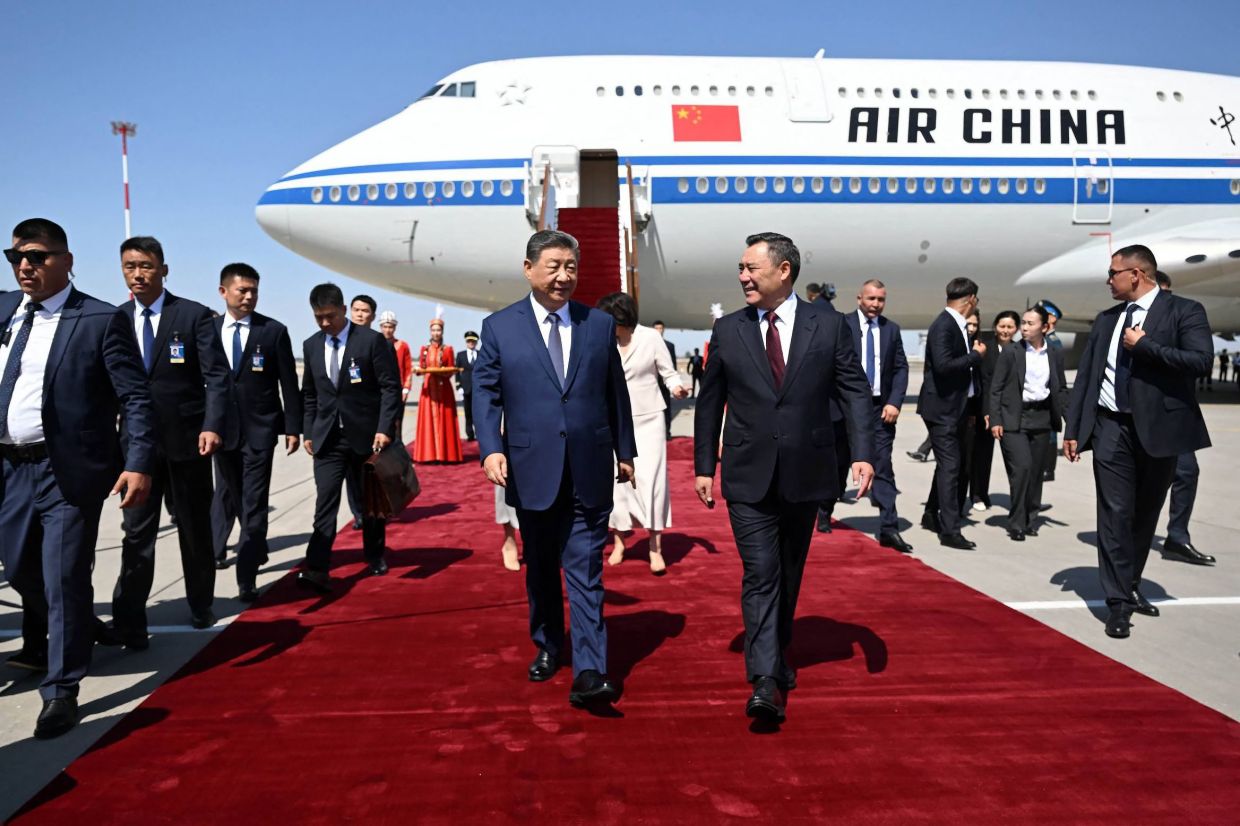
The Shanghai Cooperation Organisation will host its annual summit this week in Bishkek, Kyrgyzstan, drawing together some of the world's most consequential leaders in what represents a carefully choreographed demonstration of non-Western unity. Chinese President Xi Jinping, Russian President Vladimir Putin and Indian Prime Minister Narendra Modi are all scheduled to attend the gathering, alongside representatives from eight other member states and numerous observer nations. The event itself carries symbolic weight beyond any formal agreements that may emerge, signalling to the international community that alternative power structures are consolidating outside the traditional Western alliance system.
Established in 2001 as a security-focused initiative, the SCO has evolved significantly over more than two decades to encompass ten full members spanning three continents. Beyond China, Russia and India, the organisation now includes Iran, Pakistan, Belarus, Kazakhstan, Kyrgyzstan, Tajikistan and Uzbekistan, each bringing their own strategic calculations and regional interests to the table. This expansion reflects how the geopolitical landscape has shifted, with numerous nations seeking platforms that offer independence from Washington-aligned structures whilst maintaining engagement with multiple power centres. The organisation's growing roster demonstrates the appetite among countries across Eurasia and beyond for multilateral arrangements that operate according to different principles and priorities than the post-Cold War Western-dominated order.
For Russia and Iran in particular, the summit provides crucial diplomatic space at a moment when both nations face intensifying isolation from Western economies and alliances. Moscow, now more than four years into its invasion of Ukraine, depends heavily on maintaining and deepening relationships with countries willing to engage despite Western sanctions and diplomatic pressure. Tehran faces similar circumstances as it navigates a protracted conflict involving Israel and American interests. By gathering at the SCO, both nations underscore their embeddedness within a wider community of states that recognise their legitimacy and remain willing to conduct business and coordinate strategy with them. The bilateral meetings scheduled throughout the summit, including planned talks between Putin and Xi on Monday and between Putin and Iranian President Masoud Pezeshkian on Tuesday, illustrate how these events function as crucial forums for high-level diplomacy beyond what formal multilateral structures permit.
China and Russia have worked assiduously to position the SCO as a genuine counterweight to Western-oriented organisations, most notably the G7. Beijing's framing emphasises how the organisation has pioneered a novel model for regional cooperation, one that privileges mutual respect, non-interference and development assistance over the conditionality and pressure tactics historically associated with Western institutions. This messaging resonates with many developing nations frustrated by what they perceive as the paternalism embedded within traditional international structures. China has consistently leveraged its influence within the SCO to expand its mandate and enhance its relevance, pledging substantial financial and development resources to strengthen member states' capabilities and bind them more tightly into Beijing's broader strategic vision.
The SCO's expansion and institutional evolution also reflect broader trends in how countries across Asia, Africa and Latin America are diversifying their international relationships. Rather than choosing exclusive alignment with either the Western bloc or the Chinese-Russian coalition, many nations pursue sophisticated hedging strategies that allow them to benefit from multiple partnerships simultaneously. India exemplifies this approach, participating actively within the SCO whilst maintaining substantial defence and economic relationships with Western democracies, particularly the United States. For New Delhi, the summit offers valuable opportunities to remain informed about regional developments, to signal its continued relevance as a major stakeholder in Asian affairs, and to protect its interests within a multipolar environment where China and Pakistan—both SCO members with whom India maintains fraught relations—exercise considerable influence.
Experts familiar with India's approach to the SCO suggest that the country views its participation primarily through an optical and strategic lens rather than as a vehicle for achieving transformative outcomes. According to Dinakar Peri, a security studies fellow at Carnegie India, the organisation provides New Delhi with essential visibility into evolving regional dynamics and geopolitical competition among larger powers. By maintaining its seat at the table, India ensures it remains apprised of strategic developments affecting South and Central Asia, preserves its ability to project itself as a dependable regional actor, and maintains flexibility in how it navigates relationships with both traditional Western partners and increasingly important Asian powers. This hedging function proves invaluable at a time when geopolitical realignment accelerates across the Indo-Pacific and Central Asia.
Turkey's engagement with the SCO, though currently at the dialogue partner rather than full member level, reflects similar strategic calculations operating at different scales. President Recep Tayyip Erdogan has consistently advocated for Ankara's elevation to permanent membership, viewing such a promotion as recognition of Turkey's regional importance and as validation of its efforts to maintain a balanced foreign policy. Turkey's positioning is particularly delicate: it remains formally committed to NATO and maintains deep economic ties with the European Union through their longstanding trade arrangement, yet simultaneously seeks to expand its influence across Central Asia and the Middle East where SCO members concentrate significant power. Full SCO membership would provide Turkey with additional leverage in negotiations with both Western institutions and rising Asian powers, though such aspiration has faced resistance from current members and reflects the complex geopolitical positioning that many countries now attempt to navigate.
Despite the summit's significance as a gathering of major powers, analysts caution against overestimating the SCO's cohesion or capacity for unified action. The organisation encompasses members with substantially divergent interests, historical rivalries and competing priorities that frequently prevent it from functioning as a genuine bloc. India and Pakistan harbour deep mistrust rooted in decades of conflict; China and India maintain unresolved border disputes and strategic competition; Russia faces challenges coordinating with members who harbour concerns about Moscow's regional intentions. These internal tensions suggest that while the SCO provides valuable diplomatic infrastructure and symbolic utility, its actual capacity to shape international outcomes remains constrained by the fundamental reality that its members prioritise national interests above collective action.
The vagueness that has historically characterised the SCO's stated goals and programmes reflects both intentional ambiguity designed to accommodate diverse preferences and the genuine difficulty of forging coherent positions among such varied membership. Unlike NATO, which operates according to explicit collective defence commitments and integrated command structures, or the EU with its elaborate institutional frameworks and binding legal obligations, the SCO functions more loosely as a venue for coordination and consensus-building where agreements emerge from negotiation among equals. This flexibility permits the organisation to expand without collapsing under internal contradictions, though it also limits its capacity to implement binding decisions or mount unified responses to crises affecting its interests.
For Malaysia and other Southeast Asian nations observing these developments from the region's southern flank, the SCO summit underscores broader trends reshaping Asian geopolitics. The growing institutionalisation of non-Western alternatives to traditional Western-led structures means that countries throughout the region face increasingly complex choices about how to position themselves within overlapping multilateral frameworks. The ASEAN-led regional architecture that Malaysia helped construct, including institutions like the East Asia Summit and the ASEAN Regional Forum, now operates within a more crowded landscape of competing mechanisms. Malaysia's own careful balancing act between maintaining relations with the United States, engaging productively with China, and preserving regional autonomy through ASEAN centrality reflects precisely the strategic dilemmas that the SCO's expansion exemplifies for the wider Asia-Pacific region.

