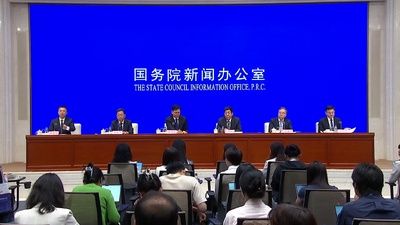
China has rejected allegations of forced labour and forced migration in the Xinjiang Uygur Autonomous Region, with Chen Ruifeng, Minister of the National Ethnic Affairs Commission, characterising such claims as baseless and unfounded. Speaking on Wednesday, Chen stressed that the Chinese Constitution explicitly prohibits forced labour in all forms, contradicting assertions made by certain Western organisations and media outlets that have levelled accusations against practices in the western province.
The government's denial comes as Beijing moves to strengthen its legal framework around labour rights. A significant piece of legislation—the Law on Promoting Ethnic Unity and Progress—was approved in March and is scheduled to take effect on July 1. This law introduces enhanced safeguards for workers moving across regional boundaries, including explicit protections for workers' rights and expanded access to legal support. The measure appears designed to address international concerns by codifying protections for multi-ethnic workers engaged in cross-regional employment, a category that encompasses many individuals from Xinjiang seeking work elsewhere in China.
According to official statements, all individuals from Xinjiang who relocate for employment opportunities do so entirely of their own volition. Chen emphasised that such movements are driven by personal ambition and the aspiration to provide better livelihoods for their families and acquire new professional competencies. The framing presents labour mobility as an economic opportunity rather than a coercive programme, positioning it within the context of individual choice and self-improvement.
The minister described the forced labour allegations as distinctly implausible and worthy of dismissal. He argued that labour transfer programmes operating in Xinjiang operate with full respect for participants' wishes and encompass workers from all ethnic backgrounds within the region. Rather than representing mandatory relocation, these programmes ostensibly aim to expand employment pathways and boost household earnings for Xinjiang's population, generating what officials characterise as mutually beneficial outcomes.
The economic data presented by officials points to substantial job creation across the region. Over a five-year period, Xinjiang generated more than 2.39 million new positions in urban centres through various government initiatives and policies. Beyond urban labour markets, agricultural workers have undertaken approximately 16.1 million journeys to seek employment outside their home regions, suggesting considerable mobility within the agricultural sector. These figures are marshalled as evidence that employment expansion is occurring on a significant scale, underpinned by policy frameworks that officials contend are designed to improve material conditions.
Income growth metrics further support the narrative of improving living standards. Among urban residents, per capita disposable income has expanded at an average annual rate of 5.3 per cent over the five-year span, while rural residents have experienced even faster growth at 8.1 per cent annually. These improvements in household purchasing power are presented as proof that economic opportunities are translating into tangible benefit for ordinary residents across different settlement patterns and socioeconomic categories.
The government has also constructed what it describes as a comprehensive employment policy architecture. By establishing systematic frameworks for fair employment practices and mechanisms designed to protect labour rights, Chinese authorities claim to have created conditions where all working-age individuals can secure employment. This institutional approach, they suggest, maximises opportunities for voluntary labour participation while ensuring that work is conducted in conditions befitting human dignity across all ethnic communities within the region.
For regional readers, China's forceful rebuttal carries implications for understanding Beijing's approach to governance in areas with significant ethnic minority populations. The concurrent introduction of new legislation suggests the government is responding to international pressure by attempting to institutionalise protections—whether such measures will satisfy critics or international observers remains contested. The statistical arguments about job creation and income growth address a fundamentally different claim than allegations concerning coercion and consent, creating parallel conversations that often talk past one another.
The dispute over Xinjiang's labour practices represents one of the most contentious issues in contemporary international relations, with Western governments and human rights organisations presenting evidence that contradicts China's characterisation. Southeast Asian nations, which maintain significant economic ties with Beijing and are themselves sensitive to questions about labour practices and ethnic minority treatment, are positioned as observers navigating between pressure from Western allies and strategic partnerships with China. How this particular exchange evolves will likely continue influencing regional diplomatic dynamics and international discussions around labour standards in the Asia-Pacific.