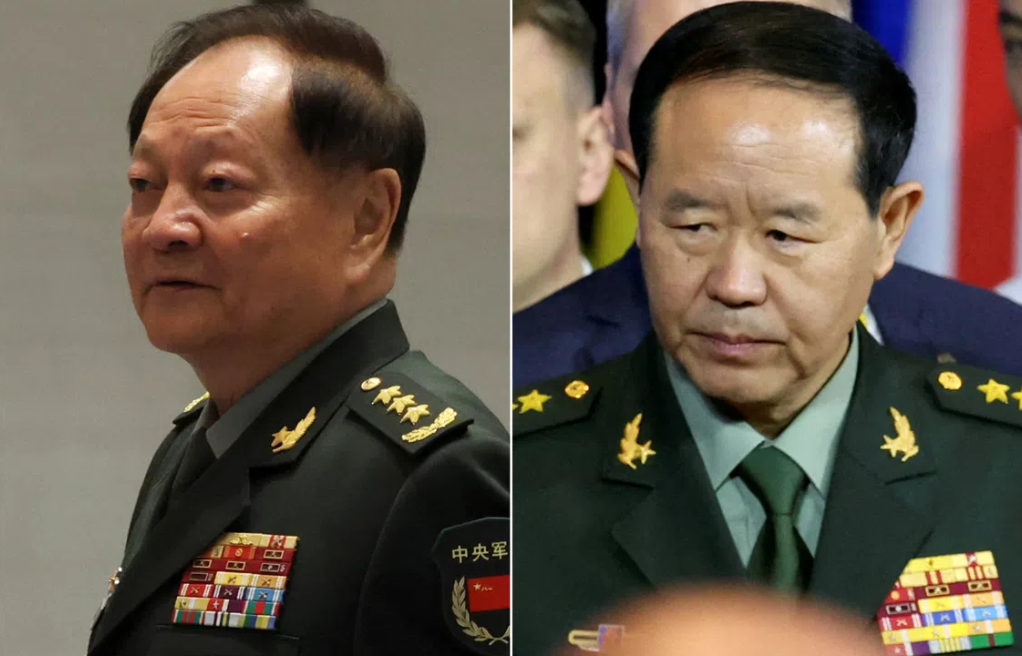
Beijing has dismissed two of its highest-ranking military officers from the country's supreme defence authority, marking another significant move in President Xi Jinping's relentless anti-corruption campaign within the armed forces. Zhang Youxia and Liu Zhenli have been removed from the state Central Military Commission following investigations into suspected serious violations of discipline and law, according to an announcement by China's official Xinhua news agency on Friday.
The removals represent a dramatic reduction in the commission's active membership. What was once a seven-member body now has only two functioning members, including Xi himself. This dramatic thinning of ranks underscores the sweeping nature of the military purge, which has fundamentally reshaped China's defence establishment over the past decade. The scale of departures raises questions about how Beijing is managing institutional continuity and succession planning within its military hierarchy during this period of sustained upheaval.
Zhang held the position of vice-chairman of the Central Military Commission, making him the second-most powerful figure in the military chain of command after Xi. He was also a member of the Politburo, the Communist Party's elite inner circle that sets national policy. Liu served as a CMC member and chief of staff of the commission's Joint Staff Department, effectively managing day-to-day military operations. Both officers occupied positions that gave them significant influence over strategic decision-making, procurement, and personnel matters across China's military apparatus.
The military sector has become the primary focus of Xi's broader anti-corruption initiative, which he launched in 2012 upon taking power. Over more than a decade, this campaign has systematically targeted officers at all levels, from regional commanders to generals who once held prominent central positions. The scope and intensity of military purges have far exceeded those in other sectors of the Chinese state and Communist Party, suggesting that Xi identified corruption, factional loyalties, or both as fundamental problems requiring comprehensive restructuring.
Just last month, Xi personally called on senior Communist Party leaders to intensify their efforts against corruption specifically within military ranks. This rhetorical emphasis, combined with Friday's announcement, signals that the anti-corruption drive remains an active policy priority rather than a concluded campaign. The timing of his renewed appeal shortly before these removals suggests a coordinated effort to reinforce messaging about institutional discipline and party loyalty throughout the armed forces.
China maintains parallel command structures at the state and party levels, with both the state Central Military Commission and the Communist Party's Central Military Commission technically functioning as separate entities. However, in practice, they operate as a unified institution with overlapping membership and shared authority. Friday's announcement specifically concerned the removal of Zhang and Liu from the state CMC structure, as determined by the Standing Committee of the National People's Congress. Notably, neither has yet been formally or publicly stripped of positions within the Communist Party's parallel commission, leaving their status there ambiguous.
The National People's Congress published an updated roster of its members on Friday, with Zhang and Liu's names conspicuously absent from the deputies list. This parliamentary action formalized their loss of seats, though ten other lawmakers were simultaneously removed. The updated list indicates that additional officers face consequences from this enforcement action, including Lieutenant General Zhong Shaojun, who previously directed the CMC's General Office, and General Ju Qiansheng, a former commander of the Strategic Support Force, which oversees emerging military domains including cyber and space operations.
The removals extend beyond uniformed military personnel. Gao Shiwen, formerly the mayor of Nanchang in southern China, has also lost his position. Notably, Gao previously served at China Aerospace Science and Technology Corporation, a state-owned enterprise responsible for developing advanced defence systems and space technology. The inclusion of aerospace and defence industry figures suggests that Xi's anti-corruption campaign encompasses not just military officers but the broader defence-industrial complex that supplies and supports the armed forces.
Separately, China's top political advisory body took action against Zhao Zongqi on Wednesday, stripping him of his membership. Zhao commanded the Western Theatre Command during the 2020 border clashes between Chinese and Indian forces in the Ladakh region, making his removal particularly significant given its geopolitical implications. The removal of an officer associated with recent border tensions potentially reflects dissatisfaction with military performance, policy outcomes, or internal investigations into how those confrontations were managed.
For Malaysia and Southeast Asia, the cascading removals of senior Chinese military commanders carry substantial implications. Stability and predictability in military leadership influence how regional powers calibrate their defence strategies and diplomatic approaches. A military establishment undergoing sustained purges may face challenges maintaining clear command authority, coordinating cross-service operations, or implementing long-term strategic initiatives. Simultaneously, officers consolidating power during such tumultuous periods may adopt hardline positions to demonstrate loyalty and resolve.
The cumulative effect of these purges has been to concentrate authority within the military around Xi's personal office while removing potential rivals or officers from competing factions. This centralization reflects Xi's broader governance philosophy, yet it also creates risks. Military organizations require deep professional expertise, institutional memory, and established channels of communication to function effectively. Removing hundreds of experienced officers while simultaneously demanding accelerated military modernization and readiness places substantial strain on organizational capacity.
The ongoing anti-corruption campaign demonstrates Xi's determination to maintain supreme control over the military and eliminate alternative power bases within China's defence establishment. However, the frequency and scale of these removals also reveal the depth of the challenges Xi faced when consolidating power, suggesting that corruption, factionalism, and competing loyalties were systemic rather than isolated problems within the armed forces. As China's military continues to modernize and expand its capabilities, the institutional disruptions caused by sustained purges merit close observation from neighbouring countries seeking to understand Beijing's strategic intentions and capacity for executing its military plans.

