China's Ministry of Foreign Affairs has expressed formal appreciation for Malaysian Prime Minister Datuk Seri Anwar Ibrahim's recent public statements on the Taiwan question and his unwavering adherence to the one-China principle. The endorsement, delivered through an official spokesperson posting on X on Wednesday, reflects Beijing's satisfaction with Malaysia's diplomatic alignment on what remains one of Asia's most sensitive geopolitical issues.
In his statement, the Chinese foreign ministry spokesperson underscored that nothing will prevent China from achieving reunification, while simultaneously asserting that the international community's commitment to recognising the one-China principle cannot be undermined or questioned. This messaging carries particular weight given the current strategic environment in East Asia, where great power competition over Taiwan's political status has intensified considerably.
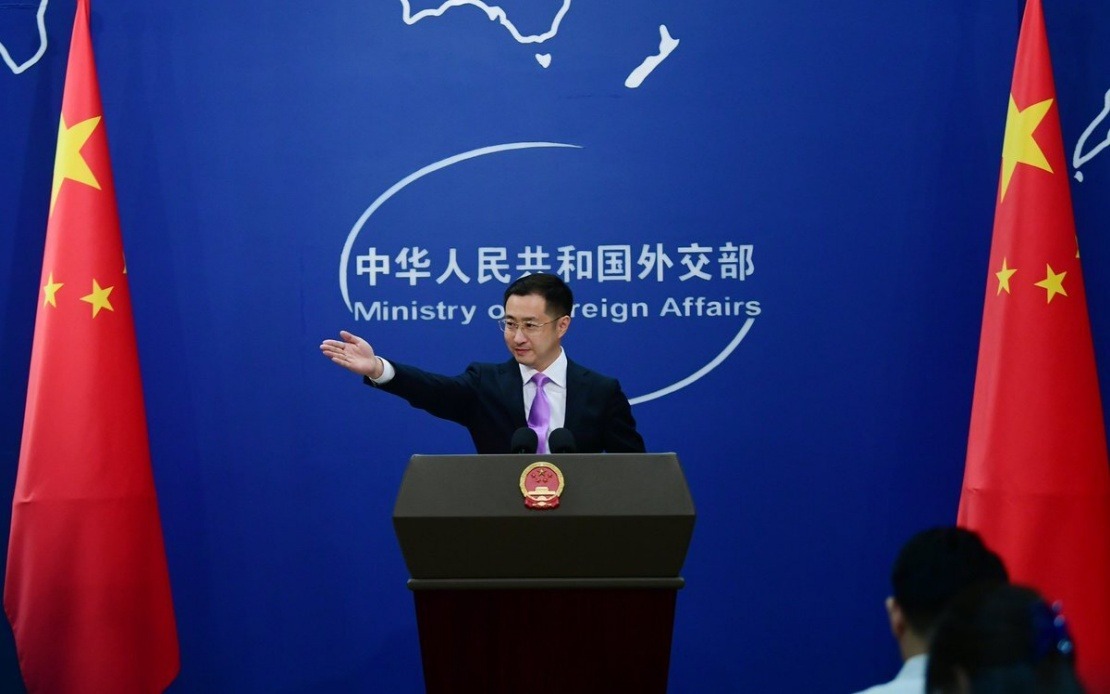
During a routine press briefing in Beijing on the same day, Chinese foreign ministry spokesperson Lin Jian elaborated further on China's position regarding Anwar's comments. Lin characterised the one-China principle not merely as a matter of geopolitical preference but as an expression of historical justice and rightness. According to Lin's remarks, as reported by Xinhua, upholding this principle aligns with both popular sentiment across Asia and what constitutes morally correct international relations.
Lin reiterated Beijing's foundational claim with deliberate clarity: Taiwan constitutes an inalienable component of China's territory, and the process of Chinese reunification represents an unstoppable historical trend that no external pressure or interference can arrest. This framing transforms the Taiwan question from a contemporary political dispute into what Beijing presents as an inevitable unfolding of historical processes, thereby attempting to deprive the matter of negotiability.
Anwar's original remarks emerged during an interview with international broadcaster Al Jazeera, in which the Malaysian prime minister articulated his perception that Taiwan exists as part of China. He emphasised this position by noting that recognition of the one-China principle enjoys universal acceptance across the international community, suggesting that Malaysia's endorsement represents alignment with a global consensus rather than a contentious political choice.
For Malaysia, this exchange demonstrates the careful calibration required in managing relations with China while maintaining broader regional interests. As a Southeast Asian nation with significant economic ties to Beijing and strategic partnerships throughout the region, Malaysia must navigate statements on sensitive issues like Taiwan's political status with considerable diplomatic finesse. Anwar's position aligns Malaysia with China's preferred diplomatic framework without explicitly precluding Malaysia's participation in regional security mechanisms or economic arrangements that might concern Beijing.
The timing of this diplomatic exchange carries significance beyond the immediate statements themselves. China has intensified its diplomatic messaging regarding Taiwan as tensions across the Taiwan Strait have escalated, with increased military activities and political rhetoric from all parties. By securing public affirmation from a significant Southeast Asian leader, Beijing gains diplomatic leverage in its broader campaign to isolate Taiwan internationally and consolidate support for its reunification objectives.
Malaysia's traditional foreign policy approach emphasises non-alignment and pragmatic engagement with all major powers, yet its statements on the one-China principle have historically reflected consistent recognition of Beijing's sovereignty claims over Taiwan. This continuity across different Malaysian administrations reflects both the substantive historical relationship between Malaysia and China and the practical asymmetry in power dynamics that shapes regional diplomacy.
The exchange also illuminates how China employs public diplomatic recognition to reinforce its framing of issues. By publicly commending Malaysian statements, Beijing transforms private diplomatic alignment into visible international endorsement, creating precedent and pressure for other nations to adopt similar positions. This multilateral reinforcement strategy has proven effective in consolidating the one-China principle across the developing world and among non-aligned nations.
For other Southeast Asian governments monitoring this interaction, it reflects the diplomatic cost of maintaining independent positions on Taiwan-related matters. Several ASEAN members have articulated more cautious or neutral positions regarding Taiwan's political status, or have sought to maintain non-committal stances that preserve flexibility. Malaysia's explicit reaffirmation represents one end of the spectrum of Southeast Asian diplomatic responses to Beijing's preferences.
The broader implications for regional stability remain complex. While reaffirmations of the one-China principle from regional leaders may satisfy Beijing's immediate diplomatic objectives, the underlying geopolitical tensions concerning Taiwan's status, the role of major powers in the Taiwan Strait, and competing visions for regional order remain fundamentally unresolved. Diplomatic statements, however emphatic, cannot address the structural interests and strategic competition that define contemporary Asia-Pacific relations.
Looking forward, Malaysia will likely continue occupying a position of careful balance, affirming Beijing's preferred language on sovereignty while attempting to preserve its broader regional autonomy. The question for Malaysia and other Southeast Asian states involves whether such diplomatic alignment on symbolic issues translates into tangible constraints on their strategic flexibility or whether they can maintain substantive independence despite rhetorical alignment with China's core positions.

