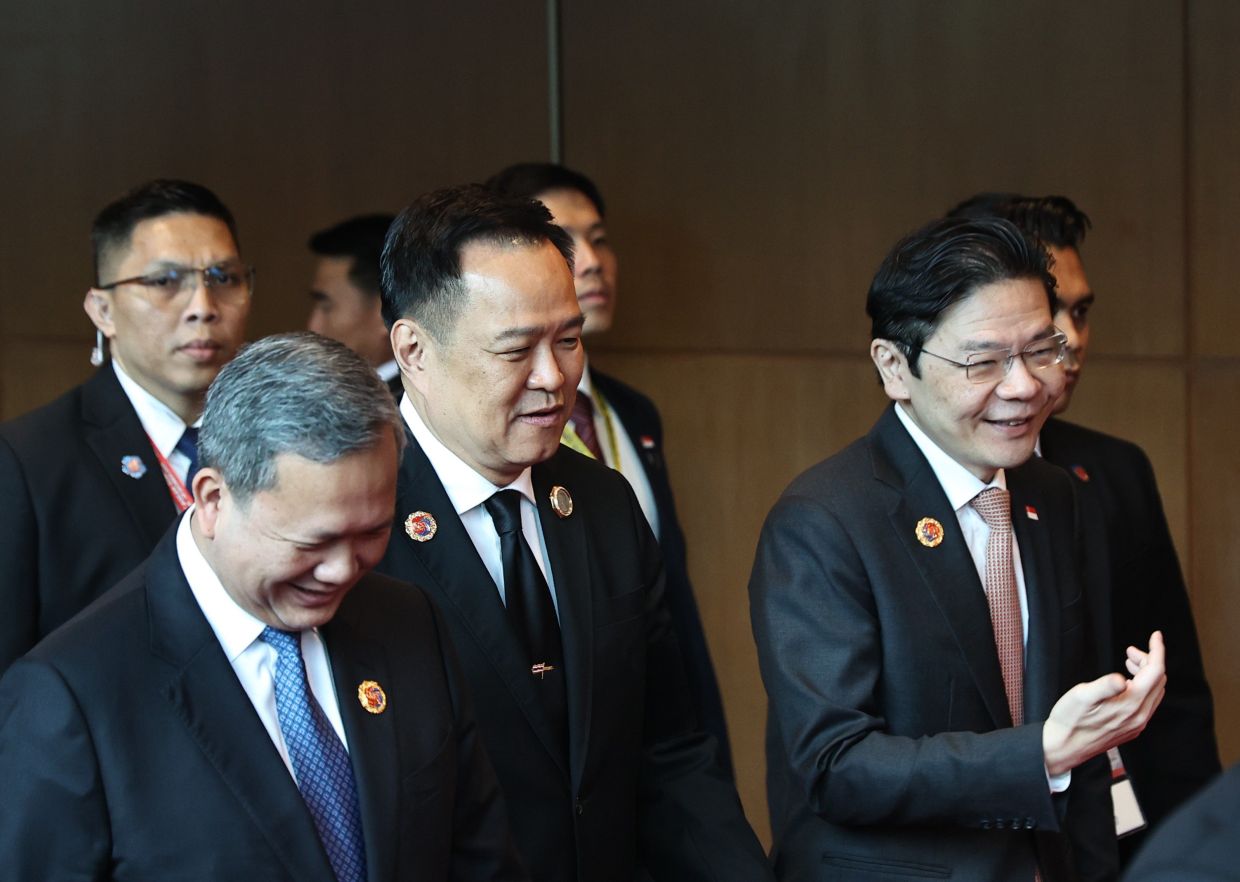
Speculation has intensified that China may step into a mediating role between Cambodia and Thailand as friction continues along their contested border region, following recent high-level diplomatic signals from all three parties. The possibility gained momentum after Cambodia's Prime Minister Hun Manet discussed the dispute directly with Chinese Premier Li Qiang during bilateral talks in Beijing on July 16, and Thai Prime Minister Anutin Charnvirakul subsequently indicated Bangkok's willingness to accept Chinese assistance in defusing tensions. Although neither the Cambodian nor Chinese governments explicitly mentioned mediation in their official statements, observers view the timing and tone of these exchanges as suggestive of Beijing's potential expanded diplomatic engagement on the issue.
Hun Manet's visit to China was ostensibly centred on his participation in the 2026 World Artificial Intelligence Conference, yet the opportunity to brief Li on border developments underscores Phnom Penh's determination to keep one of its most crucial strategic partners fully informed. During their meeting, Hun Manet reaffirmed Cambodia's principled position that any resolution must occur through peaceful channels and in compliance with international legal frameworks and existing bilateral agreements with Thailand. The Cambodian government's formal statement emphasised this commitment while acknowledging the complexities inherent in border disputes that carry historical weight and affect civilian populations in frontier communities. This direct engagement represents one of the most significant occasions on which Cambodia has formally addressed the border question at such a senior level with Beijing since hostilities intensified the previous year.
China's response, while characteristically measured, provided clear indication of its receptiveness to playing a constructive part. Premier Li reaffirmed Beijing's unwavering support for Cambodia and reinforced the traditional rhetorical framework by describing the two nations as "ironclad friends," language that signals deep strategic alignment. The absence of any explicit mediation proposal from either side should not be read as disinterest; rather, it reflects diplomatic caution and the reality that formal mediation typically requires explicit requests from both disputants. Beijing's approach has been to consistently keep diplomatic channels open while avoiding the appearance of imposing itself as an arbiter without invitation.
The narrative took an important turn when Thai Prime Minister Anutin, who was simultaneously in China to attend the same conference, signalled Bangkok's pragmatic openness to Chinese involvement. Speaking to Thai media, Anutin offered a carefully calibrated response, stating that Thailand had not requested mediation but was "not closing the door" should Beijing wish to facilitate tension reduction. This formulation cleverly preserves Thai autonomy and respect for direct bilateral engagement while leaving space for Beijing to offer assistance if circumstances warrant. Anutin's emphasis that Thailand still prefers resolving differences through face-to-face dialogue with Cambodia reflects both the traditional approach among regional neighbours and the sensitivity surrounding territorial matters that touch upon national sovereignty.
China's track record on this issue demonstrates consistent diplomatic investment over several years. During last year's Asean Foreign Ministers' Meeting, Chinese Foreign Minister Wang Yi publicly articulated Beijing's willingness to "uphold an objective and fair position and play a constructive role for the harmonious coexistence between Thailand and Cambodia," delivered separately to counterparts from both countries. Wang's intervention emphasised the importance of peaceful resolution through dialogue while reiterating China's commitment to regional stability—messaging that resonates across Southeast Asia where Beijing's role as a stabilising force remains contested among member states. Since those initial statements, China has actively supported implementation of ceasefire arrangements and has hosted trilateral meetings involving senior officials from all three parties aimed at building confidence and maintaining the fragile peace.
The convergence of Hun Manet and Anutin in Beijing at the same time, despite no announced bilateral meeting between them, creates intriguing diplomatic possibilities. While neither government has publicly orchestrated direct talks between the two leaders during this visit, the shared venue and simultaneous presence provide informal networking opportunities that are often underestimated in diplomatic analysis. Such gatherings frequently generate side conversations and behind-the-scenes engagement that shape subsequent official positions more than formal meetings sometimes do. The very fact that both prime ministers found it necessary to visit China during the same week suggests the importance each government places on maintaining alignment with Beijing despite their own bilateral tensions.
Cambodia's broader strategy on the border question reveals a sophisticated understanding of international law and multilateral engagement. Phnom Penh has actively welcomed Asean observer missions to the disputed areas and has pursued legal mechanisms through international frameworks, demonstrating that it does not rely solely on bilateral or great power intervention. This multi-pronged approach includes securing support from regional organisations while maintaining dialogue channels with key powers like China. The consistent reaffirmation of Cambodia's commitment to non-military resolution and adherence to international legal norms positions Phnom Penh as the responsible actor in regional eyes, a framing that enhances its legitimacy in appealing for external support.
The potential for Chinese mediation carries implications extending beyond the immediate Cambodia-Thailand relationship. How Beijing approaches this situation will influence perceptions of its role in Southeast Asian disputes more broadly, particularly among nations concerned about Chinese dominance in regional affairs. A successful mediation effort could enhance China's standing as a stabilising force and reinforce its position as an indispensable player in regional security architecture. Conversely, failure or perceived bias could undermine confidence in Beijing's neutrality and complicate its relationships with other Southeast Asian governments navigating similar territorial questions.
For Thailand, accepting Chinese mediation would represent a pragmatic calculus about managing tensions with a neighbour while preserving strategic flexibility with a powerful partner. Thailand's careful language about not closing the door reflects Bangkok's awareness that border disputes with neighbours carry domestic political sensitivity and cannot be seen as capitulation. The ability to frame any resolution as emerging through dialogue rather than mediation becomes important for governments facing domestic constituencies concerned about territorial integrity. Thailand's preference for direct bilateral engagement, therefore, should not be interpreted as resistance to Chinese involvement but rather as a sequencing preference that preserves face and agency.
Meanwhile, Cambodia's decision to actively brief China on developments suggests confidence in Beijing's alignment with Phnom Penh's interests, even if formal mediation never materialises. The strategic partnership between Cambodia and China encompasses security, economic, and diplomatic dimensions that extend far beyond the border dispute. For Hun Manet's government, maintaining this relationship while pursuing peaceful resolution of the border question represents the optimal outcome, and engaging Beijing serves both purposes simultaneously. The government demonstrates commitment to peaceful resolution while reinforcing ties with its most supportive external partner.
Looking ahead, whether China will formally assume mediation responsibilities remains genuinely uncertain. The absence of explicit requests from either Cambodia or Thailand, despite recent diplomatic signals, suggests both countries prefer to preserve maximum flexibility. Beijing has historically demonstrated patience with regional disputes, intervening when invited but avoiding forced involvement that could generate resentment. The current phase appears to be exploratory, with all three parties signalling openness to expanded engagement while maintaining plausible deniability about formal diplomatic initiatives. The next substantial developments will likely emerge from bilateral Cambodia-Thailand discussions or from subsequent high-level meetings that might occur through Asean or other multilateral platforms.

