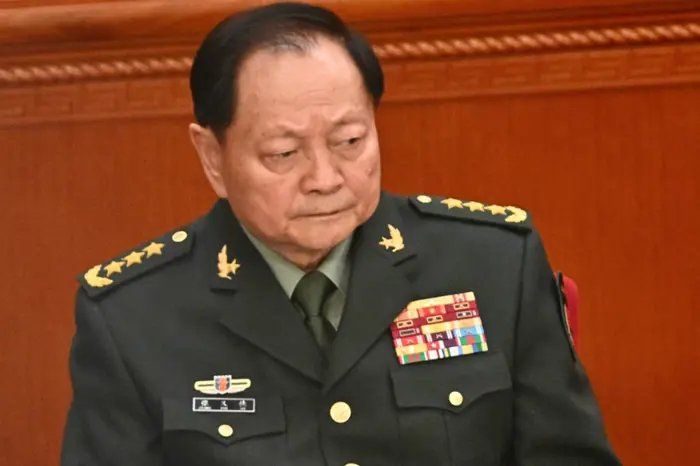
China has removed Zhang Youxia, a former senior general, from his role as vice chairman of the Central Military Commission, according to an announcement by state media on Friday. The decision came roughly seven months after authorities launched an investigation into Zhang for allegedly committing "serious violations of the law and discipline", a phrase routinely employed by Beijing to describe corruption allegations. Zhang's dismissal marks another significant casualty in the broader anti-corruption campaign that has become a defining feature of President Xi Jinping's leadership over the past decade.
Zhang's position on the Central Military Commission represented one of the most senior military roles in China's government structure. As the more prominent of two vice chairmen on the CMC, he effectively held the rank of China's highest-ranking general before his removal. His seniority and perceived proximity to Xi Jinping made his fall from grace a notable development that surprised many observers of Chinese politics and military affairs, suggesting that even those with strong connections to the leadership are not immune to such investigations.
The investigation into Zhang was formally announced in January this year, when the defence ministry disclosed that both he and another senior military official, Liu Zhenli, were under scrutiny for alleged serious breaches of discipline and law. Liu held the position of chief of staff of the CMC's joint staff department, which carries significant responsibility for managing military combat planning and strategic operations. The simultaneous investigation of two prominent military figures indicated a coordinated effort rather than isolated misconduct.
On Friday, China's state news agency Xinhua reported that the standing committee of the National People's Congress—effectively China's parliament—had convened and formally decided to remove Zhang from his post as vice chairman of the Central Military Commission. The official announcement represented the culmination of months of investigation and internal proceedings. The decision now sees both Zhang and Liu stripped of their positions within the military hierarchy, marking the completion of the formal process that began with the public announcement of their investigation.
The anti-corruption drive under Xi Jinping has become one of the most sweeping and high-profile initiatives of his tenure as leader. Since taking office over a decade ago, Xi has overseen the investigation and removal of hundreds of senior officials across government, military, and state-owned enterprises. These campaigns have been framed as essential measures to restore discipline and integrity within the Communist Party and its institutions. Supporters argue that the initiative has strengthened governance, while critics contend that such purges sometimes serve as political tools to consolidate power and eliminate rivals.
Zhang's removal carries particular significance within Chinese military circles, where questions about loyalty, hierarchy, and factional alignments have long influenced career progression and institutional dynamics. His position had given him substantial influence over military affairs and strategic planning. The fact that his apparent closeness to Xi Jinping did not shield him from investigation suggests that even the highest levels of the party and military apparatus remain subject to scrutiny under the Xi administration's anti-graft mandate.
For Malaysia and Southeast Asia, developments within China's military hierarchy warrant attention given the region's strategic geography and economic interdependence with Beijing. The Central Military Commission represents the apex of China's military decision-making, and changes to its composition can reflect shifting priorities or power balances within the Chinese government. Understanding these internal shifts provides insight into how Beijing may adjust its foreign policy, military posture, and diplomatic engagement with neighbouring states.
The timing of Zhang's removal and the earlier investigation signal ongoing institutional efforts to reshape China's military leadership and eliminate potential centres of resistance or competing influence. The CMC serves as the supreme authority over all Chinese armed forces, making its composition crucial to understanding how military decisions are made and implemented. The removal of senior figures ensures that those in power align with Xi's vision for military modernisation and strategic direction.
Liu Zhenli's dismissal alongside Zhang underscores that the investigation was comprehensive and not focused solely on a single individual. As chief of staff of the joint staff department, Liu's portfolio encompassed critical operational and planning functions. His removal from this role removes him from direct involvement in military strategy and execution. The parallel removals suggest that the investigation uncovered systemic issues or coordinated misconduct rather than isolated violations by individual officers.
The investigation and removal process demonstrates China's capacity to conduct high-level institutional change within its military structure without apparent public conflict or institutional paralysis. Despite the significant seniority of those involved, the system has managed the transition and transition of responsibilities to other officials. This reflects the institutional maturity of the Chinese military apparatus, even as questions persist about the transparency and fairness of the investigative processes employed.
China's handling of military corruption allegations reflects broader governance challenges facing large bureaucratic systems. While the removal of senior officials can signal commitment to accountability, the selective nature of investigations and the reliance on opaque processes limit international observers' ability to assess whether such measures address genuine systemic problems or serve narrower institutional or political objectives. For neighbouring countries seeking to understand Beijing's military intentions and strategic planning, such changes in personnel and institutional structure remain important indicators of policy direction.

