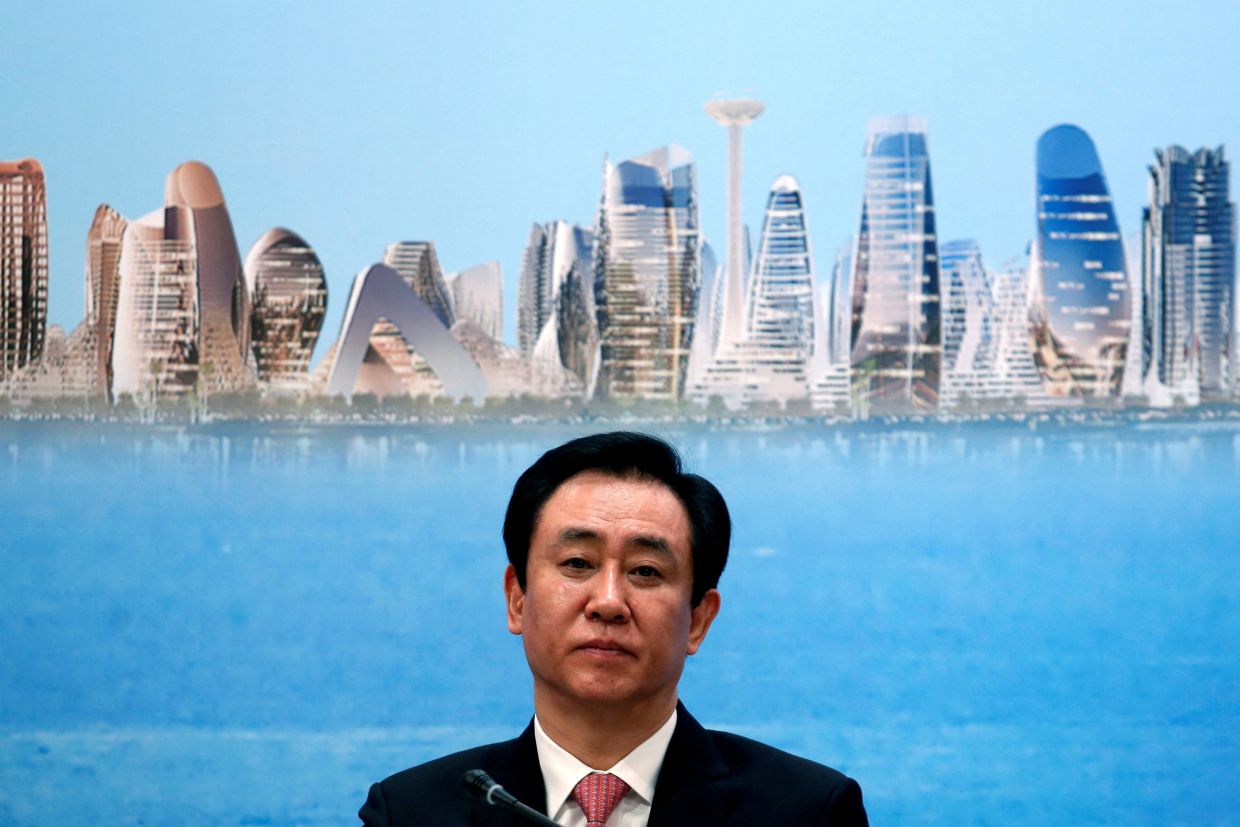
Hui Ka Yan, the founder of China Evergrande Group, has been handed a life prison sentence by a Shenzhen court, concluding a remarkable downfall for the man once regarded as Asia's wealthiest individual. The conviction, announced on Thursday, comes roughly five years after the catastrophic collapse of his real estate empire, an event that reverberated throughout China's financial system and sent shockwaves across global markets. Hui, who is 67 years old, pleaded guilty in April to eight separate criminal charges encompassing misuse of corporate funds, fraudulent fundraising schemes, unlawful acceptance of public deposits, improper loan extensions, fraudulent securities issuance and bribery.
The Shenzhen court's decision included a sweeping confiscation order covering all of Hui's personal assets, erasing the vast wealth that he had accumulated over decades of aggressive expansion. The proceedings represent a conclusive chapter in the extraordinary rise and precipitous fall of a rural-born entrepreneur who transformed himself into a titan of China's property sector. In his mid-career peak during 2017, Hui's personal fortune reached 45.3 billion US dollars according to Forbes, positioning him at the apex of Asian wealth rankings. The court emphasised that Evergrande's criminal conduct, alongside that of its subsidiary Hengda Real Estate and Hui personally, demonstrated "particularly huge amounts and egregious circumstances" that warranted severe punishment under law.
Evergrande's trajectory from industry dominance to financial catastrophe has profoundly illustrated the structural vulnerabilities within China's property market, a sector that has persistently constrained broader economic performance. The company, once the nation's premier developer by contracted sales, has defaulted on the vast majority of its approximately 300 billion US dollars in liabilities. This unprecedented collapse has exposed the fragility of a business model predicated on continuous debt accumulation and rapid market expansion. The implications extend far beyond corporate governance failures; the crisis has undermined confidence in China's financial stability and highlighted the interconnectedness of the property sector with household wealth accumulation, with millions of middle-class Chinese holding investments in real estate developments and related financial products.
Beyond Hui's individual sentence, the judicial proceedings ensnared dozens of other individuals connected to Evergrande. Five senior executives received sentences ranging from six to eighteen years alongside substantial fines, while state media reported that an additional 56 individuals associated with the company received criminal sentences on the same day. The court additionally imposed fines totalling 8.82 billion yuan—approximately 1.31 billion US dollars—against Evergrande itself, and levied 7 billion yuan in fines against Hengda Real Estate. This coordinated enforcement action signals the Chinese government's determination to hold senior corporate figures accountable for financial misconduct that had widespread ramifications.
The human cost of Evergrande's failure cannot be overstated. Countless ordinary Chinese citizens, many with modest incomes, invested in wealth-management products tied to the company, only to see their savings evaporate. This triggered sustained protests that raised concerns among authorities about potential social instability. Commentary from aggrieved homeowners on social media platforms reveals the depth of public anger and frustration, with individuals expressing bitter sentiments about bearing the costs of corporate mismanagement and questioning whether prison constitutes adequate justice for executives who orchestrated massive financial fraud.
Hui's origins lay in humble circumstances within rural Henan province in central China, where he was raised by his grandmother following his early years as a steel technician. When he established Evergrande in 1996, few could have anticipated that his company would eventually emerge as China's largest property developer by contracted sales. His expansion strategy relied heavily on leveraging debt, a tactic that accelerated growth but ultimately created an unsustainable financial structure. The pathway from provincial obscurity to continental prominence, and subsequently to criminal conviction, encapsulates both the dynamism and the recklessness that characterised China's property boom during the previous two decades.
The formal liquidation proceedings, initiated by a Hong Kong court in 2024 and followed by the delisting of Evergrande shares from the Hong Kong Stock Exchange, have proceeded at an extraordinarily slow pace. Liquidators reported that as of August, only approximately 255 million US dollars worth of assets had been successfully sold, a figure dwarfed by the aggregate value of creditor claims totalling 45 billion US dollars. This yawning gap between recoverable assets and outstanding obligations underscores the magnitude of the financial destruction inflicted by mismanagement and fraud. International creditors, including foreign investors and institutions, confront the prospect of recovering merely a fraction of their investments, reflecting the borderless nature of modern financial markets and the systemic risks posed by major corporate failures in China.
Liquidators are simultaneously pursuing civil legal action across multiple jurisdictions to seize offshore assets controlled by Hui and his former spouse, attempting to recover approximately 6 billion US dollars in dividends and remuneration distributed to the founder and other former executives. These international proceedings represent an attempt to pursue accountability and asset recovery beyond mainland Chinese territory, though such efforts frequently encounter jurisdictional complications and practical obstacles in execution. The parallel regulatory enforcement actions, including the 6.6 million US dollar fine imposed by China's securities regulator in 2024 and the permanent market ban imposed on Hui, demonstrate the multi-layered regulatory response to the misconduct that precipitated the company's collapse.
For Malaysian and Southeast Asian observers, the Evergrande saga carries multiple instructive dimensions. The crisis illuminates the systemic risks embedded within a property sector that had grown substantially beyond prudent leverage ratios, a cautionary example as regional developers increasingly expand their presence across Asia. It also illustrates the regulatory frameworks and enforcement mechanisms that Chinese authorities have mobilised when confronting major financial crimes, suggesting that Southeast Asian regulatory bodies may face comparable challenges as their own property sectors mature. Furthermore, the involvement of foreign creditors demonstrates how property market crises originating in a major economy can rapidly transmit financial stress to international investors, underscoring the importance of portfolio diversification and rigorous due diligence among regional investment managers.

