China is substantially deepening its scientific engagement with Iran in the strategically crucial domain of rare earth metals exploration and processing, according to announcements from China's National Natural Science Foundation. The initiative represents a significant expansion of the bilateral science and technology partnership between the two countries, occurring against a backdrop of intensifying global competition for control of critical mineral supply chains that are essential to modern defence and technology industries.
Under the collaborative framework, China's science foundation will commit 30,000 yuan (approximately US$4,200) per workshop to cover operational costs encompassing seminars, accommodation arrangements, and internal travel logistics. Iran's National Science Foundation will reciprocate by funding international travel for Iranian researchers and local accommodation for Chinese scientific delegations visiting the country. This structured financial commitment underscores the institutional seriousness with which both nations are approaching the partnership, moving beyond rhetorical gestures into concrete resource allocation.
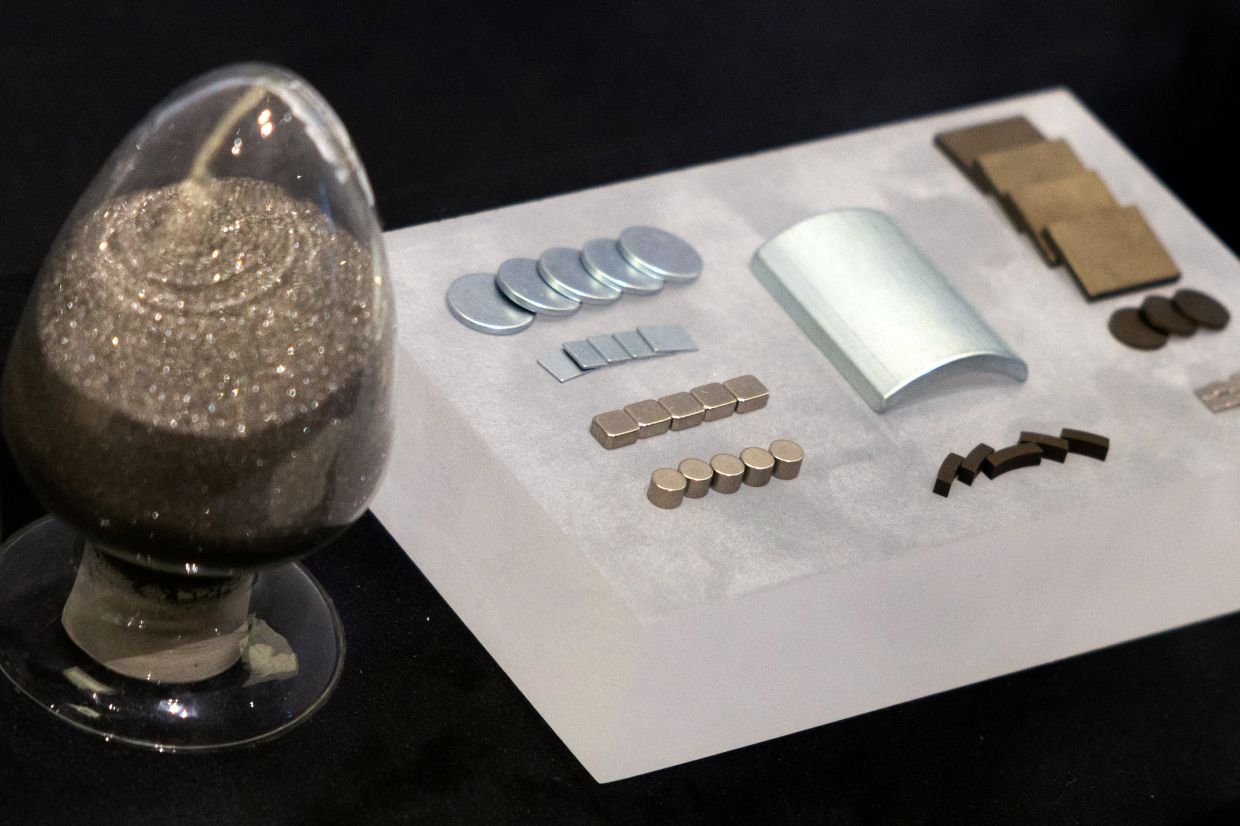
Rare earth elements represent a group of 17 metallic materials possessing distinctive magnetic and electronic characteristics that render them indispensable to contemporary military technologies. From precision-guided missiles and advanced fighter aircraft to sophisticated radar systems and electronic warfare capabilities, modern defence arsenals depend fundamentally on reliable access to these materials. This dependency transforms rare earth sourcing into a geopolitical vulnerability for nations lacking domestic reserves or processing capacity, a reality that has become increasingly apparent to policymakers in Washington and allied capitals.
The timing of this Sino-Iranian scientific cooperation carries particular significance. The Trump administration recently unveiled US$3 billion in investment commitments directed toward critical mineral extraction and battery production infrastructure, explicitly framed as an effort to replenish military stockpiles and reduce American dependence on Chinese supply chains. This represents a direct policy response to Beijing's demonstrated willingness to weaponise rare earth exports during periods of trade friction. When the previous Trump administration initiated trade hostilities with China last year, Beijing responded by implementing stringent rare earth export restrictions that severely disrupted supplies reaching American manufacturers and starkly illustrated Washington's strategic vulnerability.
China's dominant position in global rare earth markets remains unparalleled. The country possesses the world's most substantial proven reserves and exercises overwhelming control over both production and processing infrastructure. Beyond these structural advantages, Beijing has increasingly tightened restrictions on technology transfer related to rare earth refinement and application, effectively creating barriers that prevent other nations from rapidly developing competitive processing capabilities. This combination of resource control and technological gatekeeping has granted China disproportionate leverage in international strategic negotiations.
Iran's rare earth potential represents largely uncharted territory compared to established reserves elsewhere. Geological surveys indicate that Iran's territory contains iron ore and phosphate formations characterised by geological conditions typically associated with significant rare earth deposits. A February assessment by the Hague Research Institute identified rare earth anomalies distributed across approximately 7,000 square kilometres of central Iranian territory, suggesting reserves of potentially substantial magnitude. However, Iran's current extraction and processing infrastructure remains nascent, with industrial-scale production capabilities still years away from realisation.
The formal scientific collaboration between Beijing and Tehran originates from a 2017 memorandum of understanding signed in the Chinese capital. Since that initial agreement, the two national science foundations have been funding joint research initiatives spanning an expansive range of scientific disciplines. Their partnership encompasses mathematics, biological sciences, medical research, renewable energy technologies, materials science, climate change studies, and artificial intelligence applications. This breadth of engagement demonstrates that rare earth cooperation, while strategically significant, exists within a much larger framework of bilateral scientific and technological integration.
The specific rare earth research track was incorporated into the joint workshop programme launched in 2024, which initially allocated 150,000 yuan per workshop across climate change, artificial intelligence, advanced materials development, and manufacturing advancement. This year's expanded call for proposals maintains those original thematic areas while introducing new topics including nanomaterials for disease detection, environmental pollution monitoring, earthquake-resistant construction techniques, and sustainable manufacturing processes. The inclusion of rare earth exploration alongside these scientific and humanitarian applications demonstrates how Beijing frames critical mineral access within a broader narrative of scientific cooperation and development partnership.
For Malaysia and other Southeast Asian economies, this Sino-Iranian scientific initiative carries direct implications for regional supply chain dynamics and technological sovereignty. As ASEAN nations grapple with their own dependencies on imported rare earth materials for electronics manufacturing, renewable energy infrastructure, and emerging defence technologies, the emergence of alternative rare earth sources outside China's traditional dominance could reshape regional procurement strategies. Malaysian manufacturers, particularly those in the electronics and renewable energy sectors, face potential shifts in input costs and supply reliability depending on how successfully China and Iran develop competitive processing capabilities.
The geopolitical dimensions extend beyond simple market competition. By establishing deep scientific and technical collaboration with Iran on rare earth development, China is simultaneously strengthening its strategic partnership with a nation subject to multiple layers of Western sanctions, while creating alternative supply pathways that could circumvent international efforts to constrain Chinese resource leverage. This moves Beijing's rare earth strategy beyond passive reserve management into active partnership development with nations aligned with its geopolitical interests.
For the United States and its allies seeking to reduce reliance on Chinese rare earth supplies, Iran's potential development as an alternative source presents both opportunities and complications. An Iranian rare earth industry with Chinese technical assistance could theoretically diversify global supply chains; however, Western sanctions regimes and political hostilities make direct commercial engagement problematic. This creates a paradoxical situation where the most obvious solution to Chinese dominance becomes partly inaccessible to Western purchasers due to diplomatic and legal restrictions.
The scientific cooperation framework allows both Beijing and Tehran to advance rare earth development while maintaining sufficient diplomatic distance to complicate international enforcement of sanctions. By operating through science foundation channels rather than commercial arrangements, the partnership achieves substantive technological transfer while preserving elements of plausible deniability regarding resource extraction objectives. This institutional approach reflects sophisticated understanding of how modern international relations constrain direct state engagement on sensitive matters.

