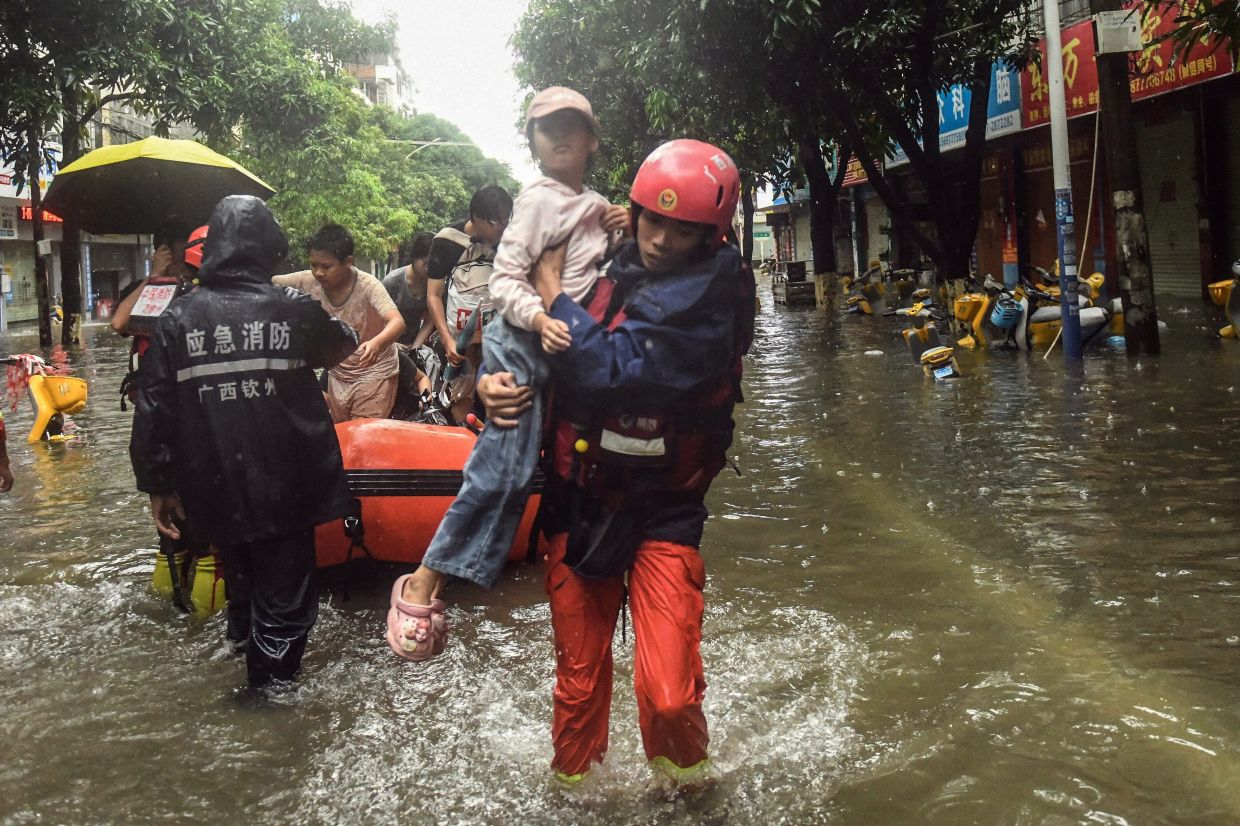
Rescue operations have intensified across China as authorities grapple with the aftermath of devastating weather systems that have claimed at least 38 lives and displaced more than 100,000 people. The crisis spans multiple provinces and involves distinct meteorological threats, from typhoon-driven flooding in the south to sudden terrain collapse in the northwest, revealing the nation's ongoing vulnerability to extreme natural events during its peak disaster season.
Typhoon Maysak delivered a particularly severe blow to Guangxi province in southern China, where torrential downpours transformed waterways into raging torrents and overwhelmed flood-management infrastructure. Official accounts confirm six fatalities in the immediate vicinity, though the true human cost extends far beyond the death toll. The evacuation of more than 100,000 residents from vulnerable areas underscore the scale of preventive measures authorities deemed necessary as weather systems continued to pose threats. Regional authorities have cautioned that rainfall would persist through Wednesday across both Guangxi and the neighbouring Guangdong province, raising the prospect of continued hazards for days to come.
The hydrological impact of the sustained precipitation has been extraordinary. Water breached the banks of 40 separate rivers and waterways across Guangxi, transforming the landscape into an inland sea in numerous locations. Agricultural communities have borne particular hardship, with nearly 13,000 acres of productive farmland submerged or destroyed by the floodwaters. State broadcaster CCTV documented the collapse of a reservoir dam, showing concrete structures disintegrating as muddy torrents surged through the breach while rescue personnel navigated the chaos from inflatable boats.
The Ministry of Water Resources has issued stark warnings about conditions expected to worsen. Minister Li Guoying predicted that water levels at the Wuzhou Hydrological Station would rise more than six metres above the official warning threshold by early Thursday morning. His statement highlighted a compounding danger: not merely the immediate flooding but the prolonged elevation of water levels that puts sustained pressure on dams, embankments and other engineering structures throughout the region. The cumulative stress from days of heavy rain and high water flow creates cascading vulnerabilities, as reservoirs become engorged and earth barriers face erosion from sustained contact with floodwaters.
Government agencies have activated their second-highest level of emergency response for flood management, mobilising resources and personnel across provincial networks. The State Flood Control and Drought Relief Headquarters coordinated the deployment of additional relief supplies including food rations, protective raincoats and rescue equipment. Yet the logistics of reaching hundreds of thousands of displaced persons across an inundated landscape present formidable challenges, particularly as communications infrastructure may be damaged and access routes submerged.
Beyond the Guangxi flooding, central Hubei province experienced a distinct meteorological threat that proved equally lethal. Powerful thunderstorms accompanied by gale-force winds swept through the region late Monday, killing 11 people and injuring 331 others. The concentrated nature of wind damage differed markedly from the diffuse inundation affecting Guangxi; concentrated winds destroyed 4,800 houses and completely collapsed 22 dwellings, leaving families suddenly homeless. One additional person remains reported missing in Hubei, adding to the ongoing search operations.
The catalogue of disasters expanded further with reports of tornado activity elsewhere in China and, most dramatically, a catastrophic landslide in Gansu province in the northwestern reaches of the country. This distinct hazard claimed 21 lives, occurring at Rencang village in Dangchang County when terrain suddenly gave way early Tuesday morning. The event buried dozens of people instantaneously, with search and rescue teams arriving at the site to conduct recovery operations. Investigations into the precise triggering mechanism remain ongoing, though such slope failures often result from water saturation reducing soil stability during periods of intense precipitation.
China's Centre for emergency management has already allocated reconstruction funding, setting aside 30 million yuan (approximately US$4.4 million) to address damage from the Gansu landslide. This commitment signals acknowledgment that recovery operations will extend well beyond immediate rescue phases, encompassing rebuilding of infrastructure, housing restoration and livelihood rehabilitation across affected communities.
The cascade of disasters reflects patterns familiar to China's summer season, when the continent's monsoon systems deliver intense precipitation to some regions whilst other areas experience oppressive heat and drought. The convergence of multiple hazards simultaneously—flooding, windstorms and slope failures—strains response capacity across provinces. Central leadership has recognised the urgency, with guidance issued directing rescue coordination teams to mobilise resources comprehensively and execute operations with maximum intensity.
For Southeast Asian observers, the Chinese experience carries particular relevance. The region shares similar geographical exposure to typhoons and monsoon-driven precipitation events, and both Vietnam and Thailand have grappled with comparable disasters in recent years. The scale of China's response—coordinating search operations across thousands of square kilometres, evacuating six-figure populations, activating national-level emergency infrastructure—provides instructive models for regional disaster management frameworks. The sustained nature of these crises also illustrates that peak seasons present not singular events but extended periods of vulnerability, requiring sustained readiness rather than discrete response spurts.
As rescue operations continue and water levels remain elevated across Guangxi, the full scope of casualties and property damage will become clearer in coming days. The intersection of typhoon damage, hydrological hazards and meteorological instability has created a complex disaster environment that will demand sustained governmental attention and coordination across multiple agencies and provinces for weeks ahead.

