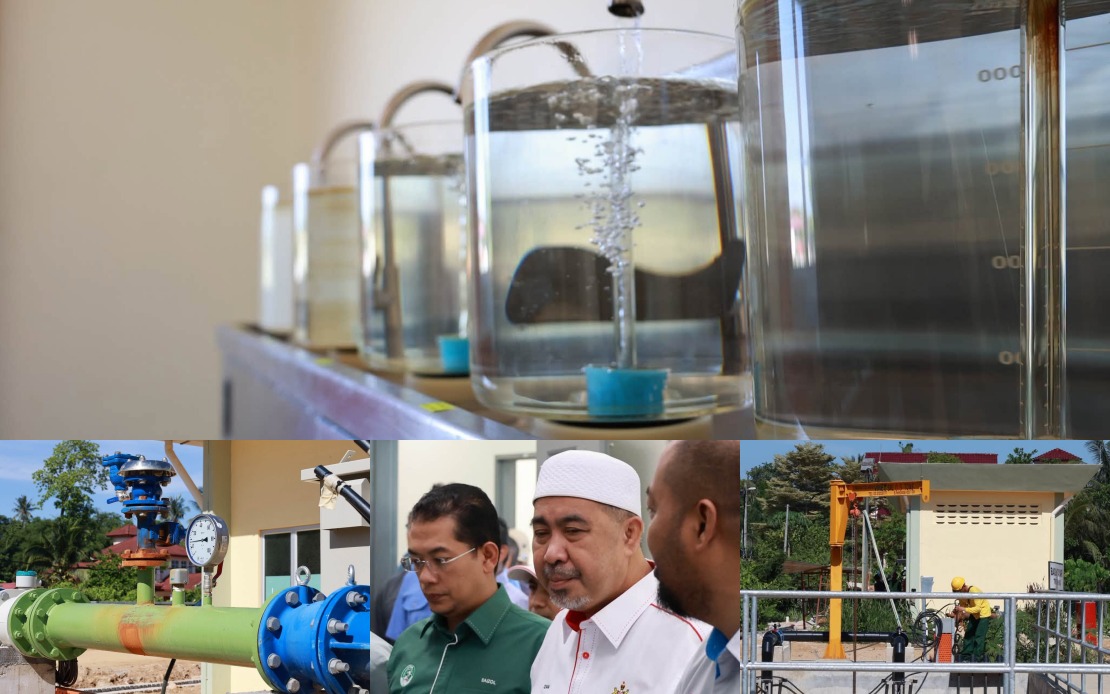
Kelantan's long-awaited Chicha 2 Water Treatment Plant in Pasir Hor is on track for September commissioning, marking a significant milestone in addressing the state's persistent water supply challenges. The RM54.98 million facility, which has achieved 97 per cent physical progress since its 2024 inception, represents a substantial investment in rural water infrastructure for the northern state. Upon opening, the plant will directly benefit residents across Pasir Hor, Telipot, Kota Seribong, Mulong and Tunjong, bringing reliable treated water access to communities that have historically struggled with supply constraints.
Datak Dr Izani Husin, who chairs Kelantan's Public Works, Infrastructure, Water and Rural Development Committee, emphasized the plant's capacity and technological significance during a recent site visit. The facility will operate at a production capacity of 20 million litres per day, drawing on groundwater sources from a 100-metre-deep excavation system. This scale of operation positions it as a substantial contributor to meeting regional demand, particularly in areas where conventional surface water sources have proven inadequate or unreliable during dry seasons.
The engineering approach adopted at Chicha 2 demonstrates innovation in local water treatment methodology. The plant utilises an aeration system to process groundwater, enabling the production of high-quality treated water suitable for household and commercial consumption. According to state officials, this aeration-based treatment method represents a first for Kelantan, potentially establishing a blueprint for future water infrastructure projects across the state. The technology's proven effectiveness could influence how authorities approach groundwater treatment at other planned facilities, signalling a shift towards more sustainable and reliable water sourcing strategies.
Beyond immediate supply improvements, the Chicha 2 project carries significant implications for consumer reconnection and network expansion. Approximately 10,000 inactive consumer accounts exist within the plant's service area, reflecting historical challenges in maintaining service continuity. Once the plant becomes operational, these dormant connections can be reactivated, allowing previously underserved households to access treated water for the first time in years. This reconnection programme represents both a commercial recovery opportunity for water authorities and a substantial quality-of-life improvement for residents.
Kelantan's broader water infrastructure challenge requires understanding the context of chronic supply issues that have plagued the state. The Chicha 2 project forms part of a comprehensive strategy to resolve regional water shortages by 2030, with multiple major infrastructure projects progressing simultaneously. State officials acknowledge that this phased approach reflects the magnitude of infrastructure deficits accumulated over decades, requiring sustained investment and careful project sequencing to ensure system stability throughout the transition period.
A critical focus of Kelantan's water strategy concerns non-revenue water management, with current losses exceeding 50 per cent of treated supply. This figure significantly exceeds the national benchmark and indicates substantial inefficiencies within the distribution network. The loss stems from multiple sources: ageing pipe infrastructure prone to leakage, underground fractures and bursts that occur without immediate detection, and non-functional or damaged water meters that prevent accurate billing and consumption tracking. The Chicha 2 project addresses supply-side deficiencies, but comprehensive resolution requires simultaneous investments in network rehabilitation and measurement technology upgrades.
For Malaysian consumers and policymakers monitoring water security trends, Kelantan's experience illustrates broader Southeast Asian challenges in sustaining aging water infrastructure while accommodating growing demand. Rural areas particularly face the intersection of infrastructure deficit, financial constraints, and technical capacity limitations that complicate rapid service improvement. The Chicha 2 initiative demonstrates that solutions exist through targeted capital investment and appropriate technology selection, though implementation requires patience and sustained political commitment.
The September commencement date carries symbolic importance within Kelantan's development narrative. After years of planning and construction, tangible benefits will reach communities that have endured repeated service disruptions and supply constraints. The psychological and practical impact of reliable water access extends beyond immediate utility provision, affecting household health outcomes, agricultural productivity, and economic activity within service areas. For residents of Pasir Hor and neighbouring villages, the plant's opening represents vindication of persistent advocacy for infrastructure investment.
State authorities have explicitly requested public patience regarding the staged resolution of Kelantan's water challenges, acknowledging that even the RM54.98 million Chicha 2 investment represents one component within a larger remedial programme. This transparency about timelines and sequencing reflects growing recognition that water infrastructure recovery cannot be compressed beyond realistic construction and commissioning schedules. Stakeholders across the state appear to have shifted toward accepting multi-year transformation programmes rather than demanding immediate comprehensive solutions.
The Chicha 2 project's emphasis on groundwater utilisation through deep excavation and aeration treatment offers lessons for other water-stressed regions within Malaysia and Southeast Asia facing similar source constraints. As surface water availability becomes increasingly variable due to climate patterns and competing demands, groundwater-based systems with modern treatment protocols provide viable alternatives for decentralised and resilient water supply networks. Kelantan's willingness to implement and showcase this approach may influence water policy discussions across the region.
Looking ahead, the successful Chicha 2 commissioning will test the state's capacity to manage expanded water production and distribution simultaneously. Operational challenges including energy cost management, maintenance scheduling, and demand forecasting will require competent administration. The plant's performance during its first operational months will provide valuable data informing subsequent infrastructure investments and potentially validating the aeration methodology for broader application.
For Malaysian households and businesses tracking water security developments, the Chicha 2 Water Treatment Plant represents incremental progress within longer infrastructure transformation timelines. September 2024 marks the beginning rather than the conclusion of Kelantan's water challenge resolution, with the state targeting 2030 for comprehensive service adequacy across all communities. This extended outlook reflects realistic assessment of infrastructure recovery complexity while maintaining political commitment toward eventual supply security for all residents.

