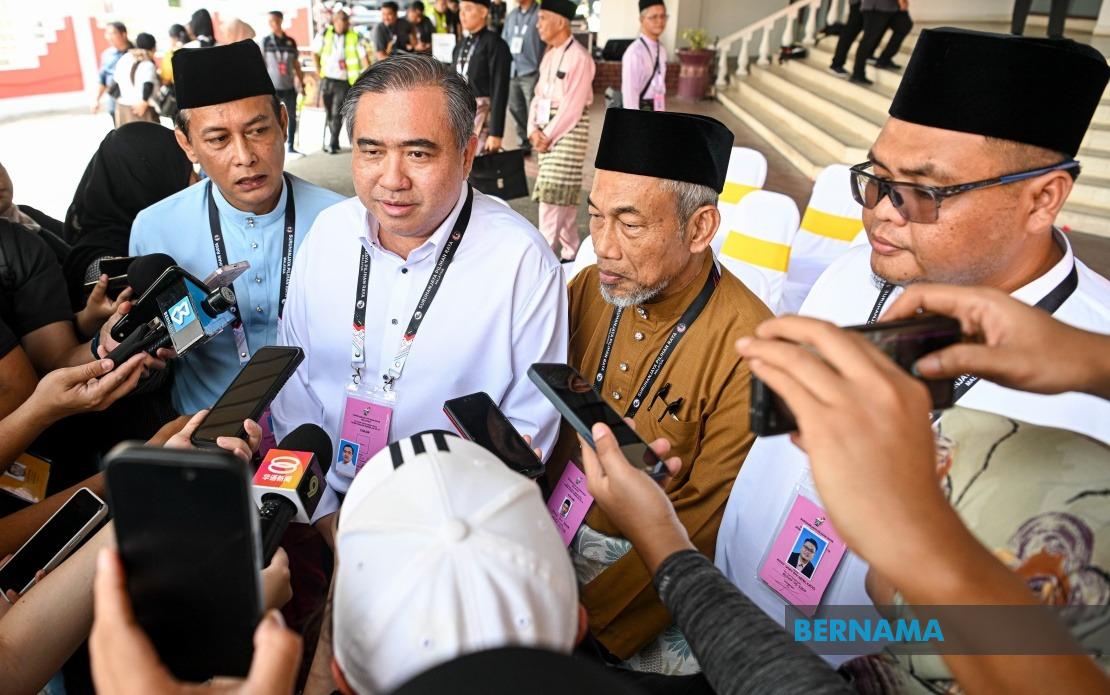
The Chennah state seat has emerged as a pivotal component of Pakatan Harapan's campaign to maintain control of Negeri Sembilan's government, according to incumbent Transport Minister Anthony Loke, who is contesting the seat himself. During proceedings at the nomination centre in Jelebu on July 18, Loke characterised the constituency as among the most strategically important in the Jelebu parliamentary area, underscoring its significance to the coalition's broader electoral aspirations in the state.
Loke's emphasis on Chennah's importance reflects broader patterns of contest dynamics in Malaysian state elections, where smaller numbers of seats can determine overall government formation. The Transport Minister pointed to the 2018 state election outcome as a concrete historical precedent, noting that two constituencies within Jelebu—namely Chennah and Kelawang—played instrumental roles in facilitating Pakatan Harapan's initial government formation in Negeri Sembilan. This reference carries particular weight as it demonstrates how localised results can cascade into statewide consequences, a phenomenon increasingly relevant as Malaysia's electoral landscape fragments across multiple competing coalitions.
Despite characterising the upcoming contest as a straight fight, Loke projected confidence in Pakatan Harapan's competitive position, grounding this optimism in the coalition's demonstrated governance record. The Transport Minister argued that the PH administration's tenure since 2018 had established a credible foundation of tangible progress and administrative stability from which to contest the election. This framing attempts to shift electoral discourse from abstract promises toward concrete deliverables, a strategy particularly resonant with voters evaluating incumbent performance against opposition alternatives.
The nomination officer for Jelebu parliamentary constituency, Abdul Rahim A Aziz, formally confirmed that Chennah would witness a bipolar contest between Loke representing Pakatan Harapan and Siow Kong Choon fielded by Barisan Nasional. The straight-fight configuration represents a significant structural simplification compared to multi-cornered contests, potentially magnifying the influence of swing voters and reducing vote fragmentation dynamics. For Pakatan Harapan, such binary contests generally prove more strategically manageable than scenarios involving multiple competitors fragmenting opposition votes.
The coalition's retention strategy appears calibrated toward leveraging accumulated governance advantages accrued during two terms in office. Rather than positioning the election as a choice between competing visions for future direction, Loke's messaging emphasises demonstrated capacity for delivery—an approach designed to capitalise on continuity preferences among voters satisfied with existing administration performance. This electoral pitch implicitly acknowledges that Malaysian voters increasingly evaluate governments based on tangible service outcomes and infrastructure development rather than ideological differentiation.
Negeri Sembilan's political significance extends beyond state-level implications, given its position as a competitive bellwether state that frequently reflects broader national electoral trends. Control of the state government carries symbolic importance within the Malaysian federation, particularly given recent patterns of coalition realignment and defection. The state's electoral dynamics therefore warrant scrutiny from national political actors seeking to interpret emerging voter preferences and coalition viability across the peninsula.
The Jelebu constituency merits particular attention within electoral analysts' assessment of the broader Negeri Sembilan contest. As a parliamentary seat encompassing multiple state constituencies, its overall performance will substantially influence whether Pakatan Harapan achieves the seat count necessary for state government formation. Within this framework, Chennah's specific result becomes emblematic of broader support patterns, potentially signalling whether the coalition maintains its 2018 coalition-building advantage or faces deterioration in core constituencies.
For opposition Barisan Nasional, Chennah represents one among several competitive seats where organisational superiority and residual rural support structures might potentially overcome incumbent advantage. The decision to field Siow Kong Choon suggests BN assessed the seat as winnable through focused resource allocation and candidate positioning. The straight-fight format eliminates complications from splinter candidacies, allowing both major contestants to concentrate resources and messaging directly on persuadable voter segments.
The broader electoral environment surrounding this contest reflects Malaysia's ongoing transition toward more fluid political competition characterised by reduced party loyalty and greater electoral volatility. Voters in constituencies like Chennah increasingly operate as marginal decision-makers, carefully evaluating incumbent performance against challenger offerings rather than responding to traditional partisan mobilisation. This dynamic explains Loke's strategic emphasis on documented achievements rather than aspirational promises, attempting to crystallise accumulated goodwill into electoral support.
For Malaysian observers tracking national political direction, the Negeri Sembilan election carries implications extending well beyond the state itself. Coalition strength, voter sentiment toward incumbent administrations, and the relative competitiveness of opposition structures will all register through state-level results. Chesham's particular contest thus represents a microcosm of larger electoral forces reshaping Malaysian politics, where localised battles accumulate into significant national political consequences.

