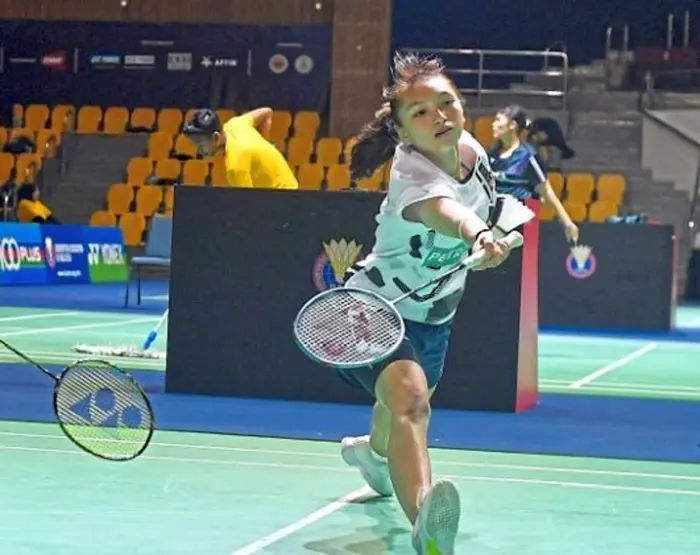
Rising badminton talent Noraqilah Maisarah Ramdan has caught the attention of Malaysia's coaching staff with her impressive versatility across multiple disciplines, yet mixed doubles coach Nova Widianto warns that raw ability alone will not guarantee her a sustained career at elite level. The 19-year-old has demonstrated considerable promise in both women's doubles and mixed doubles competitions, leading some observers to predict a bright future for the young Malaysian shuttler. However, Nova believes the mental and character dimensions of an athlete's development are equally—if not more—important than perfecting technical execution on court.
Nova has watched Noraqilah's trajectory since her junior years and recognises her exceptional talent and game awareness. He acknowledges that from a purely technical standpoint, Noraqilah possesses the skill set required to compete at the highest echelons of international badminton. Her adaptability across different formats and her ability to adjust to various playing styles suggest a player with genuine potential to make a meaningful mark on the professional circuit. Yet the coaching team has consciously adopted a patient approach, resisting the temptation to accelerate her development despite mounting expectations and early success.
The challenge of managing a talented young player's psychology becomes more acute when early success attracts public attention and praise. Nova emphasises that this attention, while outwardly positive, can subtly influence an athlete's mindset and behaviour in counterproductive ways. When a player receives commendation at a formative stage of their career, there is a psychological risk that they may become complacent, overestimate their current abilities, or develop fragility when facing inevitable setbacks. The coaching staff recognises their responsibility extends beyond drilling strokes and tactics to encompassing the emotional and psychological scaffolding that separates genuinely world-class performers from those who plateau prematurely.
Malaysia's badminton ecosystem is populated with technically gifted players, and Nova's observation reflects a broader truth within the sport: technical excellence, while necessary, is insufficient for sustained excellence. The difference between a player who reaches a certain ranking and one who progresses to become a genuine podium threat often hinges on intangible qualities such as resilience under pressure, composure during matches, and the ability to absorb criticism and adapt. Nova's emphasis on character building suggests a holistic coaching philosophy that recognises talent must be combined with mental strength and ethical grounding.
Noraqilah's recent performances have validated the coaching staff's confidence in her potential. Playing women's doubles with a scratch partner, Ong Xin Yee, she secured the title at the second leg of the Under-21 National Championship held in Kuantan, demonstrating her adaptability when paired with unfamiliar partners. More significantly, her steady partnership with Low Zi Yu has yielded impressive results on the international stage, with the pair reaching the quarter-finals of the Australian Open—a major tournament that attracts the world's best players. This achievement propelled their world ranking to a career-high position of world No. 70, indicating recognition from the global badminton community.
In mixed doubles, Noraqilah has been competing alongside Loo Bing Kun, and the pair advanced to the second round at Sydney before their campaign ended. Their current world ranking of No. 115 places them among competitive pairings, though some distance from the elite tier. The fact that Noraqilah is successfully navigating competition across two distinct formats—women's doubles and mixed doubles—underscores her tactical intelligence and physical versatility. Few players can maintain competitive standards in multiple disciplines simultaneously, suggesting she possesses a particularly well-rounded skill set.
Yet Nova's vision for Noraqilah's future incorporates a strategic narrowing of focus. While he acknowledges that competing in multiple disciplines provides valuable experience and keeps a young player's development dynamic and unpredictable, he recognises that the pathway to becoming a top-ranked global player typically requires sustained concentration on a single event. The physical and mental demands of elite badminton mean that players competing at the very highest level generally dedicate themselves to one discipline, allowing them to maximise their preparation, tournament participation, and development within that specific format. Nova suggests that Noraqilah's youth permits her to continue exploring both avenues for now, providing a broader competitive base and deeper understanding of her own preferences and strengths.
However, should Noraqilah harbour Olympic aspirations—and for a young Malaysian shuttler, the quadrennial Games represents a defining career milestone—a difficult strategic decision will eventually become necessary. The Olympics demand peak performance in a compressed timeframe, and athletes targeting that stage typically require months of specific preparation tailored to their chosen event. Nova indicates that maintaining excellence across two disciplines while also preparing for an Olympic campaign would create conflicting demands that could compromise overall performance. This represents the kind of strategic choice that separates players with genuine Olympic potential from those whose talent, while considerable, never fully translates into medals on sport's biggest stage.
The broader context for Noraqilah's development involves Malaysia's badminton programme, which has historically produced world-class players but faces competitive pressure from increasingly strong programmes in China, Indonesia, and Thailand. The coaching philosophy Nova articulates—combining technical excellence with psychological resilience and character formation—reflects global best practices in badminton development. By emphasising the non-technical dimensions of elite performance, Malaysian coaches acknowledge that talent identification alone is insufficient; systematic character development and mental conditioning are what transform talented prospects into accomplished professionals who can consistently deliver on the international stage.

