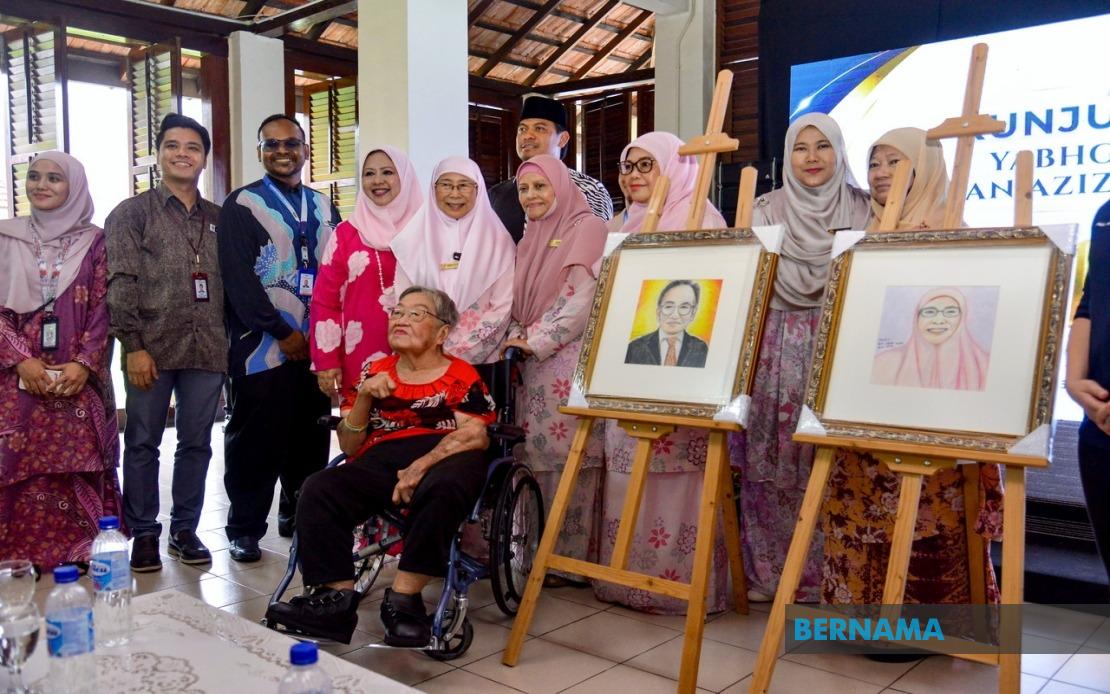
The National Leprosy Control Centre (PKKN) in Sungai Buloh deserves recognition and preservation as a significant monument to Malaysia's medical achievements, according to Datuk Seri Dr Wan Azizah Wan Ismail, wife of the Prime Minister. Speaking during a commemorative visit to the facility on its 100th anniversary, she highlighted the institution's irreplaceable role in the nation's healthcare legacy and urged policymakers to maintain its physical structures while continuously upgrading its medical services.
Established in 1926, PKKN stands as a testament to Malaysia's long struggle against one of history's most feared diseases. The centre has accumulated a wealth of medical knowledge and institutional memory spanning a full century, documenting the evolution of leprosy treatment and control methods across generations. This historical continuum makes the facility uniquely valuable not merely as a treatment centre but as a living archive of how Malaysian healthcare professionals and society adapted to combat infectious disease at different points in the nation's development.
Dr Wan Azizah, who is also chairman of KASIH Malaysia, emphasised that preservation efforts should extend beyond merely keeping buildings intact. She advocated for a holistic approach that recognises the centre's dual significance: as both a functional medical institution requiring modernisation and as a historical landmark worthy of heritage protection. This dual mandate reflects the delicate balance many specialised healthcare facilities face when they must simultaneously serve current patients while honouring their institutional past.
The centre's global significance cannot be overstated. At its peak, PKKN operated as the world's second-largest leprosy isolation facility, a distinction that underscores Malaysia's position as a major hub for leprosy management and research during the mid-twentieth century. International medical professionals and scholars visited to study treatment protocols and epidemiological approaches developed here, making the institution an important node in global medical knowledge networks.
Malaysia's achievement in eliminating leprosy as a public health threat represents one of the country's greatest medical triumphs. The nation officially attained leprosy elimination status in 1994, a milestone reached through sustained clinical effort, research initiatives, and public health campaigns coordinated substantially through PKKN's work. Current prevalence stands at just 0.15 cases per 10,000 population, placing Malaysia well below the World Health Organisation's elimination threshold and positioning the country among global leaders in disease control.
However, the continuing existence of the centre reflects an important epidemiological reality. Despite achieving elimination status, leprosy has not disappeared entirely, and sporadic cases still require management and monitoring. The centre's ongoing role in case identification, treatment supervision, and surveillance represents essential public health infrastructure that remains relevant even in a post-elimination era. Abandoning or downgrading such facilities could compromise disease surveillance systems painstakingly built over decades.
Social attitudes toward leprosy have undergone profound transformation, a development that Dr Wan Azizah specifically highlighted. Historically, the disease carried extraordinary stigma, with affected individuals facing severe social ostracism and familial rejection. Modern understanding has fundamentally altered this landscape. Leprosy is now recognised as relatively difficult to transmit, fully treatable with modern antibiotics, and causing no inevitable disability when detected early. This scientific and social progress makes preservation of the centre less about perpetuating isolation and more about honouring medical achievement and supporting vulnerable patient populations.
The centre's flexibility in responding to emerging health crises demonstrates its institutional resilience and continued utility. During the COVID-19 pandemic in 2020, PKKN repurposed its facilities to provide dedicated ward space for pandemic patients, illustrating how heritage medical institutions can adapt to contemporary health emergencies while maintaining their core functions. This adaptability suggests that preservation and modernisation need not be contradictory objectives.
For Malaysia and the Southeast Asian region more broadly, the case of PKKN raises important questions about how nations should value and maintain specialised medical institutions with significant historical legacies. As countries across the region advance economically and epidemiologically, there is sometimes a temptation to abandon or repurpose older health facilities as symbols of outdated medical concerns. Yet these institutions often contain irreplaceable expertise, documentation, and community trust accumulated over generations. The relationships built between healthcare providers and long-term patients at facilities like PKKN represent social capital that cannot easily be reconstructed.
Preservation of PKKN also carries symbolic importance for Malaysia's self-image as a developing nation that has successfully tackled major infectious diseases through sustained public health investment. The centre's existence and continued operation demonstrate that eliminating diseases of poverty is achievable for middle-income countries with sufficient political commitment and resources. This message carries particular resonance for other Southeast Asian nations still struggling with leprosy and other neglected tropical diseases.
During her visit, Dr Wan Azizah toured the facility, met with staff and residents, and received recognition of the centre's ongoing work through a portrait painted by one of the residents. These interactions underscored the human dimension of heritage preservation—the centre is not merely a building or historical artefact but a living community of healthcare workers and patients whose stories deserve documentation and respect.
The call for preservation comes at a moment when many countries are reconsidering how to balance healthcare modernisation with institutional heritage. Developing a robust framework for heritage healthcare facility management could establish valuable precedents for the region. Such frameworks would need to address funding mechanisms, regulatory standards for heritage structures that must also meet contemporary medical requirements, and governance models that respect both historical significance and current operational needs.
Moving forward, Dr Wan Azizah's advocacy suggests that PKKN's future should involve designation as a heritage medical institution with sustained government support. This recognition would legitimise investment in both preservation and upgrading, signal respect for the institution's historical contributions, and ensure that Malaysia's leprosy elimination success remains visible and accessible to future generations of medical professionals and students. The centre's centenary thus represents not an endpoint but an opportunity to reaffirm institutional commitment to this crucial but often-overlooked dimension of Malaysian medical history.

