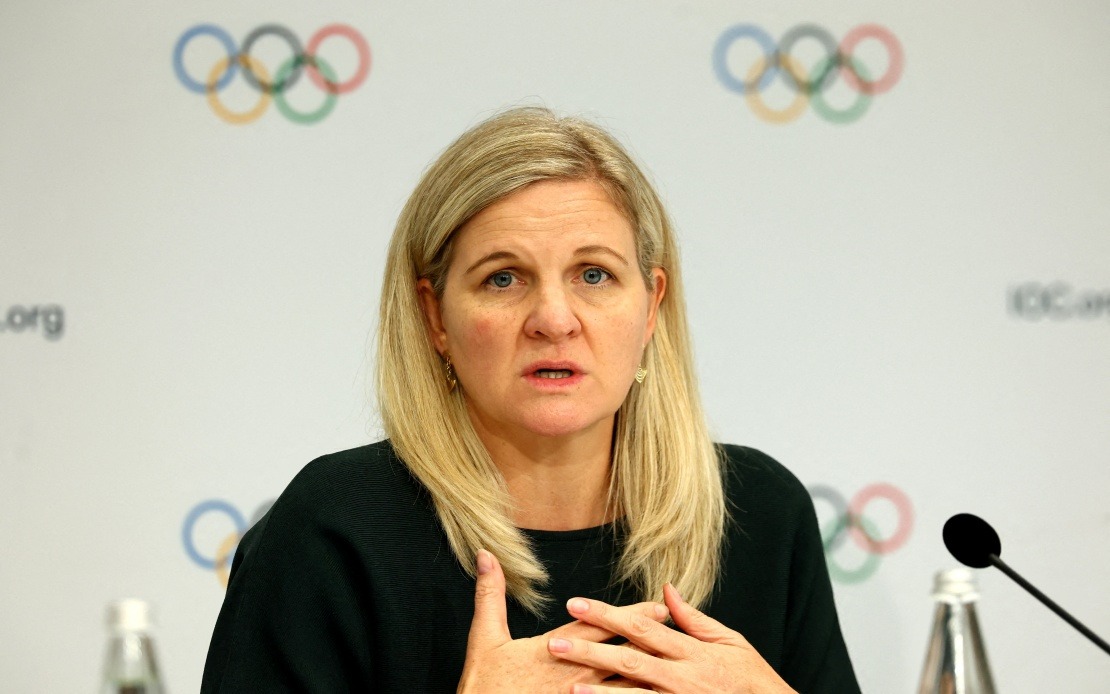
International Olympic Committee President Kirsty Coventry has confirmed that the Court of Arbitration for Sport (CAS) stands ready to address any legal complications should United States President Donald Trump attempt to influence proceedings at the 2028 Los Angeles Olympic Games. Speaking at a press conference in Moscow on Tuesday, Coventry outlined the IOC's preparedness to manage political pressure through established judicial channels, signalling confidence in the organization's capacity to insulate the Games from external political pressure.
The IOC head explained that CAS maintains a specialized temporary division, formally known as the ad hoc division, which operates exclusively during Olympic competitions. This dedicated panel handles the rapid resolution of legal disputes that emerge during the Games themselves, providing an immediate mechanism for addressing controversies without disrupting the sporting calendar. The existence of such institutional safeguards reflects decades of Olympic administration, during which organizers have learned to anticipate and manage disputes that could otherwise derail competition schedules or create diplomatic tensions.
Coverty's remarks come in the context of recent controversy involving the United States national football team at a major international tournament. On July 5, FIFA's disciplinary committee made the extraordinary decision to suspend a red card issued to American player Folarin Balogun, effectively overturning the referee's original decision. This unusual reversal permitted Balogun to participate in a knockout-stage match against Belgium, a decision that drew formal protest from the Belgian Football Association.
Trump subsequently claimed credit for the outcome, announcing that he had personally contacted FIFA to advocate for the reversal and publicly thanking the organization for what he described as righting a grave injustice. The American president's direct intervention in what should have been a purely sporting matter raised questions about whether political figures might similarly attempt to influence Olympic outcomes through behind-the-scenes lobbying or public pressure campaigns. Such interference could theoretically extend to athlete eligibility, medal adjudication, or other competition-related matters.
Despite Belgium's formal objections and the questionable circumstances surrounding the red card suspension, Balogun did ultimately play in the match. The Americans' participation proved immaterial to the outcome, however, as Belgium dominated the encounter with a convincing 4-1 victory, relegating the eligibility dispute to a historical footnote rather than an outcome-determining factor.
Coverty's reassurance about CAS mechanisms carries particular significance for Southeast Asian nations and smaller Olympic delegations that might face pressure from larger, more politically influential countries. The existence of an independent arbitration body provides a crucial counterbalance to political influence, ensuring that sporting merit rather than diplomatic leverage determines outcomes. For nations like Malaysia, Singapore, Thailand, and Vietnam that regularly compete in Olympic Games, the guarantee of impartial dispute resolution represents a foundational principle that makes international sporting competition credible and fair.
The CAS framework, established in 1984 and based in Lausanne, Switzerland, has evolved into one of the world's most important international arbitration bodies precisely because of its independence from political interference. By maintaining separate procedures for temporary matters arising during competitions, the organization demonstrates a institutional commitment to rapid, transparent justice that transcends national interests. This separation of sporting governance from political pressure has been tested repeatedly over the decades, particularly when host nations or politically powerful competitors have sought favorable treatment.
The prospect of continued Trump engagement with international sporting bodies during the 2028 Los Angeles Olympics raises broader questions about the boundary between political leadership and sporting governance. While elected officials maintain legitimate interests in their nations' sporting success and international prestige, direct intervention in competition outcomes crosses into territory that undermines the integrity of sport itself. The Trump-FIFA episode suggests that such boundaries may be increasingly contested, necessitating robust institutional mechanisms to enforce separation between political and sporting spheres.
For the International Olympic Committee, which itself faces periodic criticism regarding political influence, Coverty's emphasis on CAS procedures represents an attempt to demonstrate independence and integrity. The 2028 Los Angeles Games will be the third Olympic competition held in the United States since the Cold War era, following 1984 in Los Angeles and 2002 in Salt Lake City. Each of these American-hosted Games occurred under different political conditions, but all were ultimately conducted according to Olympic principles and rules.
The establishment of clear dispute resolution procedures before the 2028 Games begins represents prudent institutional planning. By publicly confirming CAS's readiness to address legal challenges, Coverty has signalled to athletes, national Olympic committees, and the broader sporting community that mechanisms exist to prevent outcome-determining political interference. Whether such assurances will prove sufficient to insulate the Los Angeles Games from political pressure will likely depend on whether political figures respect the established boundaries between their domains and sporting governance.
For Malaysian stakeholders, including the Ministry of Youth and Sports and the Malaysian Olympic Council, Coverty's commitment to impartial dispute resolution provides reassurance that Malaysian athletes competing in Los Angeles will receive fair treatment regardless of broader geopolitical considerations. The integrity of international sporting competition depends fundamentally on such institutional independence, making CAS's role central to the legitimacy of Olympic competition itself.

