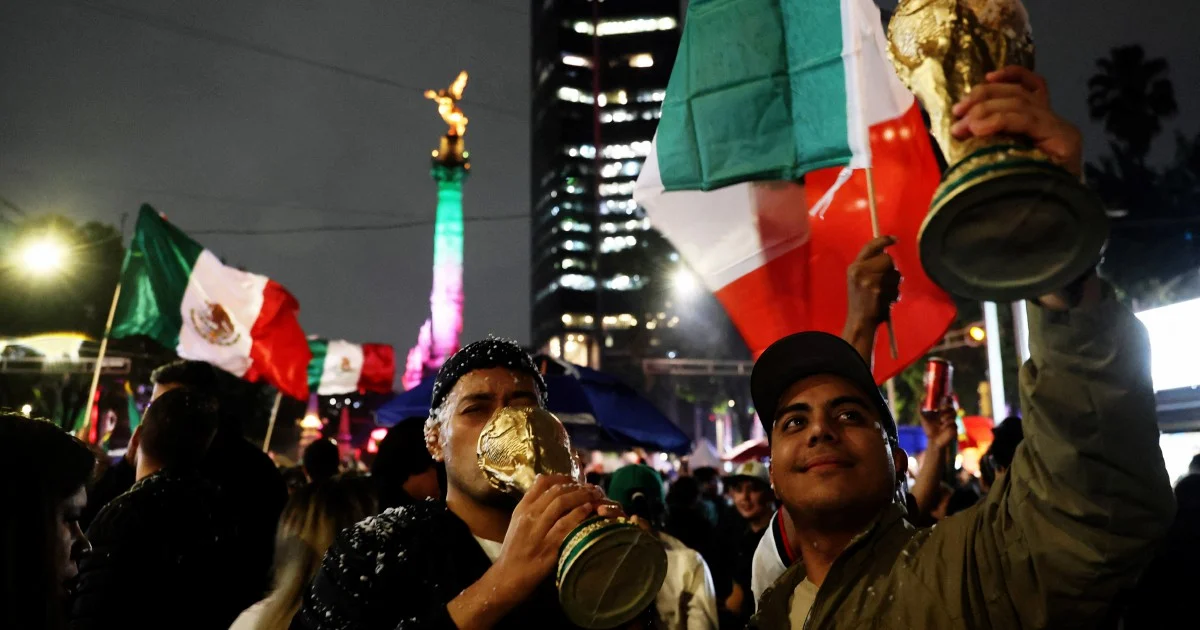
A celebration marking Mexico's World Cup triumph descended into chaos on Wednesday evening when a car accelerated directly into a gathered crowd of supporters in the beachside resort town of Cabo San Lucas. The incident resulted in 17 people requiring medical treatment, according to authorities in Los Cabos, with the vehicle's driver detained by police following the collision.
Footage circulated on social media and verified by international news organisations captured the moments preceding and following the violent incident. Video evidence shows a black sedan initially surrounded by fans donning Mexico national team jerseys before the vehicle suddenly surged forward into the assembled crowd. The force of the impact propelled multiple bystanders into the air, with the car subsequently colliding with bollards positioned along the street.
The aftermath proved particularly chaotic, as demonstrated in additional verified footage. Members of the crowd responded by extracting the driver from the vehicle and physically attacking them, while numerous injured individuals lay bleeding on the ground surrounding the scene. The exact nature and severity of injuries sustained by the 17 people treated remains unclear from available information, though the incident clearly caused significant harm to the assembled celebrants.
Cabo San Lucas, situated at the southern tip of the Baja California Peninsula, ranks among Mexico's premier tourist destinations, attracting international visitors year-round to its pristine beaches and resort facilities. The town's status as a major leisure hub means the Wednesday evening incident unfolded in an area typically bustling with both local residents and foreign tourists. Such incidents in high-traffic public spaces inevitably attract substantial international attention and raise questions about public safety during large public gatherings.
The circumstances surrounding what prompted the driver to accelerate into the crowd remain under investigation. Authorities have not yet released formal statements clarifying whether the incident stemmed from mechanical failure, intentional action, or other circumstances. The driver's detention indicates that law enforcement is treating the matter seriously, though the specific charges or preliminary findings have not been disclosed in available reports.
Vehicle-related incidents at public celebrations and gatherings have emerged as a recurrent concern across multiple jurisdictions in recent years. Such events create vulnerable situations where large numbers of people congregate in street-level locations, potentially in states of heightened emotion and celebration. The vulnerability becomes particularly acute when vehicular barriers or security measures remain minimal, as appears to have been the situation in this case.
For Malaysian readers, the incident underscores challenges that organizers of public celebrations and sporting events face when managing crowd safety in open environments. Major cities across Southeast Asia regularly host large public gatherings during international football tournaments and other sporting occasions, requiring careful consideration of security protocols and protective infrastructure. The Cabo San Lucas incident provides a sobering example of how rapidly celebratory atmospheres can transform into dangerous situations when vehicle access to crowds remains uncontrolled.
Mexico has grappled with significant public safety challenges in recent years, and while this incident appears to stem from different causes than gang-related violence dominating headlines from some regions, it nonetheless highlights vulnerabilities in crowd management systems. The concentration of injury victims from a single incident demonstrates the amplified danger when vehicles gain unobstructed access to pedestrian gatherings.
The incident's occurrence in a major tourist destination carries broader implications for Mexico's tourism sector and the sense of safety among international visitors. Cabo San Lucas particularly depends on its reputation as a secure, welcoming destination for North American and international tourists seeking beach holidays and resort experiences. Incidents of this nature generate international media attention and may influence travel decisions among potential visitors, particularly those already concerned about safety in Mexico.
Authorities in Los Cabos will likely face pressure to review and strengthen security measures at future public celebrations and gathering points throughout the municipality. Standard protective measures employed in many jurisdictions—including vehicle barriers, designated pedestrian zones separated from traffic, and enhanced security personnel presence—may see expanded implementation following this incident. The challenge for resort towns lies in implementing such measures without excessively disrupting the open, accessible atmosphere that characterizes successful public celebrations and tourist experiences.
The detained driver faces potential serious charges depending on investigative findings regarding intent and causation. Mexican legal proceedings will examine whether the incident constituted a deliberate act, negligence, or mechanical failure, with the severity of charges varying accordingly. The treatment and information the accused receives throughout the legal process may also draw scrutiny from international observers and human rights monitors, particularly given the public nature of the incident and the crowd's violent response.
For football fans across Mexico and the broader Latin American region, the incident serves as a reminder of how quickly public celebrations can become dangerous. The World Cup represents one of the world's most significant sporting events, generating intense passion and enormous public gatherings in participating nations. Balancing the spontaneity and joy of public celebration with appropriate safety measures remains an ongoing challenge for municipalities and event organisers throughout the world.

