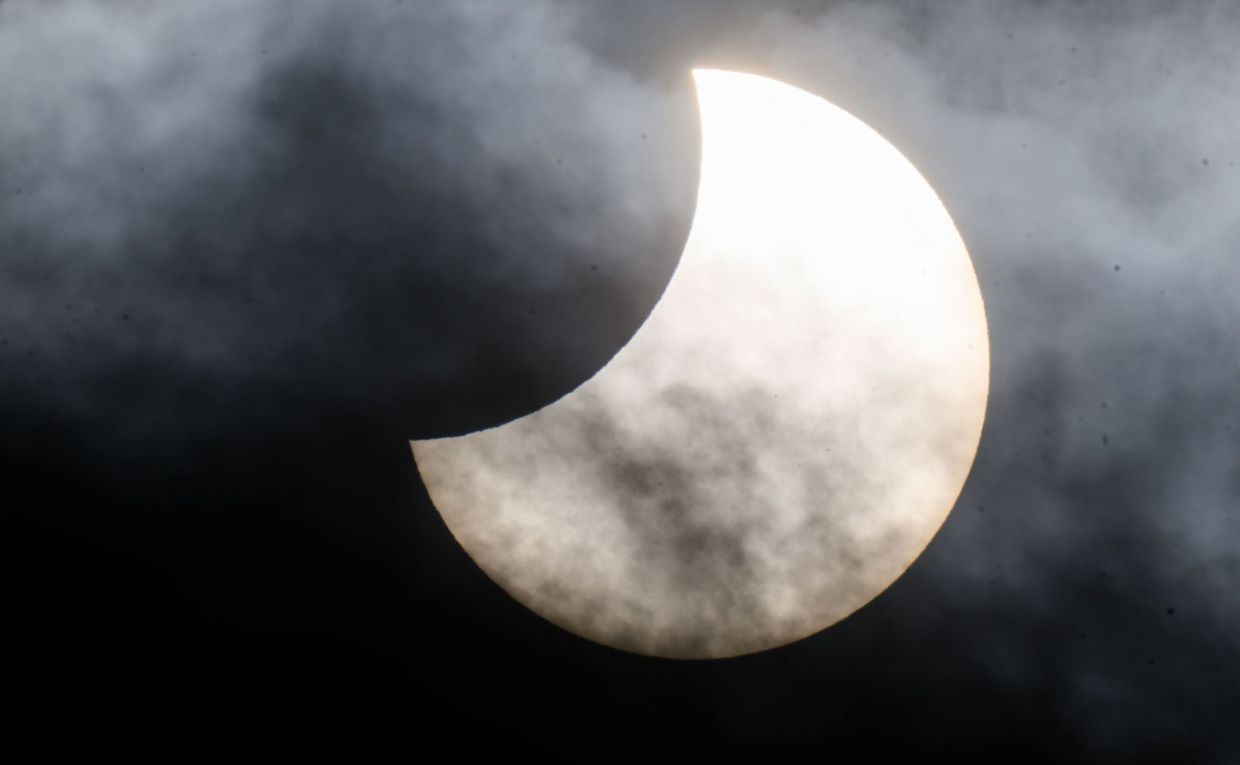
This August marks an exceptional period for celestial photography enthusiasts across the Northern Hemisphere and beyond, with two major cosmic occurrences set to illuminate the night sky and present unique opportunities for capturing extraordinary images. The alignment of these events creates a rare double showcase that astronomy fans and casual stargazers alike have circled on their calendars, whether they plan to travel to optimal viewing locations or observe from their home regions.
On August 12, a total solar eclipse will sweep across a narrow corridor spanning eastern Greenland, western Iceland, and parts of Spain, including the Balearic Islands and western Mediterranean regions. The eclipse path represents only a fraction of where the phenomenon will be visible; across a much wider swath of territory encompassing most of Europe and stretching into North Africa, observers will witness a partial eclipse. Countries including Ireland, the United Kingdom, France, Portugal, Italy, Switzerland, and Algeria will experience the moon obscuring approximately 90 percent of the solar disk, while the event will be observable even as far east as Ukraine and west into Morocco.
The timing of the August 12 solar eclipse begins with initial obscuration visible to observers in Scandinavia and Greenland around 5:00 pm Greenwich Mean Time, gradually progressing southward and eastward as the moon's shadow advances across the continent. Maximum eclipse occurs between 6:15 and 6:45 pm GMT, during which observers positioned along the eclipse path will experience totality. This celestial mechanics timing is crucial for photographers planning their positioning and equipment preparation, as the narrow window for optimal photography requires precise preparation and positioning.
Beyond the solar spectacle, August 28 brings a lunar eclipse that will captivate observers across Europe, Africa, and the Americas. This partial lunar eclipse occurs as the full moon in the constellation Aquarius passes through Earth's umbra, appearing to most Western Hemisphere viewers as nearly total. At maximum eclipse, 94 percent of the moon's surface area will occupy the Earth's umbral shadow, creating a dramatic reddish appearance that has historically fascinated observers and photographers. The event promises particularly favorable viewing conditions for observers in Latin America and along the Pacific coasts of North America.
The technological landscape for astronomical photography has transformed dramatically in recent years, democratizing access to celestial imaging that once required expensive specialized equipment. Contemporary smartphone cameras, equipped with sophisticated internal image optimization algorithms and dedicated night-mode functionality, now rival dedicated cameras from just a few years past for capturing celestial phenomena. This technological advancement means that Malaysian observers and other regional enthusiasts need not invest heavily in specialized gear to document these rare astronomical events, making eclipse photography accessible to a broader demographic of sky enthusiasts.
Successful eclipse photography with smartphones begins with location selection, a foundational element that significantly influences image quality. Identifying areas with minimal light pollution becomes paramount; specialized resources such as light pollution atlases display sky brightness variations through color gradients, with darker hues—particularly green or blue coloration—indicating optimal observation sites. Urban and suburban observers can consult these resources to identify nearby darker-sky locations within reasonable travel distance, dramatically improving photographic outcomes. For Malaysian readers, this principle remains equally valid despite tropical atmospheric conditions; seeking elevated locations or rural areas away from city centers substantially enhances eclipse visibility and photography quality.
Optimizing your smartphone's display and camera settings before the eclipse begins prepares your device for optimal performance in low-light conditions. Reducing display brightness and activating night mode in display settings allows human eyes to acclimate to darkness while preserving the camera's sensitivity settings. Most contemporary smartphones feature dedicated night modes within their camera applications, with premium devices offering specialized astrophotography modes. Google Pixel smartphones automatically engage astro mode when aimed at suitable dark-sky subjects, initiating extended exposures lasting approximately four minutes while displaying a countdown timer. Samsung Galaxy users can leverage the Expert RAW application for comparable astrophotography capabilities, with camera focus set to wide or distant settings when specialized modes aren't available.
Stability represents a critical factor separating successful eclipse photographs from blurred, unusable images. Universal smartphone tripods, available for approximately RM40 to RM47, provide reliable stabilization for extended exposures required during eclipse photography. For those without tripods, modern smartphone image stabilization has improved substantially, enabling handheld photography if executed carefully. Alternative approaches include utilizing self-timer functions with phones positioned flat on stable surfaces, eliminating vibration introduced by manual shutter activation. This practical flexibility means Malaysian observers without specialized equipment can still achieve professional-quality eclipse imagery through simple household techniques.
Solar eclipse photography demands particular caution regarding eye safety and device protection. Conventional sunglasses provide insufficient protection for direct solar observation, necessitating specialized eclipse glasses meeting appropriate standards. Smartphones offer a safer alternative for viewing and photographing solar eclipses; when appropriately configured with minimum brightness settings, the camera can capture the eclipse while observers keep their eyes safely directed away from the sun. Tapping the sun within the camera frame allows photographers to adjust brightness independently, ensuring optimal exposure without requiring direct solar viewing. For families with children, projection methods—using mirrors or pinhole camera constructions to project the solar image onto bright surfaces—provide engaging, safe observation approaches that eliminate direct sun viewing entirely.
Malaysian readers, though not positioned within the eclipse paths for August 12, can nevertheless benefit from this global celestial event by refining their astronomical photography techniques and equipment knowledge. The principles governing eclipse photography—location optimization, display configuration, camera mode selection, stability enhancement, and safety protocols—apply equally to other astronomical phenomena visible from Southeast Asia, including planetary conjunctions, meteor showers, and lunar events. August 28's near-total lunar eclipse, visible from parts of the region, provides an immediate practical application for these techniques. By implementing these smartphone photography strategies during the August celestial events occurring elsewhere, photographers throughout Malaysia and the wider region can substantially enhance their capabilities for capturing future astronomical events observable from their home locations.
The convergence of two major eclipses within a single month represents an exceptional astronomical circumstance that encourages photographers worldwide to invest attention and resources into capturing these phenomena. Technological accessibility through smartphone cameras has transformed eclipse photography from a specialized pursuit requiring expensive equipment into an inclusive activity available to anyone with a modern mobile device and modest tripod. Whether observing from northern Europe or monitoring the August 28 lunar eclipse from Southeast Asia, the same fundamental principles of careful preparation, thoughtful positioning, and technical optimization ensure that photographers can document these cosmic moments effectively and safely.

