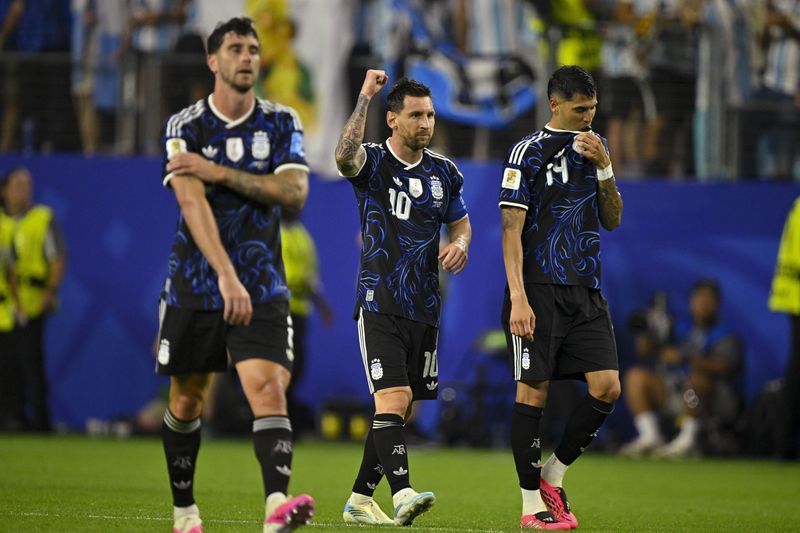
Cape Verde's head coach Bubista has reaffirmed his team's unwavering commitment to pursuing victory against Argentina in a crucial World Cup knockout encounter, signalling that the African nation will not adopt a defensive posture simply because they face the tournament's defending champions. Speaking ahead of the match at Miami Stadium on Thursday, the former centre back emphasised that Cape Verde's gameplan centres entirely on qualifying for the last 16 rather than merely surviving the encounter with honour, a mentality that has guided the island nation throughout their first World Cup campaign.
The consistency of Bubista's messaging has proven prescient given Cape Verde's unexpected results during the group stage. The team secured draws against established European powerhouses Spain and Uruguay alongside Saudi Arabia, outcomes that vindicated the coach's conviction that his squad could genuinely compete at football's highest level. These results demonstrated that Cape Verde's path to the knockout rounds was not merely a fortunate run but rather a reflection of genuine tactical organisation and collective commitment that had been forged during an arduous qualification process.
Bubista's statement of intent—that Cape Verde would approach the Argentina fixture as they had their group matches, with both humility and the genuine belief they could win—reflects a confidence that extends beyond mere platitudes. The coach explicitly stated that his team arrived in Qatar having earned their qualification on merit through the preliminary rounds, and subsequently validated that achievement by finishing second in their group. This progression from relative obscurity to the knockout stage provided the foundation for legitimate ambition heading into the Argentina encounter.
The coach's framing of his team as competitors rather than participants carries particular significance for smaller football nations. Cape Verde, ranked 67th in the FIFA world standings when the tournament began, have effectively challenged the assumption that lower-ranked teams should adopt cautious approaches when facing elite opponents. Instead, Bubista has advocated for maintaining their identity while respecting opponents—a balance that has produced tangible results and now offers psychological momentum entering a decisive fixture.
While acknowledging the quality of Argentina's squad and the individual brilliance of Lionel Messi, Bubista notably declined to construct special tactical frameworks designed purely to neutralise the Barcelona forward. His reasoning—that every team presents different challenges and that rigid game plans risk compromising Cape Verde's established identity—suggests confidence in the foundational principles that have guided the team's progress. The coach argued that adaptation to different opponents should enhance rather than replace their core methodology.
Bubista's respect for Argentina manager Lionel Scaloni and the team's status as defending world champions appeared genuine, yet he coupled this deference with a transparent assertion that Cape Verde merited equivalent respect for the accomplishments they had already achieved. This demand for reciprocal recognition reflects a broader sentiment among smaller nations competing at the World Cup: qualification itself represents an extraordinary achievement that deserves acknowledgment regardless of ultimate tournament outcomes. The coach indicated that if other parties failed to respect Cape Verde's credentials, this reflected their oversight rather than any legitimate basis for dismissal.
The psychological dimension of Cape Verde's approach holds particular relevance for Southeast Asian football perspectives. Nations in this region often encounter similar scepticism regarding their capacity to compete against traditionally dominant footballing powers, yet Cape Verde's methodology—building confidence through qualification achievements and substantiating claims through actual on-field performance—offers a template applicable to emerging football nations. The willingness to maintain attacking intent rather than retreating into purely defensive structures challenges conventional wisdom about how smaller nations should approach elite opponents.
Cape Verde's path to the knockout rounds also illuminates the unpredictability that characterises modern football at the elite level. The team's draws against Spain and Uruguay particularly demonstrated that results are not predetermined by rankings or historical pedigree. These outcomes provided empirical evidence that justified Bubista's insistence on ambitious intentions—his team had already proven capable of preventing defeat against recognised powerhouses, establishing legitimate foundations for genuine competitive ambition against Argentina.
The coach's explicit statement that his team possessed only one consideration—advancing from the fixture—represented a welcome clarity of purpose. Unlike some teams that enter knockout matches expressing satisfaction with mere participation, Cape Verde's leadership communicated unambiguous commitment to progression. This directness, combined with the demonstrated ability to achieve competitive results against quality opponents, created a psychological environment where Bubista's squad could genuinely believe in their possibilities against Argentina.
Bubista's insistence that Cape Verde would not fundamentally alter their operational principles, instead adapting while preserving identity, reflected tactical and psychological sophistication. Teams that abandon their fundamental approaches when facing elite opponents frequently surrender the advantages their established methodology provides. By maintaining organisational principles while adjusting specific tactical elements, Cape Verde sought to preserve the competitive platform they had successfully developed throughout their tournament campaign.
The narrative surrounding Cape Verde's World Cup journey extends beyond mere sporting achievement to encompass broader questions about competitive parity and opportunity in international football. A nation of approximately 555,000 people competing at the World Cup's knockout stage represented an extraordinary accomplishment, yet Bubista's framing suggested this achievement, while celebrated internally, should not be diminished by inevitable comparison to more established footballing nations. The coach's consistency in emphasising that his team deserved recognition for their qualification and group-stage performance provided the psychological scaffold supporting genuine competitive ambition.
As Cape Verde prepared to face Argentina, the underlying message from Bubista and his squad suggested an organisation that had fundamentally elevated expectations regarding what constituted acceptable outcomes for African football at the global level. Rather than treating World Cup participation as an honour to be preserved through cautious football, Cape Verde's leadership communicated that advancement represented a legitimate objective. Whether this ambition would translate into actual qualification remained uncertain, but the psychological foundation and tactical organisation the team had established throughout their campaign suggested they would approach Argentina as genuine competitors rather than respectful outsiders.
The stakes of the encounter extended beyond Cape Verde's tournament prospects to encompass broader implications for how smaller nations approach elite competition. Success would validate Bubista's philosophy that smaller nations can compete effectively by maintaining identity while adapting to opponents, a lesson potentially applicable across global football and relevant to Southeast Asian nations navigating similar competitive environments.

