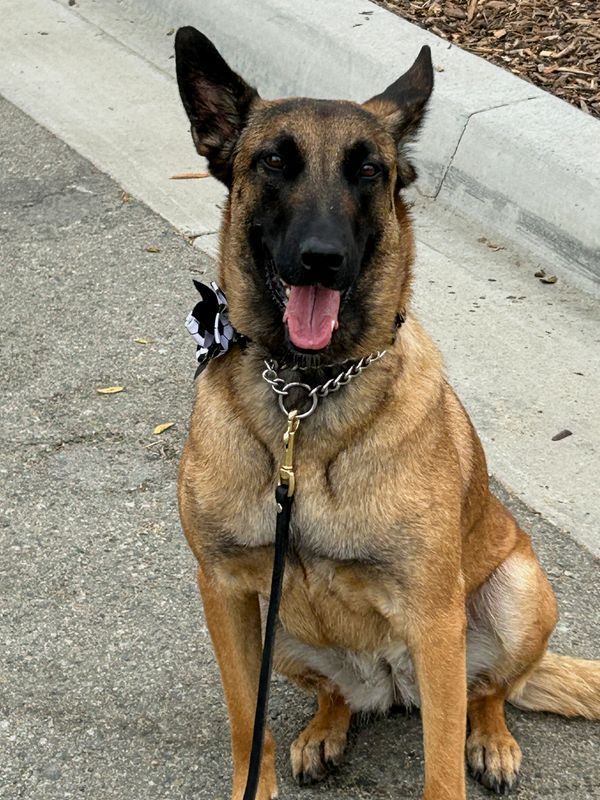
The 2026 FIFA World Cup, co-hosted across the United States, Canada, and Mexico, has mobilised an unprecedented canine security operation to safeguard stadiums and tournament venues from potential threats. Among the most visible of these working animals is Kali, a five-year-old Labrador Retriever stationed near one of the Los Angeles Stadium entrances, part of a broader deployment of several hundred detection dogs tasked with screening visitors and preventing explosive devices, firearms, and other prohibited items from entering sporting facilities.
The tournament's geographical scale and the complex geopolitical landscape in which it is unfolding have elevated security concerns to levels not typically seen at previous World Cups. The United States, one of the three host nations, maintains ongoing tensions with Iran, whose national team competed in group matches held on American soil. Beyond US-Iran relations, the Trump administration has pursued policies that have strained diplomatic ties with numerous countries participating in the tournament, creating an environment where security planners must anticipate not only potential terrorist threats but also the risk of political unrest or symbolic confrontations during matches involving sensitive nations.
The security challenges extend beyond geopolitical tensions between major powers. The tournament spans 16 cities across three countries, requiring protection not only at match stadiums but also at training facilities, team hotels, and transportation corridors connecting these sites. Months before the tournament began, Mexico experienced significant cartel violence following government security operations, heightening awareness of the volatile context in which matches are being held. Meanwhile, Los Angeles has witnessed substantial political protests during Iran's group-stage matches, demonstrating that the convergence of international sporting spectacle and diplomatic friction can translate into real-world disruption at the ground level.
Glen Kucera, President of Allied Universal Enhanced Protection Services, the largest private provider of canine security in the United States, has deployed approximately 300 dog teams from his firm's total roster of 1,000 teams to provide World Cup security across the tournament. This represents a massive commitment of resources and underscores the critical role that trained detection dogs have come to play in modern security operations at large-scale international events. The unprecedented demand for canine security across so many venues simultaneously has required security organisers to draw upon multiple sources, including federal agencies, local law enforcement, and private contractors.
The composition of the security canine force reflects both operational necessity and strategic decision-making about public perception. Kali represents the Federal Bureau of Alcohol, Tobacco, Firearms and Explosives, bringing federal explosives-detection capabilities to Los Angeles Stadium. Nearby, dogs from the Los Angeles County Sheriff's Department, including a dog named Buck working alongside handler Anthony Meyers, provide additional layers of screening. Private security teams, equipped with their own detection dogs, maintain presence at vehicle checkpoints and perimeter points. Every individual entering a stadium faces proximity to at least one security dog trained to identify threats through scent alone, creating what security professionals describe as both a practical barrier and a psychological deterrent.
Crucially, security planners have adopted a deliberate strategy regarding the types and appearances of dogs deployed. Rather than relying heavily on German Shepherds or other breeds that may carry associations with authoritarian regimes or appear inherently threatening, organisers have prioritised friendly-appearing Labrador Retrievers and similar breeds. This choice reflects a sophisticated understanding that security effectiveness depends not merely on capability but on public acceptance. Visitors from diverse nations bring varied cultural attitudes toward dogs, and in some countries, the sight of large security dogs can evoke negative associations with oppressive state control or generate genuine anxiety among attendees who have limited experience with canines as civilian companions.
According to Kucera, approximately 95 percent of the security value provided by visible detection dogs derives from their deterrent effect rather than from actual threat interdiction. The presence of working dogs signals to potential bad actors that security measures are in place and that attempts to bring prohibited items into venues face a substantial likelihood of detection. This visual messaging is particularly important in an environment where geopolitical tensions might motivate hostile actions, as the comprehensive nature of security arrangements may itself discourage individuals contemplating violence or disruption from proceeding with such plans.
Beyond the prevention of terrorism or weaponry, security officials have focused on preventing materials that well-intentioned supporters might attempt to bring into stadiums. In many countries, fans traditionally celebrate sporting victories or major plays through fireworks displays, a cultural practice that security organisers must anticipate and prevent within controlled stadium environments. Detection dogs trained to identify explosive materials serve dual purposes: they prevent both deliberate threats and inadvertent security breaches stemming from innocent cultural practices.
The tournament has demonstrated that canine security approaches can vary significantly depending on local context and available resources. In Guadalajara, Mexico, robotic dogs equipped with explosive-detection capabilities supplemented traditional animal-based approaches, allowing organisers to expand coverage in areas where trained canine handlers might be limited. In Vancouver, Canadian security agencies developed multi-layered strategies that positioned detection dogs as central components within broader security ecosystems incorporating technology, personnel, and venue design.
The Iran team's participation created particularly complex security management challenges. Governmental restrictions required Iran's squad to remain based in Mexico and to travel to American venues only immediately prior to matches, departing shortly after games concluded. This itinerary created shifting security needs and logistical complications for handlers managing detection dogs across varying schedules and locations. Iran's matches, particularly those held at Los Angeles Stadium against New Zealand and Belgium, and a subsequent match against Egypt in Seattle, were accompanied by organised political protests both outside and conceptually within the sporting context, requiring security forces to distinguish between legitimate political expression and potential security threats.
The sheer scale of coordinating hundreds of detection dogs across multiple cities and countries throughout a tournament spanning several weeks represents an operational achievement in its own right. Security organisations have experience managing large events, yet the World Cup's continental scope and the simultaneous operation of numerous independent dog-handler teams create coordination challenges distinct from previous deployments. Handlers must work in unfamiliar environments, sometimes across jurisdictional boundaries, while maintaining the operational readiness and performance standards that detection work demands.
Though the subjective experience of working dogs deployed to secure the world's largest sporting event remains largely unknowable, observers have noted that the canine participants uniformly cooperated with media documentation efforts, displaying the temperament and training that professional security organisations have invested considerable resources to develop. As the tournament progresses, the security apparatus built around these detection dogs continues functioning to maintain both safety and the sense of normality necessary for the tournament to proceed as a celebration of sport rather than a military exercise.

