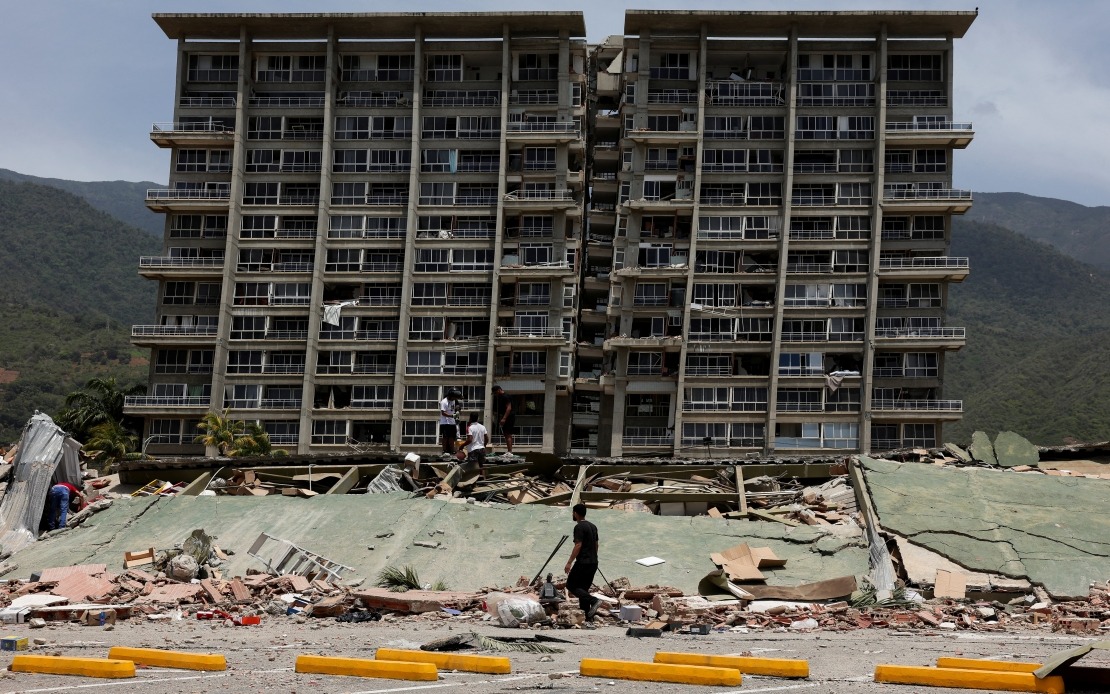
Canada's government has announced a substantial emergency relief package worth US$5 million directed toward Venezuela following a series of catastrophic earthquakes that have left the country reeling from widespread destruction and loss of life. The announcement, made through the Canadian Foreign Ministry, represents an immediate response to what officials describe as a humanitarian crisis of staggering proportions, with the full extent of the disaster still emerging as rescue and assessment operations continue across the affected regions.
The scale of the earthquake damage extends far beyond the initial impact zones, with Canadian officials warning that the tremors have unleashed a cascading humanitarian emergency. Entire communities have been devastated, critical infrastructure has been compromised, and the social fabric binding neighbourhoods together has been torn apart by the violence of the natural disaster. Preliminary assessments suggest that hundreds of thousands of individuals face immediate threats to their survival, creating an urgent imperative for coordinated international relief action. The situation remains fluid, with new information about casualties and damage assessments continuously reshaping the understanding of the crisis's true magnitude.
Foreign Minister Anita Anand characterised the unfolding catastrophe as heartbreaking, emphasising the human dimension of the disaster. Families throughout Venezuela have experienced devastating personal losses, watching their homes crumble and their loved ones perish in seconds. The emotional and psychological toll reverberates through communities still grappling with the shock of the earthquakes, even as they face the immediate challenge of securing food, clean water, and medical care. Canada's response, Anand indicated, reflects the nation's commitment to standing with the Venezuelan people during this extraordinarily difficult period, positioning bilateral humanitarian engagement as a moral imperative rather than merely a diplomatic gesture.
The Canadian funding will be channelled through established humanitarian organisations with demonstrated expertise in emergency response operations. These partners bring essential capabilities in delivering food assistance to populations cut off from normal supply chains, ensuring access to potable water in areas where infrastructure has collapsed, and providing sanitation services crucial to preventing disease outbreaks in crowded displacement camps. Health services represent another critical component, as overwhelmed local medical systems struggle to manage mass casualties and infectious diseases that emerge in post-disaster environments. Complementing these direct services, the funding will support protection mechanisms for vulnerable populations—particularly women, children, and the elderly—and logistics coordination that enables efficient distribution of aid throughout affected territories.
This fresh allocation builds upon Canada's existing commitment to Venezuela's humanitarian needs, bringing the total Canadian assistance mobilised this year to nearly US$9.5 million. The earlier contribution of approximately US$4.5 million addressed pre-earthquake vulnerabilities within Venezuelan society, where economic collapse and political instability had already created severe humanitarian deficits. The earthquake amplifies these underlying challenges exponentially, transforming a chronic emergency into an acute crisis requiring dramatically accelerated intervention. Canada's willingness to substantially increase its engagement signals recognition that the seismic events have fundamentally altered the humanitarian landscape, overwhelming existing coping mechanisms and demanding proportionate escalation of international support.
Canadian diplomatic officials have positioned themselves as active participants in the emerging regional response architecture, maintaining engagement with neighbouring countries and multilateral humanitarian organisations coordinating earthquake relief. This diplomatic positioning reflects understanding that Venezuela's geographic location within South America means that regional actors—particularly Colombia and Brazil, both significant humanitarian donors—will play crucial roles in channelling assistance and coordinating logistics. Canada's involvement in these coordination networks enhances the coherence of the international response while ensuring that Canadian priorities regarding aid distribution and accountability shape how assistance reaches vulnerable populations on the ground.
The ministry acknowledged that precise details regarding how the new US$5 million will be allocated across specific geographic zones and humanitarian interventions remain under development, with more comprehensive information expected in coming days. This measured approach reflects the realities of emergency response, where initial funding decisions must be made rapidly based on incomplete information, with subsequent refinements incorporating better intelligence about ground conditions and actual needs. The decision to publicise the commitment before finalising allocation details demonstrates Canada's determination to provide rapid assurance to Venezuelan authorities and humanitarian organisations that substantial resources are being mobilised, enabling partners to begin coordinating logistics and establishing distribution networks.
For Malaysian and Southeast Asian observers, Canada's response offers instructive lessons about international humanitarian responsibility in the face of natural disasters. The region itself faces significant seismic risks, with earthquakes periodically threatening countries across the zone. Canada's example of rapid resource mobilisation and coordination with regional partners provides a model for how developed nations with capacity should respond when major disasters strike neighbouring countries. The emphasis on working through experienced humanitarian organisations rather than attempting unilateral interventions reflects best practices increasingly recognised across the international aid community, ensuring that assistance reaches intended beneficiaries efficiently while respecting the sovereignty and institutional frameworks of affected nations.
The Venezuelan earthquake relief initiative also underscores how geopolitical tensions and competing international interests often recede when natural disasters strike, creating moments where humanitarian imperatives temporarily override other considerations. Canada's engagement reflects this principle, focusing on alleviating suffering rather than advancing particular political positions regarding Venezuela's government. This humanitarian-first approach, while sometimes complicated by questions about aid diversion or political capture, establishes a baseline commitment to human welfare that transcends other international disagreements. For Southeast Asian nations frequently caught in broader geopolitical competitions, understanding how major donors like Canada navigate such situations provides valuable perspective on balancing humanitarian obligations with other foreign policy considerations.
Looking forward, Canadian officials indicated their intention to remain closely monitoring developments in Venezuela as the humanitarian situation evolves. The commitment to provide updated information about funding allocation within days suggests that Ottawa views this as an ongoing engagement requiring sustained attention rather than a one-time gesture. Whether additional tranches of assistance will be announced depends partly on how the earthquake crisis unfolds, what secondary disasters emerge in its wake, and how effectively the initial US$5 million addresses immediate needs. This adaptive stance toward humanitarian response—where commitments expand or contract based on actual unfolding circumstances—represents a more sophisticated approach than fixed pledges announced at crisis onset, though it requires donors to maintain political will for continued engagement even after initial emergency phases subside.

