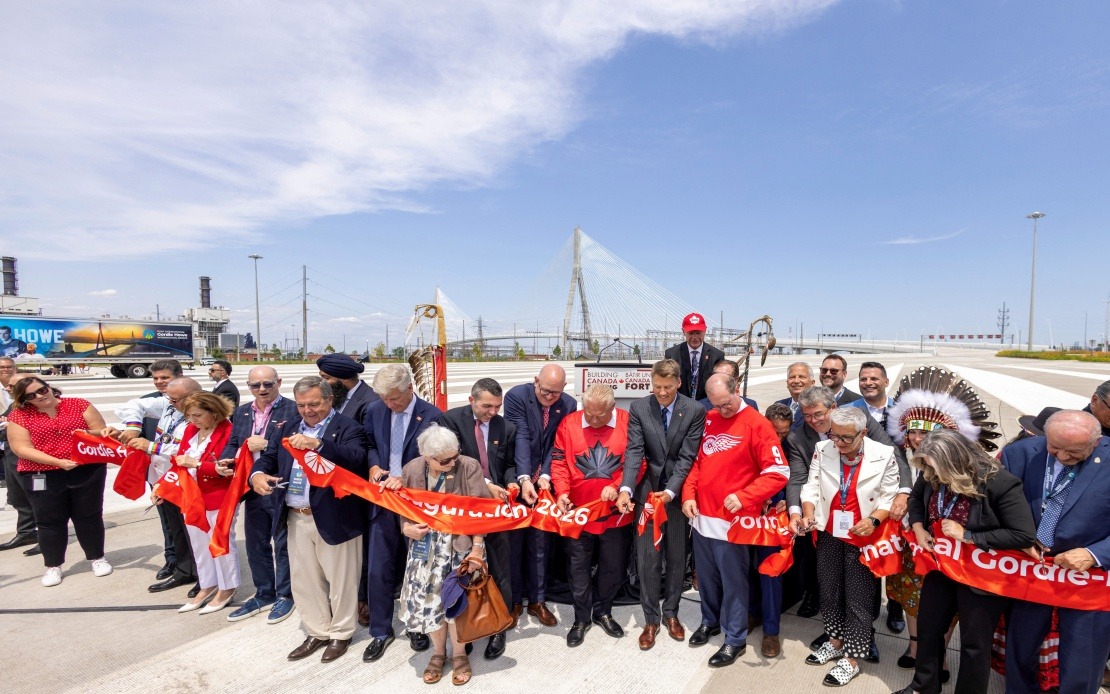
Canada has formally inaugurated the Gordie Howe International Bridge linking Windsor, Ontario to Detroit, Michigan—a multibillion-dollar infrastructure project designed to strengthen continental trade—but notably without any US government officials present at the ceremony. The exclusion marks a significant rupture in bilateral relations as the two countries clash over tariff policy and the terms governing the bridge's operation and revenue sharing.
The decision to proceed with a Canadian-only inauguration came after the US announced substantial new tariffs targeting a range of Canadian goods. President Donald Trump introduced additional duties of 50 per cent on certain Canadian products, specifically naming hockey sticks, wine, and cement among affected items. These tariffs are scheduled to take effect on August 19, thirty days after their formal signing, signalling a dramatic escalation in trade tensions that have poisoned the atmosphere for joint celebrations.
Trump justified his administration's reengineering of the bridge arrangement through his Truth Social platform, declaring that the original 2012 agreement had been poorly negotiated by his predecessors and that newly revised terms now secure 50 per cent of bridge revenues for the United States. His comments reflected frustration that Canada initially received all toll revenues until construction costs were recovered, a provision he viewed as disadvantageous to American interests. The renegotiation became a central flashpoint in an increasingly fractious economic relationship between the two neighbours.
Canada's infrastructure ministry responded to the tariff announcement by determining that holding a joint celebration would be inappropriate given the acrimonious trade environment. The decision essentially rebuffed the original plan for a coordinated bilateral opening ceremony, instead proceeding with a domestic-only event. Despite the frosty diplomatic climate, the first vehicles crossed the bridge on Monday as scheduled, demonstrating that operational implementation would continue regardless of political tensions.
The bridge was originally slated to open in June before being postponed, partly reflecting the renegotiation of financial terms that had become contentious. Under the revised arrangement announced in July, bridge revenues during the initial fifteen-year period will be allocated to cover maintenance and operational expenses. Surpluses beyond those costs will subsequently be divided between Canada and a US-controlled economic development fund, representing a significant concession by Ottawa compared to the original structure.
Canadian Prime Minister Mark Carney faced domestic political criticism for accepting these revised terms, with opposition legislators contending that he had capitulated to Trump's negotiating pressure. The contentious nature of the agreement within Canadian political discourse underscores the domestic political costs of the renegotiation, even as it attempted to preserve the broader trade relationship.
The Gordie Howe Bridge occupies a strategically vital position in North American commerce. According to Canadian broadcaster CBC, approximately one-third of all bilateral trade between the United States and Canada flows through the Windsor-Detroit region's trade corridor, which encompasses multiple crossing points including this bridge, other bridges, and tunnel infrastructure. The US Department of Homeland Security has estimated that roughly 45 per cent of commercial traffic moving through the Detroit region is expected to utilize the new bridge, highlighting its anticipated role as a major commercial artery.
For Malaysian and Southeast Asian observers, the Gordie Howe Bridge dispute offers instructive lessons about how infrastructure projects can become ensnared in wider geopolitical and trade disputes. The bridge's journey from a symbols of continental cooperation to a flashpoint for bilateral tensions illustrates how even critical shared infrastructure can become weaponized when trade relations deteriorate. Regional countries engaged in cross-border infrastructure development should note how tariff disputes and revenue-sharing negotiations can poison collaborative ventures.
The tariff measures announced by Trump represent part of a broader trade offensive targeting Canada, reflecting the US administration's willingness to use economic leverage to extract concessions on multiple fronts simultaneously. The timing of tariff announcements immediately before the bridge opening was unlikely to be coincidental, effectively linking infrastructure negotiations to broader trade demands. This bundling of grievances demonstrates how contemporary trade conflicts extend beyond specific sectoral disputes into comprehensive economic pressure.
The bridge opening without American representation marks a symbolic rupture in the North American partnership, even as commercial traffic continues flowing across the structure. The absence of US officials sent a pointed message about Canadian displeasure with American tariff policies, though the operational success of the bridge on schedule demonstrates that infrastructure functionality transcends diplomatic friction. This pattern—where political messaging diverges from practical implementation—may characterize the bilateral relationship during this period of heightened tension.
Looking forward, the Gordie Howe Bridge faces the challenge of facilitating trade between countries whose governments are deeply at loggerheads. The bridge's role as a crucial commercial conduit may actually incentivize both nations to manage the broader dispute carefully, as disruptions to this essential crossing would harm both economies significantly. However, the current trajectory of escalating tariffs and mutual acrimony suggests that the political relationship may continue deteriorating even as the infrastructure itself functions successfully.

