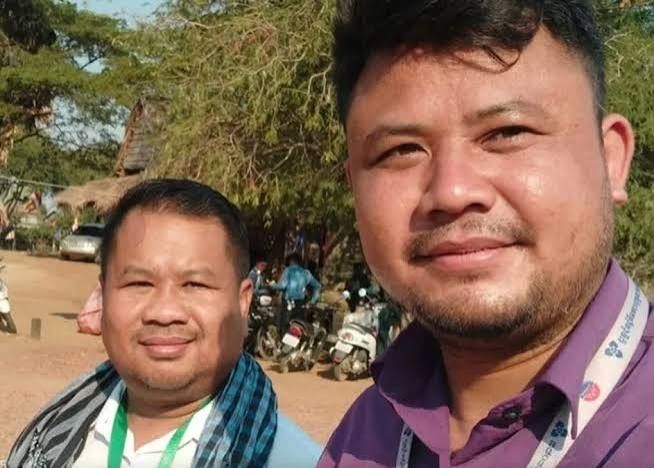
Cambodia's Supreme Court was preparing to deliver its verdict on an appeal filed by two journalists facing 14-year prison sentences for treason, a case that has become emblematic of deepening concerns about the independence of the country's judicial system. The decision on Phorn Sopheap of Battambang Post TV Online and Pheap Pheara of TSP 68 TV Online was expected in late June, following a pattern of high-profile convictions that critics argue demonstrates the government's willingness to weaponise courts against perceived enemies.
The two men were arrested in July 2023 after reporting near the Cambodia-Thailand border and subsequently charged with posting photographs from a restricted military zone to Facebook. Both journalists have consistently maintained they possessed appropriate authorization to access the area where they documented images, and they are appealing their convictions on the grounds that the original charges were baseless. Their legal team argues that the treason verdict represents a fundamental miscarriage of justice and an abuse of prosecutorial power.
The photograph that became the focal point of the case showed anti-personnel land mines positioned along the border. When the image circulated among Thai media outlets, it was seized upon by Thai authorities as evidence supporting claims that Cambodia had recently deployed mines along the frontier, causing casualties among Thai military personnel conducting patrol operations. This geopolitical dimension transformed what might have been a straightforward press freedom issue into a matter touching on national security—the very ground on which the Cambodian government has built its prosecution.
Cambodia's military and government officials responded by flatly denying that their forces had engaged in recent mine-laying operations. Instead, they attributed the discovered ordnance to remnants from the country's decades-long internal conflicts, which had only definitively concluded in the late 1990s. The government also emphasized that Cambodia remained bound by international treaties prohibiting anti-personnel mines, a commitment it said it honored scrupulously. This denial was key to labelling the journalists' actions as treason—by spreading the photographs internationally, prosecutors alleged, the men had damaged Cambodia's credibility and harmed its diplomatic standing.
The broader context involves substantial cross-border violence that erupted in July and December of the previous year. Clashes between Cambodian and Thai forces resulted in significant civilian displacement, with hundreds of thousands of people fleeing their homes on both sides of the frontier. The violence claimed approximately 100 lives among soldiers and non-combatants before a ceasefire took effect in December. Though active hostilities have ceased, underlying tensions between the two countries remain volatile and unresolved, lending additional weight to government assertions that sensitive military information could endanger national interests.
In December, a provincial court in Siem Reap found both journalists guilty of supplying foreign states with information prejudicial to national defense—the legal formula under which their treason convictions were secured. Each received a 14-year sentence. When they appealed, a lower appellate court upheld the verdicts in March, prompting international condemnation. More than a dozen journalism organizations, representing both national and international constituencies, issued a joint public statement demanding that the government withdraw its prosecution entirely, viewing the convictions as an assault on freedom of the press.
The Supreme Court hearing arrived just days after the same judicial body reaffirmed the conviction of Rong Chhun, a 56-year-old politician from the opposition camp. Chhun had been found guilty of inciting social unrest after he met with villagers displaced by government-backed development projects. Western observers and human rights groups have interpreted the Chhun case, alongside the journalists' prosecutions, as part of a broader pattern of legal harassment orchestrated by Prime Minister Hun Manet's administration to neutralize political and media criticism. Human Rights Watch characterized the pattern as evidence that Cambodian courts lack genuine independence from the ruling political establishment.
The government has rejected such characterizations, insisting that its judiciary operates with complete autonomy and makes decisions based purely on evidence and law. Officials have stressed that national security concerns are legitimate justifications for criminal prosecution and that protecting state secrets is a responsibility no government can abandon. This defense echoes arguments made under Hun Manet's predecessor and father, the long-serving Hun Sen, whose nearly four decades in power were marked by systematic suppression of civil liberties, curtailment of free speech and assembly, and documented human rights violations that earned Cambodia widespread international censure.
Hun Manet assumed the premiership in August 2023 after Hun Sen's departure, bringing with him an American education and, in theory, greater exposure to liberal democratic norms. Yet virtually no meaningful political liberalization has emerged during his tenure. The Committee to Protect Journalists, based in New York, has specifically accused the Cambodian government of weaponizing deliberately vague national security statutes to criminalize routine journalistic work. The organization pointed to the cases of Pheap Pheara and Phorn Sopheap as textbook examples of this approach.
Cambodia's global standing on press freedom reflects these chronic vulnerabilities. In the 2025 Reporters Without Borders World Press Freedom Index, the nation ranked 161st out of 180 countries, placing it among a cohort of states where press freedom conditions are classified as "very serious." This ranking underscores that the country's journalism ecosystem faces threats far more pervasive than individual prosecutions, suggesting a systematic erosion of the conditions necessary for independent reporting and public accountability.
For Southeast Asian media freedom advocates and regional observers, the Supreme Court's decision on the journalists' appeal carries implications extending well beyond Cambodia's borders. The case serves as a test of whether Hun Manet's administration intends to depart substantively from his father's authoritarian playbook or whether it will perpetuate and refine mechanisms of press suppression under new leadership. A ruling that upholds the convictions would signal continuity; one that overturns them could mark the beginning of genuine reform. The verdict was therefore awaited not only by the journalists' supporters but by regional democracy monitors tracking whether Southeast Asia's political trajectory trends toward greater openness or deepening control.

