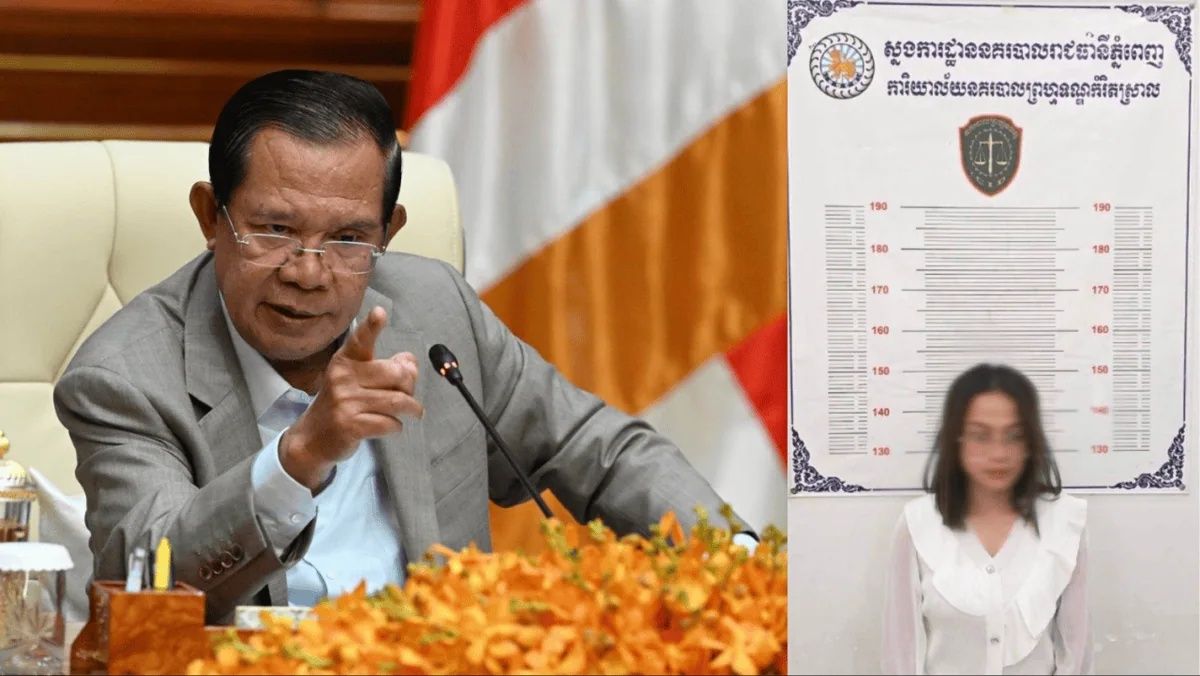
Cambodia's Senate President Hun Sen has launched a sweeping directive targeting what he characterises as abusive speech that demeans women and undermines national values, instructing the Ministry of Women's Affairs to initiate legal proceedings against alleged offenders. During discussions with the National Council for Women delegation on Friday, Hun Sen outlined an ambitious framework to combat what authorities frame as threats to social cohesion and Khmer dignity through language deemed offensive or insulting.
The initiative stems from recent incidents that have caught the attention of senior leadership. Hun Sen referenced an unidentified woman who allegedly deployed foul language to criticise government bodies and public officials, prompting authorities to require both her and her husband to submit formal apologies. This case illustrates the government's determination to regulate public discourse around state institutions, signalling that verbal criticism, particularly when couched in coarse language, will face state consequences.
A second case involves a woman named Chenda Sovannary, who reportedly engaged in heated language towards a soldier during a commercial dispute over a mobile phone transaction. Hun Sen's response to this incident reveals the breadth of the initiative—his comments suggest that protecting individuals from insulting remarks extends beyond government officials to encompass military personnel and potentially other social groups. His rhetorical question about why one would insult a soldier over a trivial commercial matter frames certain types of speech not merely as rude but as fundamentally unacceptable breaches of social conduct.
The framing of these measures as protection for "women's values" and "social morality" presents particular analytical challenges for observers tracking civil liberties in Southeast Asia. Hun Sen has explicitly rejected characterisations of the initiative as authoritarian, instead positioning it as consistent with industry standards adopted by major social media platforms, which maintain their own community guidelines and ethical codes. This comparison to private sector content moderation policies attempts to normalise state involvement in regulating public speech, though the mechanisms and enforcement processes remain significantly more coercive than corporate content removal.
The operational structure proposed by Hun Sen encompasses multiple state apparatus. The National Council for Women will serve as the plaintiff in legal actions, while coordination with the Ministry of Interior, Ministry of Information, Ministry of Culture and Fine Arts, and Ministry of Post and Telecommunications creates an integrated surveillance and enforcement mechanism. This multi-ministerial approach suggests authorities intend to monitor digital platforms systematically, particularly Facebook, where Hun Sen specifically identified problematic speech as warranting close attention and coordinated tracking efforts.
For Malaysia and regional observers, Cambodia's move reflects broader tensions in Southeast Asia surrounding digital governance and the definition of acceptable public discourse. While different governments adopt varying approaches to online content regulation, Hun Sen's explicit instruction to establish teams monitoring social media for insulting language represents one of the region's more overt commitments to state-directed content surveillance. The emphasis on protecting "dignity" and "values" through legal mechanisms rather than community-driven moderation echoes regulatory philosophies evident across several Southeast Asian nations grappling with digital public spheres.
The characterisation of certain speech as destructive to "social dignity" invites scrutiny regarding where authorities draw boundaries between legitimate criticism and prohibited insult. Hun Sen's invocation of women's protection as a rationale for expanded speech regulation presents an interesting rhetorical strategy—by anchoring the initiative to gender protection, which enjoys broad social support, officials may anticipate reduced public resistance to broader speech monitoring. However, the cases cited involve disputes over commercial transactions and perceived disrespect toward officials, areas where the connection to protecting women's interests becomes less transparent.
The implementation challenges facing this initiative should not be underestimated. Defining and adjudicating what constitutes impermissible "abusive language" requires subjective judgment, particularly across digital platforms where tone and context prove difficult to establish. Cambodia's courts will need to develop jurisprudence distinguishing between protected criticism and prohibited insult, though Hun Sen's directive to courts to "carefully review" cases involving alleged dignity violations suggests he expects judicial compliance with executive preferences regarding what merits prosecution.
Regionally, this development occurs alongside similar efforts by governments to regulate digital speech in ways authorities characterise as protective but critics view as restrictive. Thailand, Vietnam, and other regional states maintain various laws targeting defamation, insulting state institutions, or public order violations that authorities invoke against speech deemed problematic. Cambodia's move represents an explicit, high-level governmental commitment to systematic monitoring and prosecution, potentially establishing a template for other nations considering enhanced digital governance mechanisms.
The practical implications for ordinary Cambodians engaging in social media discussions remain uncertain. Individuals who express strong criticism of government policies or state personnel in colourful language now face potential legal consequences, particularly if their speech involves insults rather than substantive argument. This creates chilling effects on public discourse, as citizens become aware that heated expression could trigger state investigation and legal action. The requirement for formal apologies in the cases Hun Sen mentioned demonstrates authorities' interest in public recantation and submission to state correction.
Malaysian policymakers observing these developments may perceive both opportunities and cautionary lessons. Malaysia itself maintains various laws targeting sedition, defamation, and insulting state institutions, though recent years have witnessed greater public debate about their application. Hun Sen's explicit linkage of speech regulation to protecting women's values and social morality demonstrates how broader governance objectives can be framed within sympathetic social goals, a rhetorical strategy with potential regional applicability. However, the transparency and explicit nature of Cambodia's directive also illustrates the risks associated with overtly institutionalised speech monitoring systems.
Looking forward, Cambodia's established mechanism for tracking and prosecuting insulting speech through multiple coordinated ministries will likely expand in scope and application. The involvement of the National Council for Women as plaintiff suggests the framework will be deployed particularly in cases involving female complainants or gender-related speech, though Hun Sen's comments about insulting soldiers and construction workers indicate the initiative encompasses protection for broader categories of persons and institutions. How regional civil society organisations and international observers respond to this development may influence whether comparable mechanisms gain traction elsewhere in Southeast Asia.

