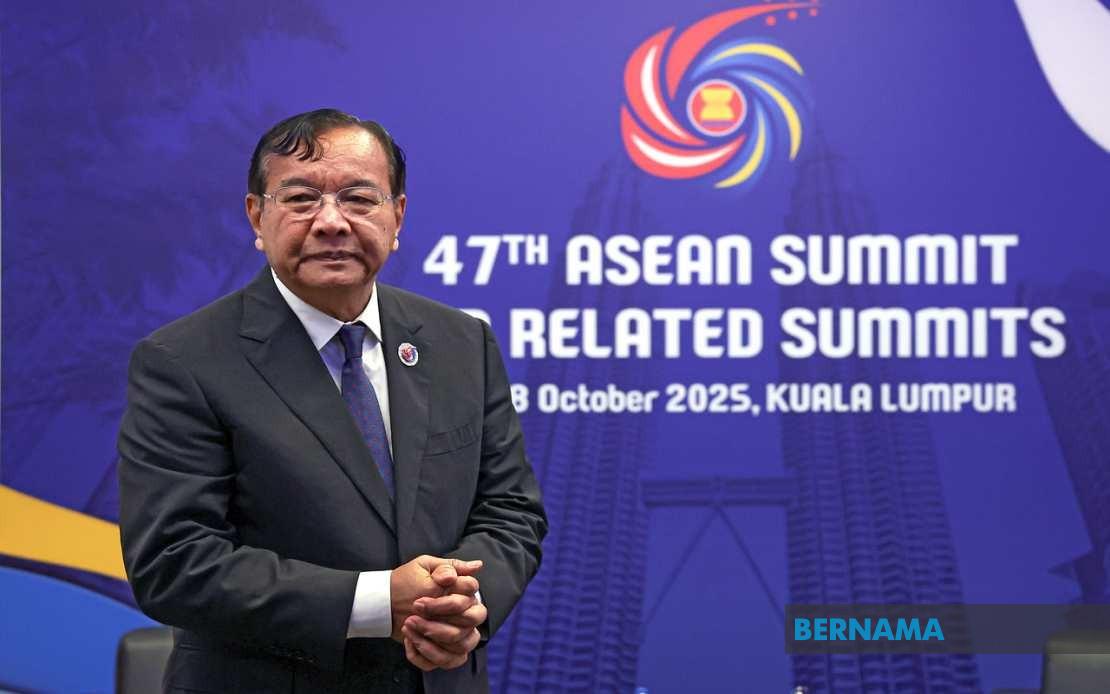
Cambodian Deputy Prime Minister and Foreign Minister Prak Sokhonn has arrived in Malaysia for a two-day official visit that marks a significant turning point in bilateral relations. The centrepiece of the engagement is the third Malaysia-Cambodia Joint Commission for Bilateral Cooperation (JCBC), which will be co-chaired by Prak Sokhonn and Malaysian Foreign Minister Datuk Seri Mohamad Hasan on Tuesday in Kuala Lumpur. The resumption of this institutional framework comes after a two-decade break, with the previous gathering having taken place in Siem Reap in 2006, underscoring how long the two Southeast Asian neighbours have operated without a formal high-level bilateral dialogue mechanism.
The timing of this visit carries strategic significance for the wider region. Malaysia and Cambodia are approaching a historic milestone in 2027—the 70th anniversary of their diplomatic relations—and both governments have indicated that the current engagement reflects an intention to reset and revitalise partnership ahead of this landmark year. By reactivating the JCBC at this juncture, the two nations are demonstrating renewed political will to address accumulated bilateral issues and chart a course for deeper cooperation across multiple domains. This recommitment to structured dialogue suggests that both Kuala Lumpur and Phnom Penh recognise the mutual benefit of maintaining robust institutional channels in an increasingly complex regional environment.
During his stay, Prak Sokhonn will also conduct a courtesy call on Prime Minister Datuk Seri Anwar Ibrahim on Monday. These high-level exchanges between premiers provide an opportunity beyond the typical foreign ministry agenda, allowing both leaders to discuss matters of strategic national interest and reaffirm their commitment to the bilateral relationship. Such engagements often set the political tone for lower-level discussions and signal to both domestic and international audiences the importance placed on the partnership. The private talks between Malaysia's premier and Cambodia's deputy premier are expected to cover regional security, economic cooperation, and shared concerns within ASEAN.
The economic dimensions of Malaysia-Cambodia relations present a compelling rationale for deepening ties. In 2025, bilateral trade between the two nations has surged dramatically, reaching RM5 billion (US$1.17 billion) with a year-on-year growth rate of 27.4 per cent. Malaysian exporters have been particularly successful in the Cambodian market, with outbound shipments totalling RM4.13 billion (US$970 million), while Malaysian imports from Cambodia reached RM880 million (US$200 million). These figures reflect Cambodia's growing importance as both a market for Malaysian goods and as a source of raw materials and agricultural products. The substantial trade imbalance in Malaysia's favour also suggests opportunities for deeper value-added partnerships and industrial cooperation.
Malaysia's investment footprint in Cambodia is equally impressive and speaks to the confidence Malaysian entrepreneurs and corporations have in the Cambodian economy. As of 2024, Malaysia has accumulated US$3.20 billion (RM13.07 billion) in cumulative foreign direct investment across 162 registered projects in Cambodia, positioning Malaysia as the third-largest foreign investor in the kingdom after China and Vietnam. This investment portfolio spans multiple sectors including manufacturing, infrastructure, hospitality, and financial services. The presence of established Malaysian enterprises in Cambodia has created lasting commercial networks and people-to-people connections that reinforce the economic interdependencies between the two nations.
The reactivation of the JCBC after such a lengthy hiatus also reflects broader regional patterns. Many ASEAN countries have found that bilateral mechanisms require periodic renewal and revitalisation to remain effective governance tools. The 20-year gap suggests that maintaining such structures demands consistent diplomatic attention and political prioritisation. The decision to restart these formal meetings indicates that both governments have assessed that the benefits of structured dialogue outweigh the administrative burden, particularly as Southeast Asia navigates complex challenges ranging from transnational crime to maritime security and climate change mitigation.
For Malaysia specifically, strengthening ties with Cambodia serves several interests. Cambodia sits along important maritime routes and shares territorial waters with Malaysia in the Gulf of Thailand, making maritime cooperation an essential dimension of bilateral relations. Additionally, Cambodia's role within ASEAN means that closer Malaysia-Cambodia coordination enhances Malaysia's voice and influence within the bloc. From an economic perspective, Cambodia represents part of Malaysia's broader strategy to deepen integration with the ASEAN community and maintain its position as a regional economic hub.
The formal outcomes of the JCBC meeting will be documented in the Agreed Minutes, a binding record of bilateral commitments and areas of future cooperation. These minutes typically cover an expansive range of issues from trade facilitation and investment protection to cultural exchanges, educational cooperation, and security matters. The signing of this document will provide a roadmap for the two governments' bilateral engagement over the coming years and establish clear benchmarks against which progress can be measured. Such documentation also serves an important function in providing continuity even if political transitions occur in either country.
The resurrection of this bilateral commission must also be understood within the context of Cambodia's own regional diplomacy. As Cambodia assumes various leadership roles within ASEAN rotational mechanisms, maintaining strong partnerships with fellow ASEAN members becomes strategically important. For Malaysia, the visit provides an opportunity to deepen engagement with a neighbour that, despite geographical proximity, had allowed formal dialogue channels to atrophy over two decades. Rebuilding these connections now positions both nations well for addressing future challenges and opportunities in the region.

