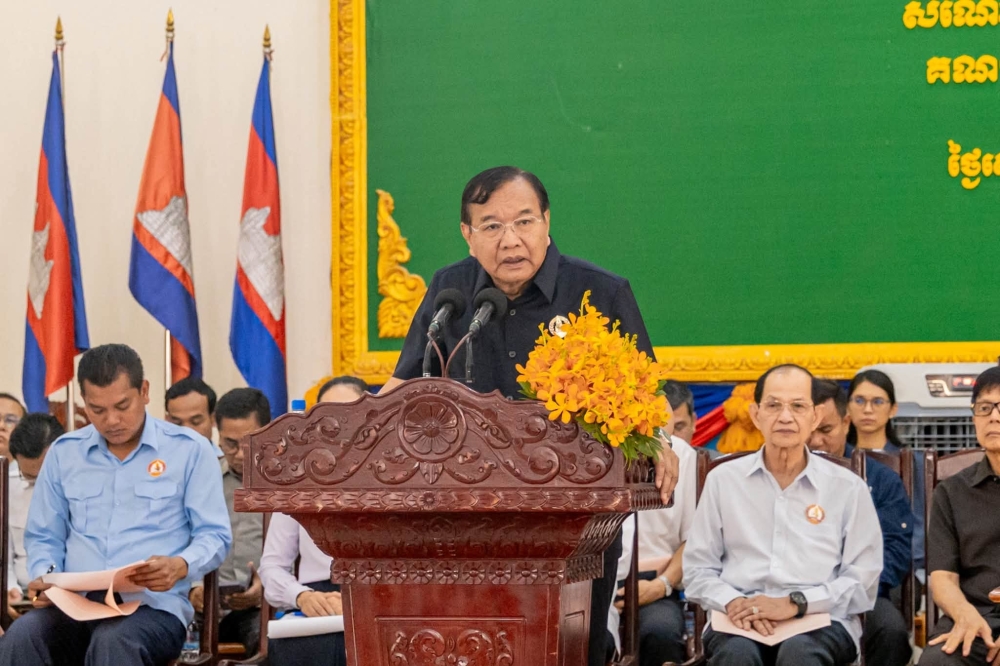
Cambodian Deputy Prime Minister and Minister of Foreign Affairs and International Cooperation Prak Sokhonn touched down in Malaysia on August 3, marking the beginning of a strategically significant two-day official visit that underscores the importance both governments place on their bilateral relationship. The high-level visit, which commenced at Sepang, reflects ongoing efforts to strengthen ties between Phnom Penh and Kuala Lumpur at a time when regional stability and cooperative frameworks remain central to Southeast Asian diplomacy.
Prak Sokhonn's presence in Malaysia carries particular weight given his dual portfolio as both deputy premier and foreign minister, positioning him as one of Cambodia's most influential voices in international affairs. His appointment to these critical roles signals that Cambodia views this engagement with Malaysia as worthy of attention from its highest-ranking officials. Such visits typically involve discussions spanning trade, investment, education, cultural exchanges, and security cooperation—the pillars upon which modern Southeast Asian partnerships are built.
Malaysia and Cambodia share a complex history punctuated by both cooperation and periodic tensions. The two nations are bound by their membership in the Association of Southeast Asian Nations (ASEAN) and have numerous shared interests in maritime security, tourism development, and economic integration. Recent years have seen renewed emphasis on people-to-people exchanges, with thousands of Cambodian workers contributing to Malaysia's labour force and Malaysian investors participating in Cambodia's economic expansion. This visit provides an opportunity to review progress on existing agreements and chart new directions for mutual benefit.
The timing of Prak Sokhonn's visit coincides with a period of significant activity in Southeast Asian diplomacy. Regional governments have intensified efforts to address challenges ranging from South China Sea disputes to pandemic recovery and economic integration under the ASEAN framework. As a bridge nation within ASEAN, Cambodia's position carries weight in regional discussions. The visit signals Cambodia's commitment to maintaining active diplomatic engagement and building momentum on collaborative initiatives that benefit the broader Southeast Asian community.
Economic cooperation likely features prominently in discussions during the visit. Malaysia remains an important trading partner and investment source for Cambodia, whilst Cambodian products, particularly agricultural goods and textiles, have found growing markets in Malaysia. Both nations have expressed interest in facilitating smoother trade flows and exploring complementarities in their respective economies. Infrastructure development, technology transfer, and joint ventures represent potential areas where deeper engagement could yield tangible benefits for citizens of both countries.
Educational and cultural dimensions of the bilateral relationship deserve attention as part of this visit. Malaysia hosts a significant number of Cambodian students pursuing higher education, creating networks that strengthen long-term ties between the societies. Cultural programmes and people-to-people initiatives foster understanding and goodwill that transcend official diplomatic channels. Such exchanges contribute to regional integration and help build the human foundations necessary for sustainable cooperation.
Security and defence matters are increasingly important in bilateral discussions between ASEAN members. Both Malaysia and Cambodia have interests in maritime security, counter-terrorism efforts, and regional stability. As a coastal nation, Malaysia has particular concerns about maritime issues, whilst Cambodia's importance lies partly in its role within broader regional security architecture. Discussions on these matters help build trust and establish mechanisms for addressing shared security challenges.
The visit also presents an opportunity to discuss Cambodia's role within ASEAN and broader regional initiatives. ASEAN's centrality in regional diplomacy means that coordinated approaches among member states strengthen the organisation's collective voice. Cambodia, as an ASEAN member and fellow Southeast Asian nation, collaborates with Malaysia on regional issues ranging from the ASEAN Regional Forum to East Asia Summit discussions. Prak Sokhonn's visit allows both sides to align their positions on key regional matters and ensure their voices complement rather than contradict one another in multilateral forums.
For Malaysia's government, hosting such a senior Cambodian delegation reinforces Malaysia's role as a significant diplomatic hub within Southeast Asia. The nation's strategic location, economic importance, and ASEAN membership position it as a natural venue for regional high-level engagements. These visits contribute to Malaysia's reputation as a stable and welcoming partner for diplomatic engagement, enhancing its soft power within the region.
Looking forward, Prak Sokhonn's visit is likely to generate joint statements or commitments addressing specific areas of cooperation. Such outcomes, whether in the form of memoranda of understanding or renewed pledges on existing frameworks, provide benchmarks against which progress can be measured in coming months. Regular high-level visits of this nature keep diplomatic relationships vibrant and ensure that bilateral engagement remains responsive to evolving regional circumstances.
The visit demonstrates that despite occasional diplomatic frictions that emerge in any bilateral relationship, Malaysia and Cambodia remain committed to productive engagement. Both nations recognise that regional stability and mutual prosperity depend on maintaining strong ties with neighbouring countries. As Southeast Asia navigates complex geopolitical and economic transitions, visits like Prak Sokhonn's underscore the importance ASEAN members place on sustaining the web of relationships that hold the region together.

