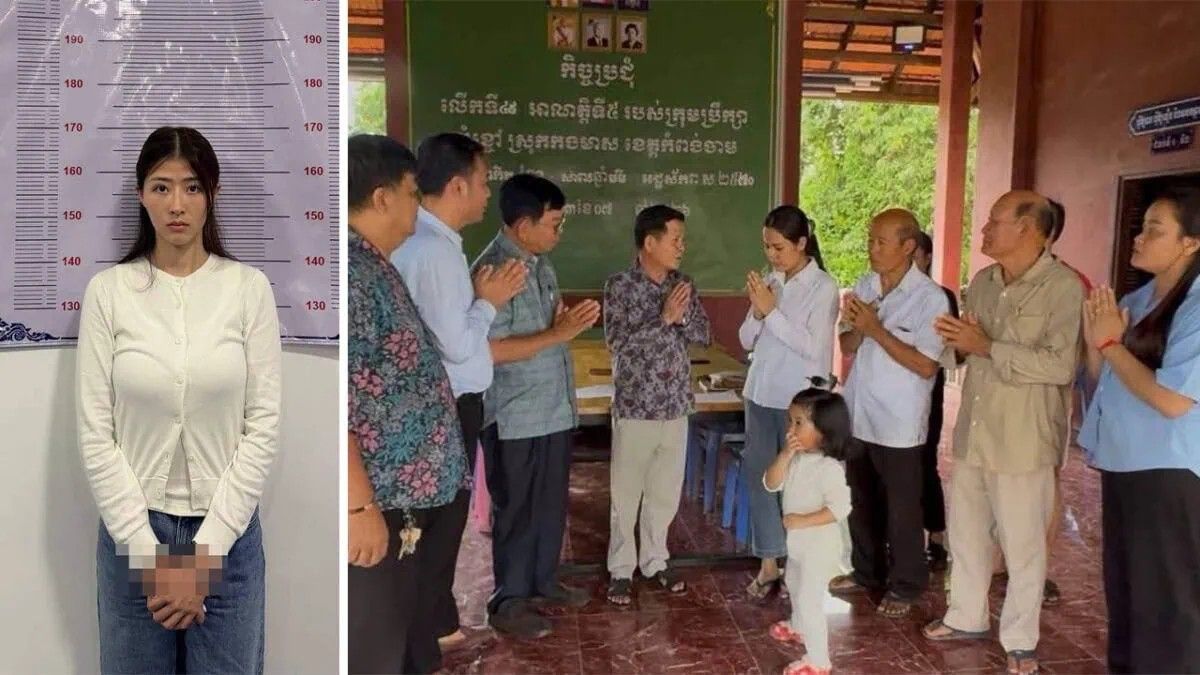
An out-of-court settlement has brought closure to the civil dimension of a fatal traffic incident in Cambodia's capital, though the criminal investigation into the death of Kuoch Limhan continues unabated. On August 6, the victim's family and the accused driver's relatives reached an agreement that saw the withdrawal of civil claims in exchange for monetary compensation, marking a swift resolution to the compensation dispute whilst leaving the more serious criminal liability unresolved.
Limhan, who worked as an official with the Ministry of Public Works and Transport's construction laboratory, was struck by a vehicle in Phnom Penh's Sen Sok district on the night of July 28. According to accounts from the incident, the collision occurred when the driver, identified as Sam Meychou, allegedly crossed the centreline whilst attempting to overtake another vehicle and struck Limhan's motorcycle. The impact proved fatal, with the victim pronounced dead at the scene. Reports suggest Limhan had been returning home with milk for his young daughter at the time of the collision.
The settlement agreement, reached through negotiation between the two families and facilitated by legal representation, resulted in Oknha Tong Hok Seng, Meychou's father, transferring S$60,000 in civil compensation to Limhan's widow. The arrangement was formally documented and witnessed by local authorities, including commune chief Kong Sekleng and lawyer Phon Thearin, lending official standing to the private agreement. Seung Kimhor, who represented the victim's family in pursuing the civil claim, was similarly party to the signed accord.
Crucially, both parties committed to resolving the dispute through what the agreement termed an "amicable" resolution, with neither side permitted to pursue additional claims or demands flowing from the incident. This language reflects a common approach in Southeast Asian legal practice, where out-of-court settlements serve to compartmentalise disputes and allow families to move forward without prolonged litigation. The terms explicitly precluded either party from seeking further compensation or recourse related to the collision.
However, the civil settlement operates independently from the criminal dimension of the case. Meychou remains subject to criminal prosecution for her alleged role in the fatal accident and her subsequent departure from the scene. The Phnom Penh Municipal Court formally charged her on July 31 with causing a fatal traffic accident and fleeing the scene—both serious offences under Cambodian law. The investigating judge ordered her remanded in pre-trial detention following interrogation and review of evidence.
Timeline evidence establishes that Meychou surrendered herself to authorities on July 30, approximately 36 hours after the collision. Video footage from the incident captured the accused and a companion departing the scene in a tuk tuk whilst the victim's body remained on the rain-soaked street, a detail that underscores the apparent abandonment of the scene and likely informed the fleeing-the-scene charge. The arrest and subsequent charging proceeded swiftly, with court proceedings commencing within three days of the incident.
The separation of civil and criminal liability in this case reflects important principles within common law jurisdictions, though Cambodia's legal system operates under different frameworks. Nevertheless, the outcome demonstrates how compensation disputes can be resolved separately from questions of criminal responsibility. The family's acceptance of settlement does not constitute an admission of innocence by the accused, nor does it impede the state's prosecution of criminal charges in the public interest.
For Malaysian and Southeast Asian observers, this case illustrates both the possibility of privately negotiated settlements in traffic fatality cases and the continued necessity of criminal accountability. While civil compensation provides material support to grieving families—a matter of genuine importance—the independent prosecution of traffic offences protects broader public interests and establishes deterrence against dangerous driving practices. The two-track approach allows families to access timely financial relief whilst the justice system pursues accountability for the conduct itself.
The incident also underscores persistent road safety challenges across the region. Hit-and-run collisions, whether involving momentary loss of control or deliberate evasion of responsibility, claim lives with sobering regularity across Southeast Asia. Meychou's alleged crossing of the centreline whilst overtaking suggests inattention, recklessness, or misjudgement—patterns that recur in accident investigations throughout the region. The criminal proceedings now underway will determine whether her conduct meets the threshold for criminal culpability, a question distinct from her family's capacity to compensate the victim's survivors.
The involvement of local authorities and legal representatives in witnessing the settlement reflects good governance practice, ensuring transparency and preventing future disputes over agreement terms. Such formal documentation reduces the risk of subsequent conflicts and demonstrates that even private settlements benefit from official oversight and verification. The roles played by the commune chief and lawyer suggest a structured mediation process rather than unilateral negotiation.
Looking forward, this matter now bifurcates into its criminal and compensatory tracks. The victim's family has secured financial resources to address the material consequences of their loss, whilst the criminal justice system pursues its investigation and prosecution independently. Whether Meychou's pre-trial detention will be sustained, whether trial proceeds expeditiously, and what sentence might follow a conviction remain unresolved. These outcomes will shape not only Meychou's personal circumstances but also signal the consequences for dangerous driving conduct within Cambodia's jurisdiction.

