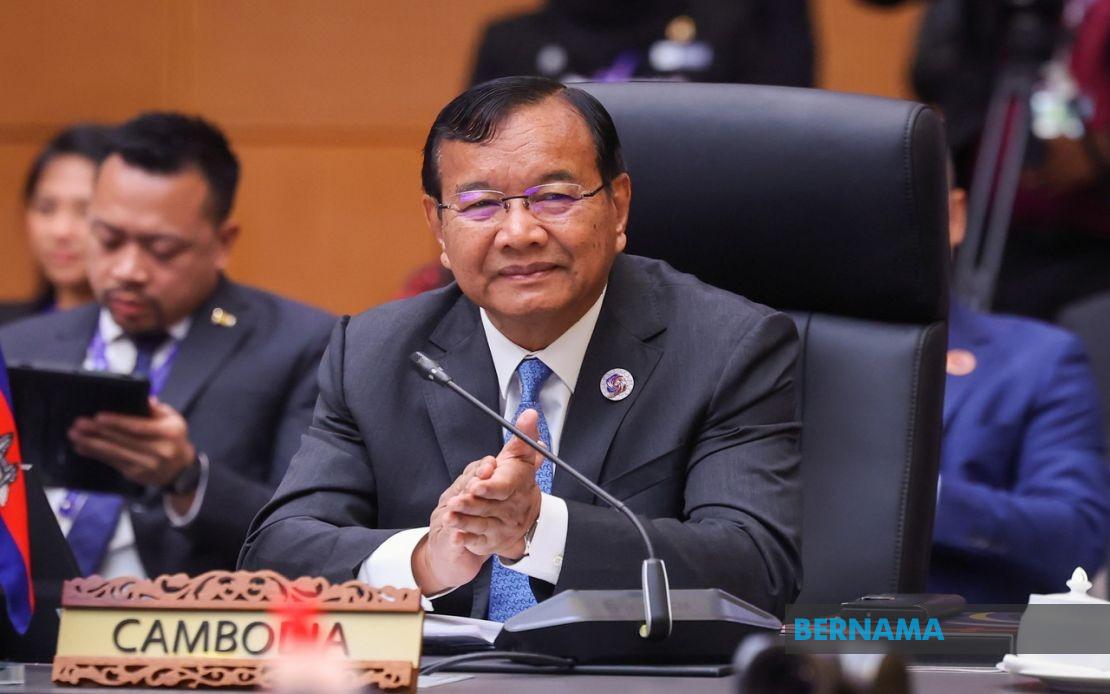
Cambodia's Deputy Prime Minister and Foreign Minister Prak Sokhonn touched down in Malaysia on August 3 for a two-day official visit, signalling renewed diplomatic momentum between the neighbouring Southeast Asian nations. His arrival at Kuala Lumpur International Airport Terminal 1 at 1.48 pm was marked by the presence of Cambodian Ambassador to Malaysia Ouk Chandara and Malaysia's chief ceremony officer Datuk Rozainor Ramli, underscoring the official nature of the engagement.
The visit represents a significant diplomatic milestone as the two countries seek to deepen their strategic partnership across multiple sectors. Beyond ceremonial formalities, Sokhonn's itinerary reflects substantive engagement priorities, beginning with a courtesy call on Prime Minister Datuk Seri Anwar Ibrahim before moving into scheduled bilateral discussions. This sequence of high-level meetings demonstrates Malaysia's commitment to treating the Cambodian delegation with appropriate diplomatic protocol and signals openness to advancing shared regional interests.
The centrepiece of Sokhonn's visit is the 3rd Meeting of the Cambodia-Malaysia Joint Commission for Bilateral Cooperation, scheduled for the following day in Kuala Lumpur. This forum serves as the primary institutional mechanism for reviewing progress on previously agreed initiatives and identifying new areas for collaboration. The JCBC meeting will comprehensively assess implementation of agreed minutes from the second gathering and evaluate the status of bilateral agreements concluded between the nations, providing an opportunity to address any outstanding issues and chart new directions.
During his stay, Sokhonn is expected to engage in bilateral talks with Malaysia's Foreign Minister Datuk Seri Mohamad Hasan. These discussions will likely cover contemporary regional security challenges, trade and investment facilitation, and people-to-people exchanges. Such ministerial-level conversations are crucial for clarifying each nation's positions on regional affairs and establishing concrete action plans for cooperation in the coming months.
The economic dimension of Malaysia-Cambodia relations has demonstrated considerable momentum, particularly in recent years. Trade between the two nations grew robustly in 2025, with bilateral commerce surging 27.4 per cent year-on-year to reach RM5 billion, equivalent to USD1.17 billion. This substantial growth trajectory reflects increasing commercial integration and suggests expanding business opportunities for investors and entrepreneurs from both countries seeking to capitalize on regional market dynamics.
Malaysia's investment presence in Cambodia underscores the depth of economic engagement between the neighbours. As of 2024, Malaysian cumulative investments in Cambodia reached USD3.20 billion, or approximately RM13.07 billion, distributed across 162 registered projects. This investment stock positions Malaysia as Cambodia's third-largest foreign investor, behind only China and Vietnam, demonstrating the confidence Malaysian business entities hold in Cambodia's growth potential and market opportunities.
The significance of these economic metrics extends beyond raw figures. They reflect successful navigation of bilateral investment frameworks and dispute resolution mechanisms, indicating that both governments have fostered regulatory environments conducive to business expansion. For Malaysian companies, Cambodia represents a gateway to the broader Indochinese market and a source of competitive cost advantages in manufacturing and agribusiness. For Cambodia, Malaysian capital and expertise contribute to economic diversification and employment generation.
Sokhonn's visit occurs within the broader context of strengthening ASEAN cohesion and intra-regional diplomacy. Both Cambodia and Malaysia are ASEAN members navigating complex great power competition in Southeast Asia. Bilateral visits at this diplomatic level serve to reinforce consensus on regional challenges including maritime security, trade facilitation, and responses to external pressures. The momentum generated by high-level visits often translates into coordinated positions within ASEAN forums and contributes to the bloc's collective bargaining power in international negotiations.
Looking ahead, the outcomes of the JCBC meeting will likely influence the trajectory of Malaysia-Cambodia relations over the subsequent two years until the fourth meeting. Concrete deliverables from this visit—whether in the form of new memoranda of understanding, expanded trade protocols, or enhanced cultural and educational exchanges—would provide tangible evidence of the partnership's deepening. These outcomes also serve as benchmarks for assessing the effectiveness of diplomatic engagement and help justify continued investment of governmental resources in bilateral relations.
For Malaysian policymakers and business interests, the visit represents an opportunity to address impediments to deeper economic integration while celebrating progress achieved to date. Discussions during the JCBC meeting may address infrastructure connectivity, labour mobility, financial services integration, and supply chain coordination—areas where bilateral cooperation could yield mutual benefits. Similarly, Cambodian officials likely view the engagement as a platform for attracting additional Malaysian investment in priority sectors including agriculture, tourism, and manufacturing.
The timing of Sokhonn's visit also carries symbolic importance in demonstrating the continuity and stability of Malaysia-Cambodia relations despite regional geopolitical complexities. In an era when Southeast Asian governments must balance relationships with major powers, bilateral partnerships grounded in proximity, shared cultural heritage, and complementary economic interests provide stable foundations. Regular high-level visits reinforce these foundations and signal to regional and international audiences that Malaysia and Cambodia remain committed to peaceful, mutually beneficial coexistence.

