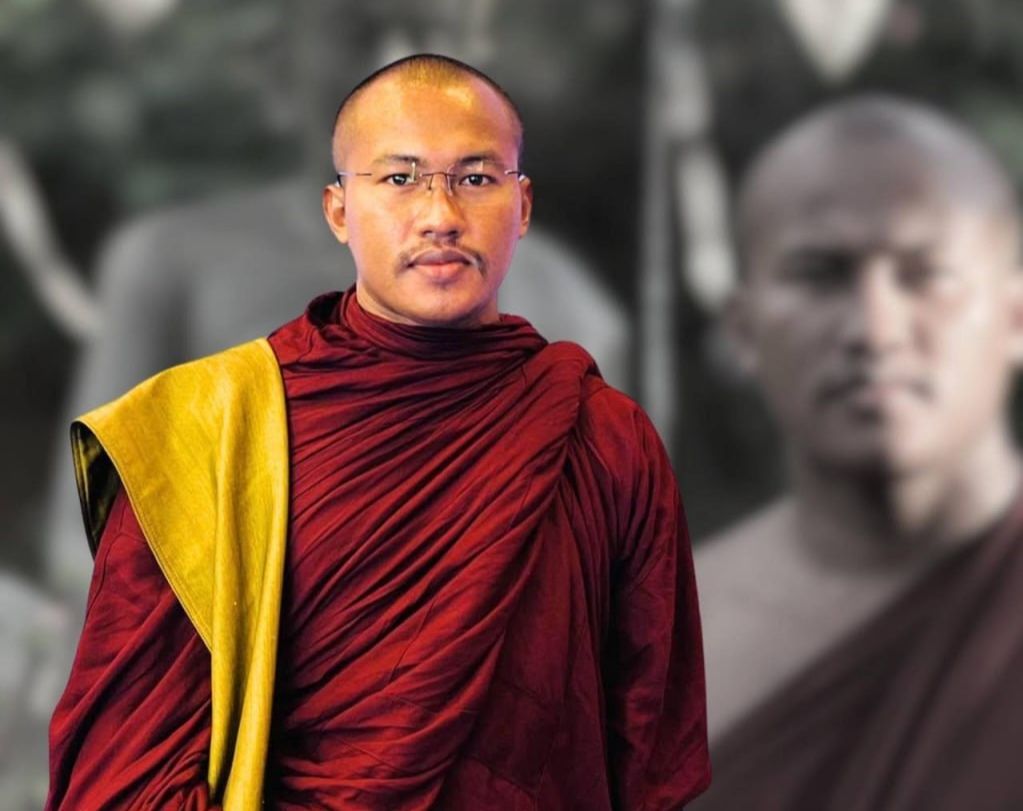
A coalition of fifty Cambodian civil society organisations, labour unions, and community groups has issued a forceful joint statement demanding the immediate release of citizen journalist and former monk Chea Vuthy, whose conviction last week has reignited concerns about shrinking democratic space in Southeast Asia. On August 19, the Phnom Penh Municipal Court sentenced the 27-year-old to 18 months in prison and fined him two million riel—approximately $500—after finding him guilty of incitement under the Criminal Code. What distinguishes this case from typical incitement prosecutions is the source of the alleged offence: private comments made within a small Messenger group chat of around twenty members, not public posts or statements intended for mass circulation.
The circumstances surrounding Vuthy's detention paint a picture of escalating pressure on independent voices in Cambodia. Arrested in April at Wat Por Veal pagoda in Battambang province by plainclothes provincial police, Vuthy was forcibly defrocked before being held in pretrial detention at Phnom Penh's Police Judicial Prison. He remains behind bars as of publication. His defence counsel, Em Chantha, has signalled an intention to appeal the verdict, arguing that the evidence presented fails to meet legal thresholds for incitement and questioning whether comments confined to a private messenger group can reasonably constitute criminal expression. The Phnom Penh Appeal Court had previously rejected Vuthy's bail request in June, effectively limiting his access to the outside world throughout much of his prosecution.
The August 20 joint statement, released through the Cambodian League for the Promotion and Defense of Human Rights (LICADHO) and endorsed by a spectrum of human rights, media, labour, and community organisations, emphasises the disproportionality of the penalty relative to the nature of the alleged transgression. Signatories include the Cambodian Center for Human Rights, Cambodian Human Rights and Development Association, Cambodian Center for Independent Media, Cambodian Journalists Alliance Association, and the Overseas Press Club of Cambodia, among others. The statement articulates a fundamental concern: that criminalising private expression, even when made in a limited forum, establishes a chilling precedent that threatens the entire ecosystem of free speech, since few individuals will feel secure engaging in candid discussion if private remarks can be weaponised through state prosecution.
According to the organisations, Vuthy's comment in the August 2025 Messenger discussion related to provincial territories and the broader Cambodia-Thailand border situation, specifically touching on the plight of people displaced by fighting in that disputed region. Vuthy acknowledged making the remark in the private group but maintained he never posted it publicly. Critically, the Messenger comment appears to have been the sole substantive evidence marshalled against him. The civil society groups argue this evidentiary thinness violates international standards governing permissible restrictions on freedom of expression, particularly Article 19 of the International Covenant on Civil and Political Rights, to which Cambodia is a state party. Under that framework, restrictions must be prescribed by law, serve a legitimate aim, and meet rigorous necessity and proportionality tests—none of which the organisations believe the conviction satisfies.
Vuthy's case sits within a troubling pattern of prosecutions linked to commentary on the Cambodia-Thailand border dispute. LICADHO has documented multiple convictions and charges following social media posts on the border conflict. In May, a chef received an identical 18-month sentence for similar speech, while in June a deputy school director was sentenced to two years imprisonment. This clustering suggests either heightened state sensitivity around border matters or a systematic use of incitement laws to suppress discussion of politically sensitive territorial issues. For Malaysian and Southeast Asian readers, the implications extend beyond Cambodia's borders: the precedent of criminalising private online expression in a country sharing maritime boundary disputes and sensitive bilateral relations carries lessons about how states in the region might justify expanding surveillance and control of private communication channels.
Before his arrest, Vuthy had cultivated a reputation as a vocal commentator on environmental degradation, deforestation, and human rights abuses. His work as a citizen journalist, combined with his former status as a Buddhist monk, gave him considerable moral authority within Cambodian civil society. The forcible defrocking—a severe punishment in Buddhist cultural context—appears intended to strip him of that credibility and social standing. Yet the act of defrocking itself, conducted without apparent ecclesiastical process, has only intensified the perception among civil society that the state is pursuing a vendetta rather than administering justice according to established legal procedures.
The defence strategy articulated by Vuthy's lawyer hinges on distinguishing between private and public speech, and on questioning whether the legal definition of incitement can reasonably extend to remarks within a closed group. Em Chantha contends that the threshold for incitement—historically interpreted as speech directly calling for or substantially likely to provoke imminent unlawful action—has been breached by this conviction. The appeal process will test whether Cambodia's appellate courts are willing to meaningfully scrutinise prosecutorial decisions or merely defer to lower court determinations. International precedent suggests that criminal penalties for private expression, particularly in online contexts, should be viewed with considerable scepticism by reviewing courts committed to freedom of expression protections.
Cambodia's Ministry of Information responded to the civil society statement through spokesman Tep Asnarith, asserting that the executive branch does not interfere in judicial matters and emphasising the independence of the courts. Asnarith noted that Vuthy retains rights to legal representation and appeal while urging civil society to approach such cases with balance and accuracy. This response, however, sidesteps the substantive concerns raised about proportionality and the application of incitement law to private expression. It also elides the relationship between prosecutorial discretion and executive priorities: even if courts operate independently in formal terms, selective enforcement of broadly-written laws can constitute an indirect form of speech suppression.
The breadth of the coalition demanding Vuthy's release underscores how his case has become emblematic of wider anxieties within Cambodian civil society about the trajectory of political freedoms. The inclusion of labour organisations suggests concerns extend beyond journalism into the broader question of whether workers can openly discuss grievances or participate in organising without fear of state retaliation for private communications. The involvement of community networks and grassroots groups indicates that prosecutorial overreach is perceived as affecting ordinary citizens, not merely prominent activists. For regional observers, the case reflects how Southeast Asian democracies and quasi-democracies are grappling with the challenge of regulating online expression: between legitimate concerns about harmful speech and the dangers of using expansive laws to suppress legitimate dissent.
The invocation of Cambodia's Universal Periodic Review commitments and ICCPR obligations in the civil society statement signals an intention to internationalise Vuthy's case, bringing pressure through UN mechanisms and international human rights bodies. Cambodia cannot easily dismiss these references, having committed to comply with such frameworks during diplomatic engagements. The extent to which international pressure translates into concrete relief for Vuthy will depend on whether his appeals court proves receptive to arguments grounded in Cambodia's treaty obligations and whether international attention modifies state calculations about the political cost of maintaining his imprisonment. In the interim, the case serves as a stark warning about how incitement laws, ostensibly designed to prevent dangerous speech, can become instruments for silencing legitimate discourse on sensitive political matters.

