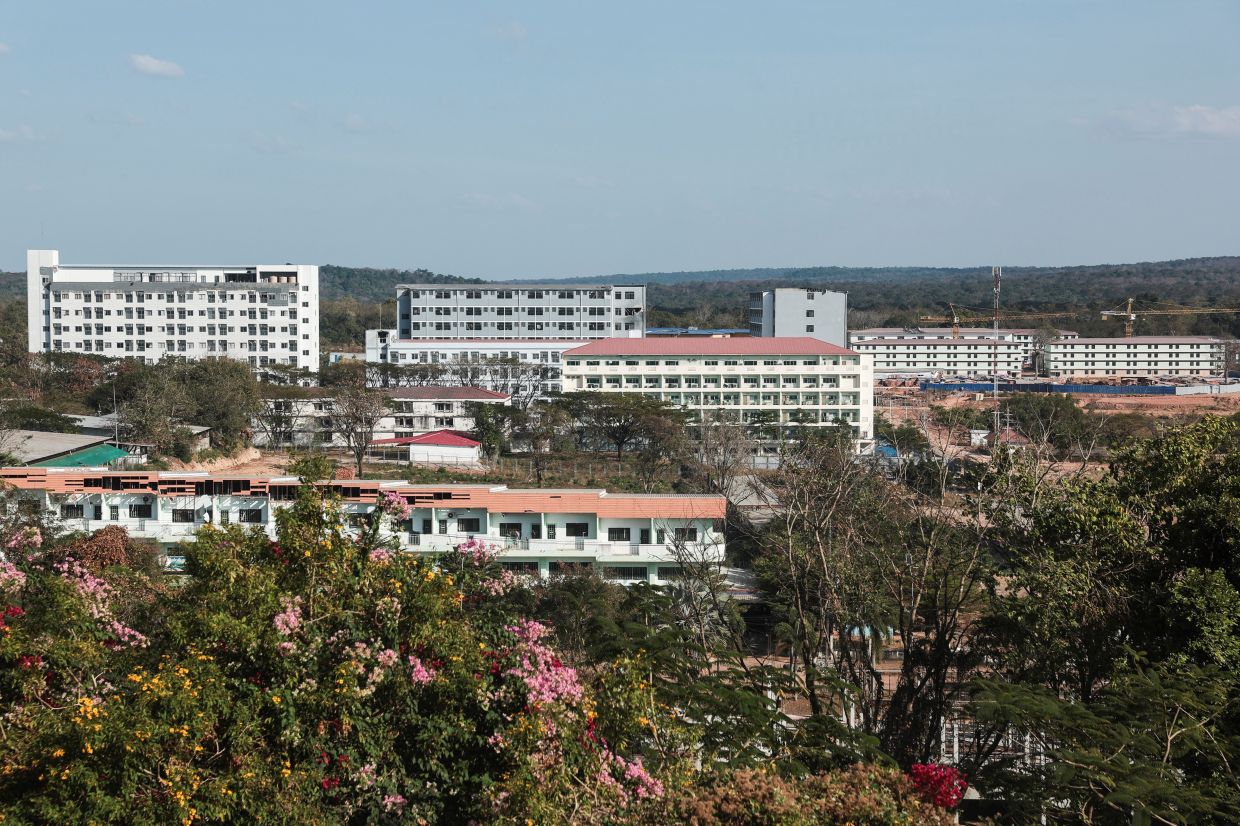
Royal Hill, a sprawling casino compound straddling the Thai-Cambodian border, presents itself as a luxury gambling destination with neoclassical columns and gold-trimmed architecture. But Reuters investigations have uncovered that the facility operated as landlord to one of Southeast Asia's most sophisticated crime centres, housing fake police stations and bank offices used to perpetrate global fraud schemes. The discovery implicates Lim Heng Group, a gambling empire controlled by a politically connected Cambodian tycoon, in leasing buildings to operators conducting industrial-scale scamming and human trafficking operations, though the news agency found no evidence the group directly participated in the crimes themselves.
Documents reviewed by Reuters, including a rental agreement dated March 2024, show that Lim Heng Group charged dramatically inflated rents for three buildings within the Royal Hill compound. The lease stipulated US$200,000 monthly—rates so far above market value that a comparable property in Phnom Penh's upscale districts was advertised for just US$25,000 per month. The disparity suggests the premium pricing reflected the specialized nature of the operation, with the high costs likely covering both facility rental and operational discretion from the landlord. Thai military officials and former trafficking victims who worked at the site corroborated that these buildings housed elaborate setups designed to deceive victims across multiple continents.
The compound's criminal infrastructure was sophisticated and deliberate. Inside the rented structures, criminal syndicates had transformed ordinary rooms into convincing replicas of police stations and banking offices from numerous countries. These fake institutional settings served as backdrops for "romance scams" and police-impersonation fraud targeting vulnerable victims worldwide. Thai military personnel who visited the site, along with individuals who worked within the operations, confirmed the extensive nature of these criminal backdrops. The scammers would use video calls and digital communication to interact with victims while maintaining the illusion they were dealing with legitimate authorities, extraction funds through false claims of legal jeopardy or romantic investment opportunities.
The discovery carries significant implications for understanding how transnational crime networks operate within Southeast Asia's casino sector. According to research from the Global Initiative against Transnational Organized Crime, many Chinese-affiliated scam syndicates maintain close operational ties with casinos, which provide essential infrastructure for laundering illicit proceeds and conducting their schemes. The casino environment offers both operational convenience and financial integration—victims' money can be gambled and redistributed through legitimate gaming transactions, obscuring the trail of criminal proceeds. This convergence between organized gaming and organized fraud has made Southeast Asian casinos, particularly in Cambodia, increasingly attractive bases for criminal operations.
Lim Heng's position within Cambodia's elite circles suggests how such arrangements become institutionally sustainable. The tycoon maintains documented ties with senior military generals, holds a royal title equivalent to a duke, and donated US$20,000 to Cambodia's military last year. These connections create a protective ecosystem in which problematic business practices face minimal regulatory consequences. Sophal Ear, who studies Cambodia's political economy at Arizona State University, notes that the kingdom's casino sector is predominantly controlled by businesspeople with deep political connections, creating perverse incentives that prioritize patronage relationships over enforcement. This structural reality undercuts official government pledges to eliminate scam operations.
Cambodia's government response to the Royal Hill scandal reveals the contradictions within its anti-fraud agenda. Despite international media coverage of fake police stations and banking facilities discovered at the site, Cambodian officials have persistently described Royal Hill as simply a hotel. This characterization persists even as photographic evidence circulated globally showing the extent of the criminal infrastructure. Chhay Sinarith, a senior minister tasked with combating online fraud, acknowledged that investigations were underway in the Royal Hill area but deflected responsibility by suggesting Thai security forces should return custody of seized locations to facilitate Cambodian probes. This jurisdictional argument reveals how border complexities can obstruct accountability.
The legal mechanisms available to address landlord responsibility remain underdeveloped in Cambodia's regulatory framework. According to Piseth Duch, a Phnom Penh-based attorney specializing in business and human rights law, prosecutors can theoretically charge property owners if investigations establish they knew about criminal use and permitted it to continue. However, the evidentiary burden is substantial, and political considerations often override legal procedures. The Cambodian Human Rights Action Coalition echoes this concern, noting that without genuine enforcement commitment from politically connected entities, landlord liability remains largely theoretical.
Lim Heng Group's response to scrutiny demonstrates how powerful defendants can weaponize legal processes. In September 2024, the company filed "incitement to discrimination" complaints against two Cambodian publishers whose outlets had reported the presence of confined foreigners at Royal Hill. Court summonses dated September 16 made no specific reference to which article claims the company contested, obscuring the nature of its objections. One publisher, Penn Nuon, confirmed the complaint's existence but stated he had removed the article to settle the case following legal advice. This litigation strategy—filing vague complaints that pressure publishers into self-censorship—effectively chills investigative reporting without requiring substantive legal victories.
The scale of fraud emanating from Royal Hill and similar Southeast Asian operations reflects a broader crisis affecting Western nations. The United States government estimated that Americans lost approximately US$10 billion to fraudsters operating from Southeast Asia in 2024 alone. An Amnesty International investigation, drawing on casino regulatory records and witness testimony, determined that Cambodian casino owners directly controlled at least a dozen scam centres, though Reuters has not independently verified these figures. These statistics underscore how criminal operations centred in a single Southeast Asian nation impose substantial costs on distant victims, creating international accountability challenges that exceed any individual country's enforcement capacity.
Human trafficking dimensions compound the criminal severity at Royal Hill. Pornpen Aimhun, a Thai woman identifying herself as a trafficking victim who worked at the site, described the experience of detained workers coerced into executing scams targeting international audiences. At least four fenced-off buildings within the compound were dedicated to criminal activity, according to Thai security officials, with elaborate security measures including high fences topped with razor wire intended to prevent escape. Victims were typically migrant workers from Southeast Asia and China, recruited through deceptive labour recruitment or simply abducted, then imprisoned and psychologically manipulated into participating in fraud schemes. This intersection of human trafficking with cybercrime represents an evolution in transnational organized crime that traditional law enforcement frameworks struggle to address.
The Thai military's December bombing of Royal Hill during a brief border conflict introduced an external enforcement mechanism where legal and diplomatic channels had failed. Thailand claimed it targeted the casino because Cambodian forces had commandeered buildings for drone and sniper positions. However, the military's subsequent occupation and invitation to Reuters to document evidence of scamming operations suggests a more calculated strategy: using military action to expose and dismantle a criminal centre that conventional law enforcement had been unable or unwilling to address. Thailand's established connection between Lim Heng and Royal Hill through security agency reports provides additional evidence of long-standing awareness of the facility's problematic operations.
The broader context reveals that Cambodia's casino sector represents a critical vulnerability in regional security and justice. While Cambodia has taken incremental steps—extraditing alleged scamming kingpin Chen Zhi to China and passing legislation targeting scammers—these measures remain insufficient without addressing the underlying nexus between political patronage and criminal tolerance. Lim Heng Group's unwillingness to respond to direct inquiries about cyberscam and trafficking activities, combined with its resort to legal intimidation against critical media, suggests institutional resistance to accountability. Until Cambodia's government demonstrates political will to enforce regulatory standards against connected elites, Royal Hill-type operations will likely continue to function as transnational crime sanctuaries.
For Malaysia and other Southeast Asian countries, the Royal Hill case offers cautionary lessons about regulatory capture and the risks of allowing casino sectors to develop without robust, independent oversight mechanisms. Cross-border coordination between national authorities remains essential, as individual countries' enforcement efforts prove insufficient when criminals exploit jurisdictional gaps. The incident also highlights how transnational organized crime has evolved to combine multiple illicit activities—gambling, fraud, money laundering, and human trafficking—into integrated operational ecosystems that generate substantial profits while imposing externalized harms on vulnerable populations worldwide.

