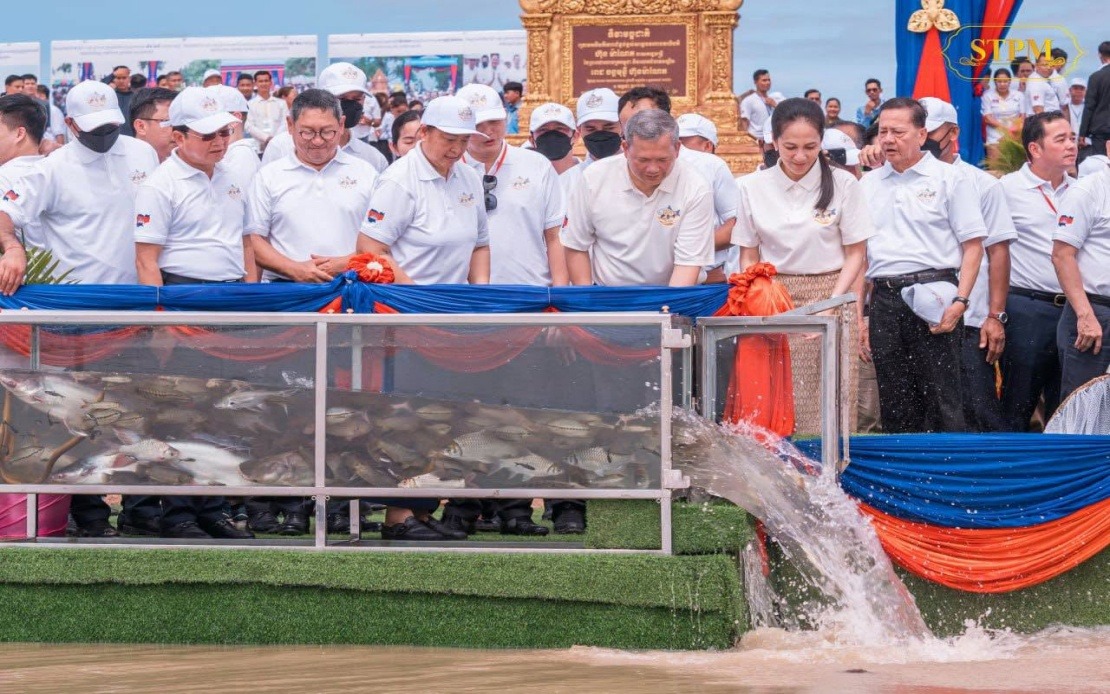
Cambodia's government is intensifying its battle against illegal fishing, with Prime Minister Hun Manet ordering a comprehensive enforcement operation targeting unlawful activities in critical fish breeding zones. Speaking at the National Fish Day celebration held in Svay Rieng Province on Wednesday, the premier outlined an ambitious strategy to safeguard the nation's aquatic ecosystems and the fishing communities that depend on them for survival. The directive represents a significant policy shift as Cambodia grapples with mounting pressure on its marine and freshwater resources from both commercial poaching operations and unsustainable harvesting practices that threaten the livelihoods of thousands of artisanal fishermen across the kingdom.
The protection of fish stocks has become a matter of pressing national concern for Cambodia, where aquatic resources form the backbone of food security and rural employment. Hun Manet characterised the agriculture and fisheries sectors as essential pillars of national stability, describing agriculture as the nation's stomach and fisheries as its primary source of protein. This framing underscores how deeply Cambodia's economic and social welfare are intertwined with the health of its natural resources. The Tonle Sap lake and associated river systems, which support some of the world's most productive inland fisheries, have faced increasing strain from illegal activities including destructive fishing methods and unauthorised commercial harvesting.
To implement this enforcement agenda, Hun Manet disclosed that military units stationed around Tonle Sap have been instructed to mobilise and intensify operations against natural resource crimes. Over the preceding two years, armed forces personnel have engaged in enforcement activities addressing both terrestrial and aquatic violations, though Hun Manet indicated this arrangement was intended as a temporary measure. The government's reliance on military personnel reflects a structural challenge within Cambodia's institutional capacity—a shortage of specialised law enforcement officers trained and equipped to combat sophisticated environmental crimes. This dependency has created an awkward situation where military resources, typically reserved for border security and territorial protection, have been diverted to address civilian resource management issues.
The premier acknowledged the inherent inefficiency of this approach, stating that the government aims to eventually reduce its dependence on military deployment for these purposes and avoid deploying additional troops to civilian law enforcement duties. This candid admission reveals the underlying constraint facing Cambodia's environmental protection efforts: the need to develop dedicated, professional enforcement agencies capable of tackling resource crimes without straining military capacity. Building such institutional capability requires sustained investment in training, equipment, and inter-agency coordination—challenges that extend beyond Cambodia's immediate policy horizon.
Among the specific illegal practices targeted by the new enforcement drive is large-scale clam dredging, which Hun Manet identified as particularly damaging to artisanal fishing communities. The destructive harvesting of clams and other bottom-dwelling species not only depletes these particular stocks but also degrades the habitat conditions essential for fish reproduction and growth. Hun Manet issued an immediate cessation order for such activities, signalling zero tolerance for this category of violation. The decision reflects growing recognition that certain fishing methods cause disproportionate ecosystem damage relative to their economic value, making them priority targets for elimination.
Protection of fish during critical breeding seasons emerged as a central component of Hun Manet's strategy. Illegal fishing intensifies during spawning periods when fish congregate in predictable locations and become vulnerable to capture, a practice that undermines the reproductive potential of entire fish populations. By designating spawning zones as enforcement priorities, the government aims to interrupt this cycle of unsustainable harvest. The biological imperative is clear: allowing fish to complete reproductive cycles is essential for maintaining stock abundance and preventing the ecosystem collapse that would devastate Cambodia's fishing sector.
The scale of Cambodia's commitment to this initiative was symbolically demonstrated through the release of 1.5 million fish and other aquatic species into the Vai Ko River in Svay Rieng Province, undertaken in conjunction with the National Fish Day celebration. This restocking operation serves multiple purposes: it replenishes depleted populations, demonstrates government commitment to recovery, and generates public awareness about conservation efforts. Such initiatives, while not addressing the root causes of overfishing, provide visible evidence that authorities are taking action to reverse population declines.
For Malaysia and other Southeast Asian nations, Cambodia's approach to fisheries enforcement offers both instructive lessons and cautionary implications. The region shares interconnected marine ecosystems where illegal fishing in one jurisdiction affects neighbouring waters and fish stocks. Cambodia's struggle with enforcement capacity mirrors challenges faced across Southeast Asia, where porous borders, weak regulatory institutions, and the economic desperation of fishing communities create conditions favourable to resource crime. The deployment of military resources to civilian enforcement roles, while pragmatic, highlights the costs of inadequate institutional development and raises questions about long-term sustainability of such arrangements.
The underlying tension in Hun Manet's position reflects a fundamental development challenge: Cambodia must simultaneously protect natural resources essential for food security and rural livelihoods while building the institutional capacity to enforce regulations without militarisation of resource management. This balancing act will determine whether the government's enforcement drive produces lasting improvements in resource sustainability or merely shifts illegal activities to less-monitored locations. Regional cooperation, capacity-building assistance, and technology transfer from more developed nations could accelerate Cambodia's progress toward sustainable fisheries management and reduce its reliance on military deployment for environmental protection.

