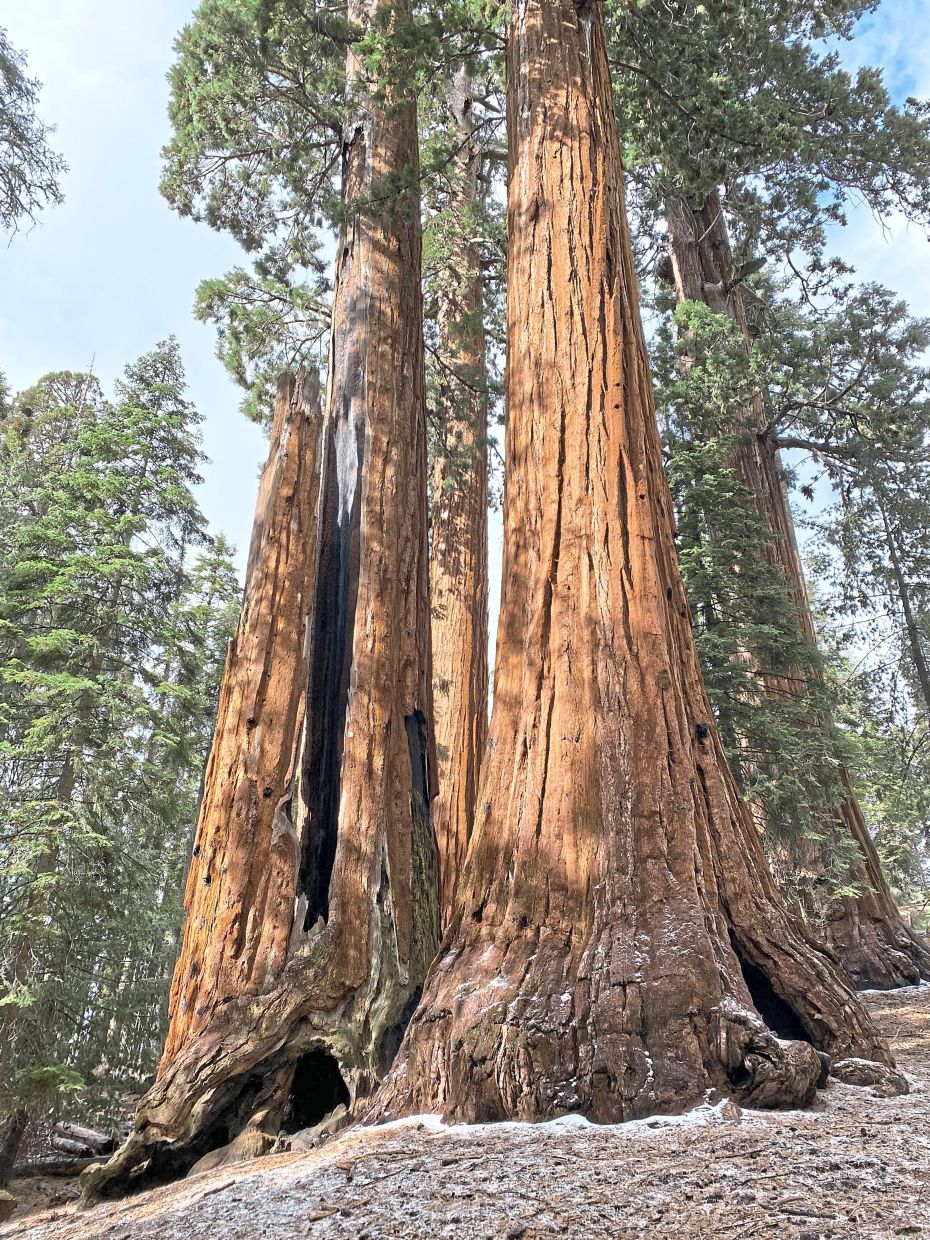
California is undertaking one of its most significant environmental recovery missions in response to a catastrophic loss of giant sequoias that occurred in the years immediately following 2020. The 2020 and 2021 wildfire seasons claimed approximately 20% of the world's remaining giant sequoia population, decimating these iconic species that can reach heights of 91.5 metres and live for up to 3,000 years. The scale of destruction across Sequoia National Park, Sequoia National Forest and surrounding areas of the southern Sierra Nevada shocked scientists and park managers into action, spurring the formation of an unprecedented coalition dedicated to preventing similar future losses.
The emotional weight of that disaster cannot be overstated for those tasked with stewarding California's natural heritage. Kevin Conway, state forests programme manager for Cal Fire, articulated the gut-wrenching reflection that gripped the firefighting and conservation community. The fires exposed a fundamental vulnerability in how these supposedly resilient giants had been managed for more than a century, forcing experts to confront uncomfortable truths about well-intentioned but ultimately counterproductive fire suppression policies that had allowed forests to become dangerously overgrown and combustible.
In response to the catastrophe, eight primary organisations joined forces to establish the Giant Sequoia Lands Coalition in 2022, comprising Cal Fire, California State Parks, the National Park Service, Tulare County, the Tule River Indian Tribe of California, UC Berkeley, the US Forest Service, and the federal Bureau of Land Management. This partnership controls lands spanning from Tahoe National Forest southward to Bakersfield, encompassing all 94 known giant sequoia groves in California. An additional nine supporting organisations contribute scientific expertise, financial resources and administrative backing, creating a coordinated framework unheard of in previous conservation efforts for these particular trees.
The restoration work has proceeded with impressive momentum over the past four years. Since launching in 2022, the coalition has systematically thinned overgrown brush and small-diameter trees that serve as fuel for intensifying wildfires across 44 of the 94 sequoia groves. Crews have simultaneously conducted controlled burns designed to mimic historical fire regimes that once moved through these forests naturally, and have planted more than 682,000 sequoia seedlings in areas that suffered severe burn damage during the 2020-2021 fires. In total, these efforts have reduced fire danger across 9,409 hectares, according to findings released in May.
For Malaysian readers and Southeast Asian observers, this restoration model offers instructive parallels to tropical forest management challenges. The giant sequoia situation demonstrates how fire suppression policies implemented with positive intentions can ultimately undermine ecosystem health and resilience. Similarly, many Southeast Asian nations have discovered that strict fire prevention regimes in tropical forests can lead to dangerous accumulations of deadwood and vegetation, increasing the severity of inevitable fires rather than preventing them altogether. The coalition's emphasis on working with fire rather than against it represents a philosophical shift increasingly recognised across the region.
The underlying ecological explanation for the sequoias' previous vulnerability reveals a complex interaction between human intervention and natural processes. Giant sequoias evolved alongside fire over millennia, their thick reddish bark—which can grow approximately 60 centimetres thick—providing insulation that protects living tissue from intense heat. Their reproduction depends on fire; sequoia cones contain resin that must be melted by flames to release seeds. Historically, lightning strikes and controlled burns set by indigenous tribes moved through these groves every 10 to 20 years, maintaining a natural state of regular, low-intensity burning.
Beginning around the early 1900s, aggressive fire suppression efforts fundamentally altered this dynamic. By extinguishing every fire, resource managers inadvertently allowed small trees, brush, and dead wood to accumulate to unprecedented density levels. This transformation created conditions catastrophically different from the forest structure that shaped sequoia evolution. When the 2020 and 2021 wildfires eventually arrived, they burned with intensity unknown in modern times, hot enough to penetrate the protective bark and kill these ancient trees that had survived for thousands of years. Kristen Shive, a fuels and forest specialist with UC Berkeley's Cooperative Extension Program, described the psychological and scientific shock of surveying groves where millennia-old trees had been killed by what she characterised as human mismanagement rather than inevitable natural disaster.
Climate change has compounded these existing vulnerabilities significantly. Elevated temperatures dry out soils and vegetation, enabling fires to spread more rapidly and burn with greater intensity. The extended droughts of 2012-2016 and 2020-2022 killed millions of other trees across the Sierra Nevada range, converting living forest to potential fuel. This progression illustrates a feedback mechanism increasingly familiar to climate scientists worldwide: warming temperatures stress ecosystems through drought, dead vegetation accumulates, subsequent fires burn hotter, and ecological damage becomes more severe with each cycle. The sequoia crisis exemplifies how climate and fire policy intersect to amplify environmental damage.
The coalition's solution involves fundamentally reshaping forest composition through targeted removal of competing species. Overgrown white fir, red fir, and incense cedar—species that thrive in the thick, shaded conditions created by fire suppression—are thinned systematically. Dead sugar pines and ponderosa pines from recent droughts are removed using chainsaws. Much of this debris is piled and burned during the off-season, though larger logs on private land or Cal Fire demonstration forests are sold to lumber companies, thereby offsetting thinning costs. After removing this accumulated material, controlled burns restore the low-intensity fire regime that sequoias require and tolerate. Thinning simultaneously permits more sunlight to penetrate the forest canopy, creating conditions where sequoia seedlings can actually establish and grow.
Steve Mietz, former superintendent of Redwood National Park and now president of Save the Redwoods League based in San Francisco, captures the urgency animating this work. He frames the restoration effort not as hopeful speculation but as a race against inevitable future fires, emphasising that management professionals possess proven techniques to reduce catastrophic outcomes. The question is no longer whether more fires will come, but whether forests will be prepared when they do. This perspective acknowledges that fire is not an external threat to be eliminated but a natural process to be integrated into management strategy.
Legal challenges have periodically threatened the coalition's momentum. The Earth Island Institute sued the National Park Service in 2022 to halt fuel reduction projects planned for Merced Grove in Yosemite, arguing that inadequate environmental review had been conducted. Federal district courts dismissed the case, and in 2023 the Ninth Circuit Court of Appeals upheld that decision, allowing work to proceed. Six wildfires have threatened Merced Grove within the preceding 15 years, providing empirical justification for the thinning and controlled burn programme that commenced last year and continues into 2024. This legal vindication reflects broader judicial recognition that ecological restoration through active management serves conservation purposes protected under environmental law.
The restoration effort represents a fundamental reorientation in how California manages its most iconic forest ecosystems. Rather than attempting to suppress all fire and preserve forests in their accumulated, overgrown state, managers are working to restore the historical conditions that created these giants and sustained them for millennia. For Southeast Asia, where tropical forest management faces its own intersection of fire, climate change, and human intervention, the sequoia restoration offers a case study in adaptive management. It demonstrates that acknowledging past mistakes and fundamentally changing approach, while resource-intensive and requiring sustained institutional coordination, remains possible even for deeply entrenched management paradigms. The progress achieved since 2022—across 44 groves and 9,409 hectares—suggests that with sufficient commitment and collaboration, even the most massive living things on Earth can be protected from the consequences of human mismanagement.

