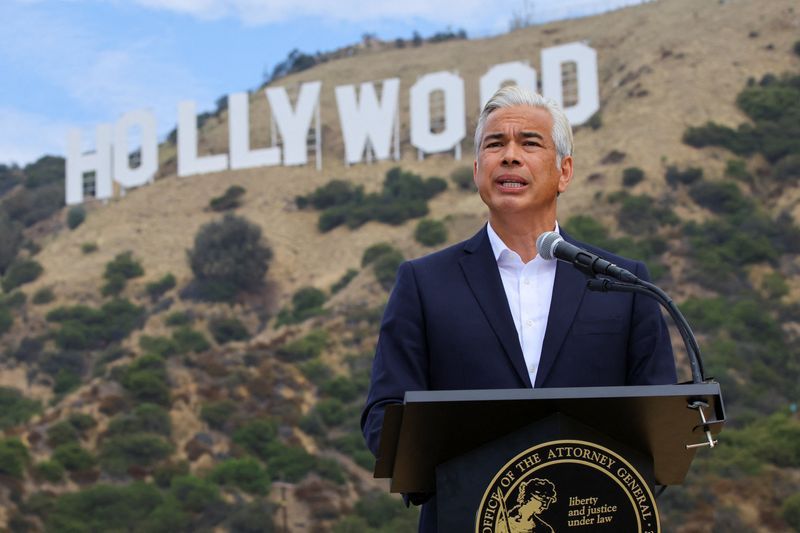
California and eleven other states have launched a legal challenge against Paramount's proposed $110 billion acquisition of Warner Bros Discovery, presenting the most significant regulatory threat yet to CEO David Ellison's strategy of consolidating the company into a major competitor with Netflix and Disney. The lawsuit, filed in Oakland federal court, contends that the merger would establish a dominant player controlling roughly a quarter of revenue generated by theatrical film releases and basic cable programming across the United States, concentrating unprecedented market power in a single entity.
The coalition of state attorneys general alleges that the combination would fundamentally reshape competitive dynamics in entertainment distribution, ultimately harming consumers through higher prices and reduced content variety. According to the lawsuit, the merged company would exercise outsized control over the allocation of premium release dates at cinemas nationwide, potentially forcing theaters to accept unfavourable terms or face content shortages. Similarly, the consolidation would diminish competition in cable distribution, directly affecting the networks that households rely on, including CNN, MTV, HGTV, Cartoon Network, and Nickelodeon. The states argue these market distortions would cascade through their economies, damaging thousands of workers across film production, acting, writing, and technical crews.
All twelve state attorneys general involved are Democrats, reflecting an increasingly partisan dimension to antitrust enforcement in American politics. Oregon's Dan Rayfield framed the action as protecting families and local film industries despite what he characterised as the federal government's endorsement of a problematic merger. California Attorney General Rob Bonta explicitly linked the lawsuit to what he views as the Trump administration's accommodative stance toward corporate consolidation, citing the Justice Department's recent approval of the Paramount-Warner Bros deal as evidence of regulatory capture. The fact that Republican attorneys general have not joined the coalition underscores the politicised nature of contemporary antitrust disputes, a phenomenon that extends beyond this case to other high-profile challenges targeting LiveNation and Nexstar's acquisition of Tegna.
The Department of Justice cleared the merger last month, and observers have suggested that political connections—particularly billionaire Oracle co-founder Larry Ellison's cultivation of relationships with President Donald Trump—may have facilitated that clearance. The timing and political composition of the state-led challenge reflects Democratic frustration with federal regulators whom they perceive as insufficiently protective of competition. For many Democratic politicians, antitrust enforcement has become a vehicle for channelling public anger about rising costs of living and corporate consolidation, issues that resonate broadly with voters regardless of entertainment industry specifics.
Paramount's response has emphasised that the lawsuit misrepresents established antitrust doctrine and mischaracterises competitive realities within entertainment. The company argues that the acquisition would enable greater production capacity and content diversity, not reduction. CEO Ellison has committed to releasing thirty films annually from the combined studios, and the company plans to eliminate $6 billion in duplicative infrastructure, overhead, and positions. Paramount contends these operational efficiencies would ultimately benefit consumers through expanded content libraries and more competitive pricing relative to rivals. However, the states dismiss such commitments as unenforceable marketing pledges that cannot constrain a company with enhanced market power to raise prices or degrade quality even while maintaining promised output levels.
The specific market concentration figures cited in the lawsuit paint a stark picture of the deal's competitive implications. The combined entity would control twenty-seven percent of theatrical film distribution, thirty percent of blockbuster film distribution, and twenty-seven percent of basic cable channels. These percentages represent control of crucial bottlenecks in content distribution that competitors cannot easily circumvent. Theater owners have openly opposed the merger, fearing reduced access to premium content and diminished bargaining leverage. Hollywood labour unions and workers have similarly expressed concern that consolidation would eliminate jobs and reduce production diversity across the industry.
Regional implications merit particular attention for Southeast Asian observers and stakeholders. The entertainment industry's globalised structure means that content distribution decisions made in Los Angeles directly affect regional markets including Malaysia. Reduced production diversity, higher licensing costs, and consolidated decision-making authority over content acquisition could translate into higher streaming and cable subscription prices across Asia, as international distributors pass through increased costs. Moreover, reduced competition among studios could dampen investment in regionally-relevant productions and limit opportunities for local filmmakers and production companies seeking co-production partnerships.
The litigation timeline presents significant business implications that could prove decisive regardless of ultimate legal outcome. Federal merger cases typically require eight months or longer for judicial determination, creating prolonged uncertainty that carries substantial financial consequences. Paramount faces quarterly payments of approximately $650 million to Warner Bros Discovery shareholders if the deal fails to close before October, creating a ticking clock that could force renegotiation or abandonment. Even if Paramount ultimately prevails in court, extended delays could disrupt financing arrangements, depress stock valuations, and undermine the strategic rationale underlying the combination. Securities markets have responded cautiously, with Paramount shares rising modestly to gains of 2.9 percent and Warner Bros shares advancing 2.6 percent following the lawsuit announcement, suggesting investor uncertainty about ultimate resolution.
Analysts view the state action as substantively more threatening than previous challenges to the deal. Paolo Pescatore of PP Foresight characterised the lawsuit as the most credible obstacle yet to the transaction, noting that even victory would inflict substantial economic damage on Paramount through legal costs and deal uncertainty. The challenge also carries symbolic weight within broader conversations about antitrust enforcement and corporate consolidation in the digital economy. Democratic-led states are explicitly rejecting federal regulatory approval as adequate protection for state-level interests in competitive markets and worker protection, establishing a precedent for coordinated state-level challenges to mega-deals cleared by Republican administrations.
The underlying substantive legal questions remain contested territory within antitrust doctrine. Traditional analysis focused on whether consolidation would create direct price increases to end consumers, but modern enforcement increasingly emphasises effects on intermediate participants—cinema operators, cable distributors, content creators—whose bargaining power and economic welfare affect downstream consumer welfare through indirect channels. The states' framing of the deal as harming workers and small businesses reflects this broader conceptualisation, extending antitrust scrutiny beyond immediate price effects to encompass labour market impacts and small enterprise viability. Whether federal courts will embrace this expansive approach remains uncertain, but the litigation will surely illuminate contemporary judicial thinking on consolidation in network industries.
As the case proceeds, the political economy of entertainment distribution in North America and its global ramifications will face intensive scrutiny. The outcome will likely influence regulatory approaches to future media consolidation, potentially affecting similar proposed transactions and establishing precedent for state-level antitrust enforcement independent of federal approval. For Malaysian policymakers and industry participants, the unfolding litigation represents a crucial test of whether globalised entertainment markets will remain fragmented among competing providers or consolidate under dominant players capable of dictating terms to regional distributors and consumers. The lawsuit thus carries implications extending far beyond Paramount and Warner Bros Discovery, touching on fundamental questions about market structure and economic power in the digital age.

