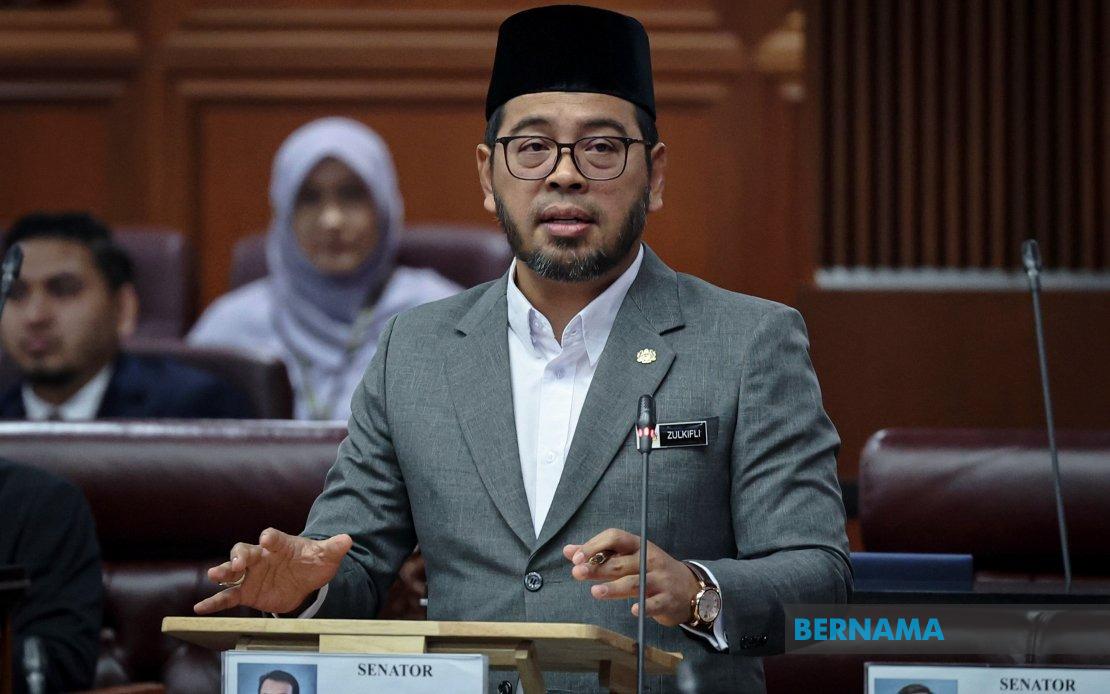
The Cabinet plans to examine whether the final report of the Royal Commission of Inquiry into Tabung Haji should be released to the public, Religious Affairs Minister Dr Zulkifli Hasan announced in Parliament today. The decision comes amid persistent public debate over the handling of the pilgrimage fund's financial crisis, which has generated considerable confusion and unfounded allegations about the disposal of the institution's assets. Zulkifli's statement signals that the government is weighing the benefits of transparency against other considerations, though he did not specify a timeline for the Cabinet's decision.
Central to Zulkifli's remarks was a forceful denial of claims that the former Treasury secretary-general inappropriately liquidated Tabung Haji's valuable assets. He characterised the 2018 transaction instead as a rescue operation executed to prevent the collapse of a critical financial institution serving Malaysia's Muslim population. This framing is significant because it distinguishes between a deliberate firesale of assets and a structured bailout designed to stabilise deposits and restore public confidence in the institution.
The financial crisis at Tabung Haji had reached critical proportions by 2018, when independent audits by the Auditor-General and Bank Negara Malaysia uncovered deep structural problems. The accumulated deficit between assets and liabilities had swelled to RM10.9 billion, a figure that stunned officials and raised the spectre of systemic failure. The situation deteriorated further when a loss of confidence triggered rapid withdrawals totalling approximately RM6 billion over a compressed timeframe, straining liquidity reserves and threatening the institution's ability to meet its obligations.
The government faced an existential choice that year. If Tabung Haji had been permitted to fail, the state would have been forced to absorb liabilities estimated at RM74.5 billion, since deposits in the institution carried a full government guarantee. This potential liability represented an enormous fiscal burden that would have reverberated through Malaysia's public finances and economic stability. Against this backdrop, the Cabinet's decision to transfer underperforming and problematic assets to the government-owned special purpose vehicle Urusharta Jamaah Sdn Bhd (UJSB) emerged as a collective policy response to prevent catastrophe rather than as an opportunistic asset grab.
The efficacy of the rescue has become increasingly evident in Tabung Haji's subsequent performance. Deposits, which stood at RM69.4 billion in 2019, have since expanded to surpass RM95.1 billion as of mid-2025, representing a recovery of more than RM25 billion. This trajectory indicates that depositor confidence has been meaningfully restored, and the institution has stabilised on a sustainable footing. The growth in deposits is particularly important because it reflects the willingness of Malaysian Muslims to entrust their savings to Tabung Haji again, a psychological and financial metric that the bailout was designed to achieve.
Equally significant is the improvement in returns for depositors. The profit distribution rate, which had languished at 1.25 per cent in 2018, has been increased to 3.5 per cent for 2025—the highest achieved in eight years. This improvement directly enhances the real purchasing power of depositors and makes the institution more competitive relative to alternative savings vehicles. For Malaysians saving specifically to perform the hajj pilgrimage, such returns matter substantially because they reduce the total financial sacrifice required to meet pilgrimage costs.
Zulkifli also highlighted that hajj costs themselves have been held constant for three consecutive years spanning 2024 to 2026, despite persistent inflationary pressures on transportation, accommodation, and logistics across the Middle East and internationally. This price stability represents a meaningful subsidy effect, as the real cost of providing hajj services has risen, yet pilgrims have been shielded from having to absorb these increases. This policy choice reflects a broader commitment to ensuring that the hajj remains financially accessible to Malaysians across varying income brackets.
The proposal to release the RCI report publicly reflects growing calls for accountability and transparency surrounding Tabung Haji's rescue and restructuring. Public discourse in Malaysia has at times been characterised by speculation and incomplete information about the mechanics of the bailout, and releasing the RCI findings would provide a comprehensive, authoritative account of what occurred, why decisions were made, and what outcomes have resulted. Such transparency could help dispel misconceptions and establish a factual foundation for public understanding.
However, the Cabinet's deliberative approach also suggests that officials are considering whether releasing the RCI report might raise operational, political, or institutional sensitivities. Full disclosure might invite criticism of specific individuals or decisions, or might provide ammunition for political opponents to weaponise the bailout narrative. The balance between these considerations—between transparency and institutional discretion—remains at the core of the Cabinet's pending review.
For Malaysian stakeholders, the stakes are substantial. Tabung Haji manages retirement savings and pilgrimage funds for millions of Malaysians, many of whom have modest financial resources. The quality of governance, the accuracy of public information, and confidence in the institution's stewardship directly affect their economic security and religious obligations. Understanding whether the rescue was executed competently, ethically, and in the public interest remains a legitimate concern warranting clear answers. The Cabinet's decision on the RCI report will thus carry implications extending well beyond parliamentary procedure into the realm of public trust and institutional legitimacy.

